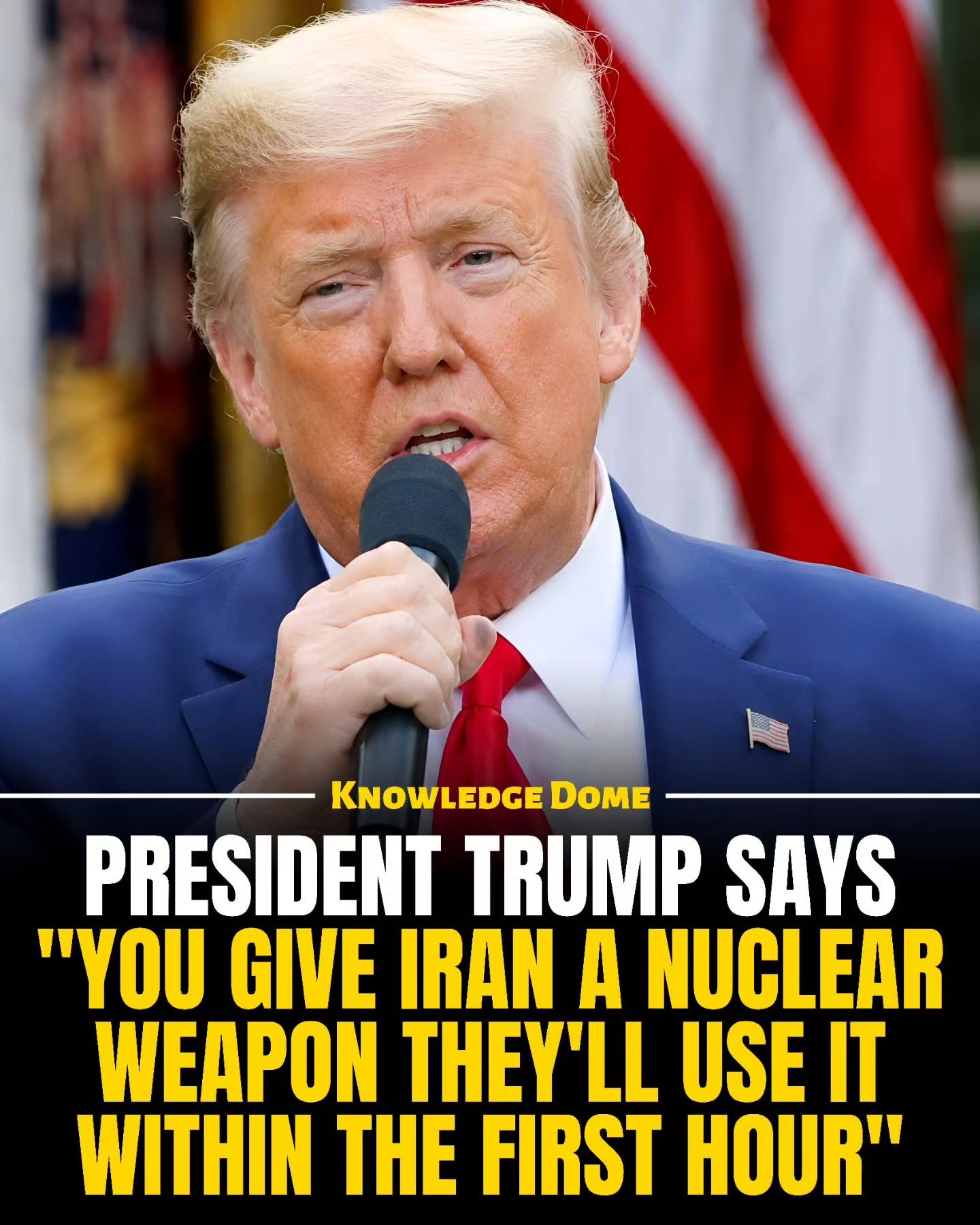
President Trump's Stance on Iran and Nuclear Weapons
President Donald Trump has made it clear that he believes a nuclear-armed Iran would pose a significant threat to the Middle East and the world at large. His statements, made during a dinner with American farmers, underscore his administration’s firm stance on nuclear policy and the ongoing negotiations with Iran. The discussion revolves around the potential for Iran to acquire nuclear weapons and the dire consequences that could follow.
Why This Matters
The geopolitical landscape is significantly influenced by the dynamics between the United States and Iran, particularly concerning Iran’s nuclear ambitions. Understanding Trump’s position offers insight into the broader strategic considerations and the potential implications for global security.
The Context of Trump's Remarks
Trump’s remarks came amidst ongoing talks and negotiations between Washington and Tehran. The discussions centered on Iran’s nuclear program and the future of any potential deal.
Historical Background
The negotiations surrounding Iran's nuclear program have a complex history. Previous agreements, such as the Joint Comprehensive Plan of Action (JCPOA), aimed to curtail Iran's nuclear capabilities in exchange for the lifting of economic sanctions. However, the U.S. withdrawal from the JCPOA under the Trump administration in 2018 has added layers of complexity to the current talks.
Trump’s Key Points
During his speech, Trump emphasized several critical points that are worth exploring in detail.
Immediate Use of Nuclear Weapons
Trump stated that if Iran were to acquire a nuclear weapon, it would likely use it very quickly. This assertion underscores the perceived urgency and danger of Iran's potential nuclear capabilities. The idea that Iran would use a nuclear weapon within the first hour if it obtained one is a stark warning about the potential outcomes of unchecked nuclear proliferation.
Regional and Global Security
Trump's comments highlighted the broader implications for regional and global security. He specifically mentioned the risks to Israel, the Middle East, and the rest of the world. This stance reflects a broader concern about the destabilizing effects of nuclear proliferation in an already volatile region.
U.S. Policy on Iran
Trump's administration made it clear that the United States will not allow Iran to acquire nuclear weapons. This position aligns with a broader U.S. strategy aimed at maintaining geopolitical stability and preventing the spread of nuclear weapons.
Iran's Agreement
Trump also noted that Iran had agreed, in his words, to not move forward with nuclear weapons. This is a significant claim, as it suggests progress in the negotiations and a potential path forward for a diplomatic solution.
The Ongoing Negotiations
The current negotiations between the U.S. and Iran are multifaceted and involve complex diplomatic efforts. Understanding the nuances of these talks is crucial for grasping the broader context of Trump's statements.
Negotiation Dynamics
These negotiations involve not just the U.S. and Iran, but also other global powers, including China, Russia, and European nations. The diplomatic efforts aim to find a balance between Iran's right to peaceful nuclear energy and the international community's concerns about nuclear proliferation.
Stakeholders and Interests
Various stakeholders have differing interests in the outcome of these negotiations. For the U.S., preventing nuclear proliferation and maintaining regional stability are paramount. For Iran, the ability to leverage its nuclear program for economic and political gain, as well as the lifting of economic sanctions, are significant motivators.
Trump's Stance on Nuclear Policy
Trump's statements provide valuable insights into his administration’s nuclear policy and the broader strategic considerations at play.
U.S. Commitment
The U.S. commitment to preventing nuclear proliferation is a cornerstone of its global security strategy. Trump’s comments reiterate this commitment and emphasize the potential consequences of failing to achieve this goal.
Diplomatic Efforts
Diplomatic efforts are the primary means through which the U.S. aims to achieve its goals. Trump’s statements highlight the importance of ongoing negotiations and the potential for diplomatic solutions to complex geopolitical issues.
Practical Tips for Staying Informed
Understanding the intricacies of international relations and nuclear policy requires staying informed about current events and diplomatic developments.
Follow Reliable Sources
Reliable news sources and expert analysis are essential for staying informed. Websites, news outlets, and think tanks that specialize in international relations and nuclear policy can provide valuable insights.
Engage in Discussions
Engaging in discussions and debates about nuclear policy and international relations can help deepen your understanding. Joining forums, attending lectures, and participating in online discussions can provide diverse perspectives and enrich your knowledge.
Consider Various Viewpoints
It's important to consider multiple viewpoints and perspectives. Different stakeholders, including governments, international organizations, and advocacy groups, have varying interests and viewpoints on these issues.
Important Takeaways
Trump's statements about Iran and nuclear weapons offer several important takeaways that are crucial for understanding the broader context of nuclear policy and international relations.
The Urgency of the Issue
The potential for Iran to acquire nuclear weapons is a pressing concern for global security. The perceived urgency of the issue underscores the need for continued vigilance and diplomatic efforts.
The Role of Diplomacy
Diplomacy plays a critical role in addressing complex geopolitical issues. Ongoing negotiations and diplomatic efforts are essential for finding viable solutions and preventing nuclear proliferation.
Regional and Global Implications
The implications of Iran's nuclear ambitions extend beyond the Middle East. The potential for regional and global instability highlights the need for coordinated international efforts to address this issue.
Conclusion
President Trump's stance on Iran and nuclear weapons reflects a broader strategic consideration of global security and the role of diplomacy in addressing complex geopolitical issues. Understanding the nuances of these discussions and the potential implications for regional and global stability is crucial. Staying informed and engaged in discussions about these topics can provide a deeper understanding and contribute to meaningful dialogue and solutions.
Watch the Reel
Questions readers ask
What specific actions has Trump taken to address the Iranian nuclear threat?
Trump has implemented the withdrawal from the Iran nuclear deal, also known as the JCPOA, in 2018 and reinstated economic sanctions on Iran as a means to curb their nuclear ambitions. His administration has also imposed additional sanctions on Iranian entities involved in nuclear activities and has consistently advocated for a tougher stance in negotiations.
Why does Trump believe that Iran would use nuclear weapons swiftly?
Trump's view is based on the perception that Iran, driven by its regional ambitions and historic rhetoric, would seek to capitalize on its nuclear capabilities as soon as it acquires them. This belief underscores the urgency in the administration’s warnings and their push for stringent measures.
How does Iran's nuclear crisis impact global geopolitics?
The Iranian nuclear crisis significantly influences global geopolitics, with the United States and Iran’s dynamics shaping the balance of power in the Middle East. This situation affects alliances, military deployments, and diplomatic relations, as other nations respond to the shifting geopolitical landscape.
What are the main points of Trump's stance on Iran's nuclear ambitions?
Trump’s stance emphasizes the immediate threat of a nuclear-armed Iran and the potential for swift use of nuclear weapons. He advocates for a tough approach in negotiations, supports economic sanctions, and stresses the need for international cooperation to prevent Iran from acquiring nuclear capabilities.
What role do economic sanctions play in Trump's Iran nuclear strategy?
Economic sanctions are a cornerstone of Trump's Iran nuclear strategy. By reimposing and intensifying sanctions, the administration aims to pressure Iran into abandoning its nuclear ambitions. These sanctions target various sectors of Iran’s economy and specific entities involved in nuclear activities.
How does the administration's position affect ongoing nuclear talks with Iran?
The administration’s firm stance and reimposed sanctions have complicated ongoing nuclear talks with Iran. Trump’s approach has led to a breakdown in negotiations, and it remains to be seen whether future talks can be revived. The current environment is characterized by a lack of trust and a hardline stance on both sides.
Why did Trump withdraw from the nuclear deal with Iran?
Trump withdrew from the Iran nuclear deal, the Joint Comprehensive Plan of Action (JCPOA), due to concerns that it did not sufficiently address Iran’s nuclear ambitions and regional destabilizing activities. His administration believed the deal allowed Iran to maintain nuclear capabilities and did not provide adequate enforcement mechanisms.
Recent articles
Fresh deep dives from the latest Reels we unpacked.




Comments
Be the first to comment.