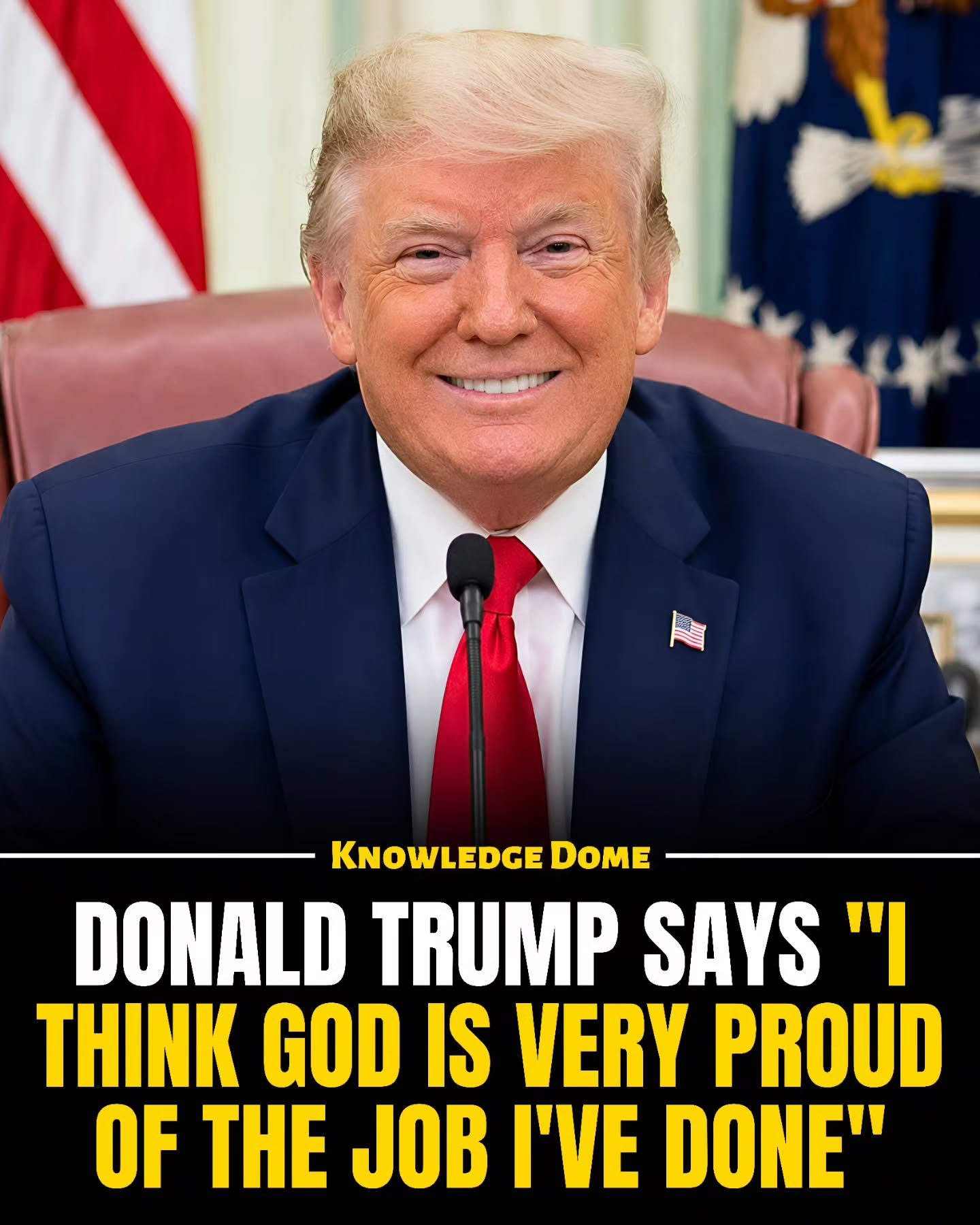
The Noteworthy Political Quote by Donald Trump on His Administration's First Year
On January 20, 2026, President Donald Trump marked the one-year anniversary of his second administration with a lengthy White House press briefing. During this extensive 105-minute event, the president addressed numerous topics, but one particular exchange garnered significant attention. When asked if he believed God was proud of his work over the past year, Trump’s response was both confident and controversial. Understanding this statement and its implications requires a deeper dive into the context and the broader political landscape.
Context
Political rhetoric often blends personal beliefs with public policy, but Trump’s assertion that God was proud of his work added a new layer to this dynamic. The quote, “I think God is very proud of the job I’ve done, and that includes for religion,” was met with mixed reactions. Supporters viewed it as a bold expression of faith, while critics saw it as an unusual blend of politics and religion.
Analysis
To fully grasp the significance of Trump’s statement, it’s essential to examine the broader context of his administration and the political climate.
Economic Policies
Trump asserted that his first year back in office had been “incredible economically.” This claim is framed in a political environment where economic performance is often used as a barometer for a president's effectiveness. Economic policies, including tax cuts and deregulation, have been central to his administration’s agenda. These measures are intended to stimulate economic growth, but their success can be a matter of interpretation.
Religious Protections
A significant portion of Trump’s remarks focused on religious protections, particularly for Christians and Jewish people. He asserted that his administration had done more to safeguard these groups than any other. This stance aligns with the broader conservative Christian base, which has been a key demographic for his administration. Addressing religious freedom and protection has been a consistent theme in his policy agenda. The question arises, however, about the practical measures his administration has taken to achieve these protections. Critics may argue that the claim lacks concrete evidence, while supporters might point to various legislative and executive actions as proof.
Border Security
Trump’s comments on border security were particularly notable. He claimed that his administration had “fixed the border” after what he deemed a disaster. Border security has always been a critical issue for his administration, often framed as a matter of national sovereignty and safety. The administration’s approach to border control has involved a combination of physical barriers, policy changes, and increased enforcement, all of which have been met with varying degrees of success and controversy. The effectiveness of these measures is a subject of ongoing debate.
Political and Ethical Ramifications
Trump’s statement about God’s pride in his work has sparked conversations about the appropriate intersection of politics and religion. Some argue that religious beliefs should remain private, while others see this as a legitimate expression of faith in governance. The ethical implications of such statements, particularly when made by a public figure, are complex and multifaceted.
One of the more contentious points is the potential influence of religious beliefs on policy decisions. Critics worry that political actions rooted in religious beliefs could lead to biased policies that disproportionately affect certain groups. Conversely, supporters argue that a leader’s faith can guide them to make morally sound decisions.
Public Response
The public response to Trump’s quote has been varied. Supporters have hailed it as a confident show of faith, while critics have found it unusual for a president to speak that way about God and politics. This dichotomy reflects the broader polarizing nature of Trump’s presidency, which has often seen sharp divisions among the public on various issues. The contrast in reactions highlights the challenge of navigating the delicate balance between personal beliefs and public responsibility.
Practical Tips
For those interested in understanding the complexities of political statements, particularly those involving faith, there are several practical tips to keep in mind:
Critical Thinking
Always analyze political statements with a critical eye. Consider the broader context, the speaker’s motives, and the possible implications. This approach can help in discerning the genuine intent behind public declarations.
Seek Multiple Sources
Relying on a single source for information can be misleading. Seek out multiple perspectives to gain a comprehensive understanding of the issue at hand. This includes reading from various news outlets, academic sources, and expert analyses.
Understand the Context
Political statements are often grounded in specific contexts and historical moments. Understanding the underlying issues and the current political landscape can provide deeper insights into the significance of such statements. In this case, familiarizing oneself with Trump’s policies on economics, religion, and border security can offer a clearer picture of his beliefs and actions.
Engage in Thoughtful Discussions
Engaging in thoughtful discussions with others can broaden your perspective and deepen your understanding. Be open to different viewpoints and be willing to explore the nuances of complex issues. This can foster a more informed and empathetic approach to political and ethical debates.
Important Takeaways
Trump’s statement about God’s pride in his work is a multifaceted issue that touches on various aspects of governance, faith, and public perception. Key takeaways include:
- Political and Religious Beliefs: The intersection of political and religious beliefs is a delicate balance that can have far-reaching implications. Understanding the nuances of this relationship is crucial for informed political discourse.
- Economic and Religious Policies: The effectiveness of Trump’s economic and religious policies is a subject of ongoing debate. Analyzing the specific measures and their outcomes can provide a clearer picture of the administration’s achievements.
- Public Perception: The public response to Trump’s statement highlights the polarized nature of contemporary politics. Engaging with various perspectives can offer a more comprehensive understanding of the issue.
Conclusion
The quote by President Donald Trump, “I think God is very proud of the job I’ve done, and that includes for religion,” has sparked a range of reactions and discussions. This statement, made during a significant press briefing marking a year into his second administration, sheds light on his beliefs and the broader political landscape. By examining the contexts of economic policies, religious protections, and border security, as well as the ethical and practical implications, we gain a deeper understanding of the complexities involved. Engaging in thoughtful discussions and seeking multiple sources of information can further enrich our comprehension of such weighty topics.
Watch the Reel
Questions readers ask
What specific event led to Trump's claim that God is proud of his administration's work?
This claim came during a 105-minute White House press briefing on January 20, 2026, marking the one-year anniversary of Trump's second term. When asked about God and his administration, Trump asserted that he thought God was proud of his administration's performance.
Why did Trump's statement blend politics and religion?
Trump's statement blended politics and religion because it intertwined his personal beliefs about faith with his role as the nation's leader and the accomplishments of his administration.
What was the broader political context surrounding Trump's assertion?
The broader political context involves the ongoing debate about the role of faith in governance and how political leaders should balance their personal beliefs with their public duties.
How did Trump's statement reflect on his first year in his second term?
Trump's statement indicated that he viewed his administration's first year as successful and worthy of divine approval, highlighting his perspective on the key accomplishments during this period.
How did Trump's comments tie into the broader theme of faith in governance?
Trump's comments sparked conversations about how faith influences political decisions, and whether or not politicians should openly discuss their beliefs in relation to their governance.
Why did Trump's claim about God's approval spark such attention and debate?
Trump's claim sparked attention and debate because it raised questions about the separation of church and state, as well as the appropriate role of personal religious beliefs in public office.
Related deep dives
Similar reads based on topic and creator.



Recent articles
Fresh deep dives from the latest Reels we unpacked.




Comments
Be the first to comment.