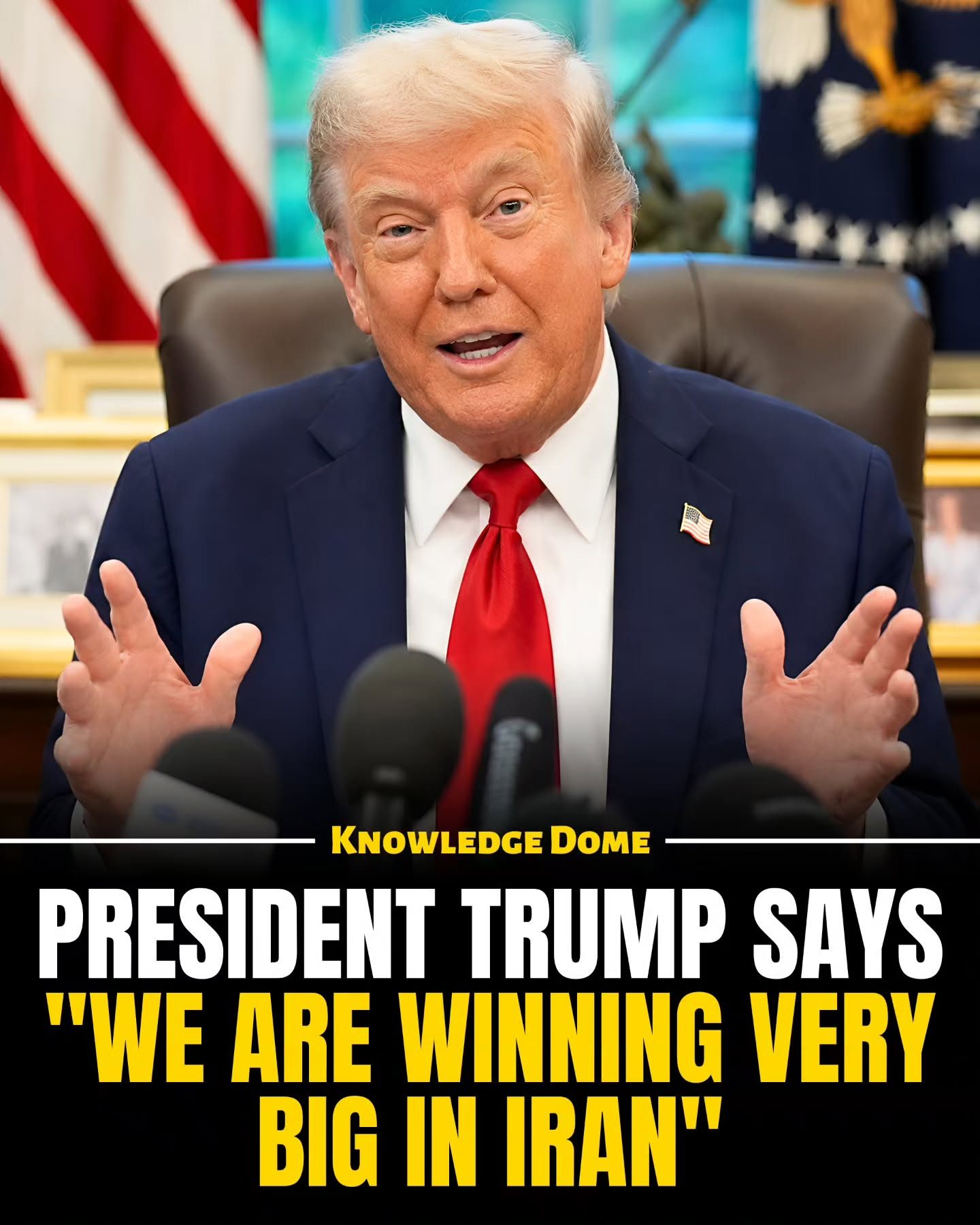
President Trump's Statement on U.S. Progress in Iran
President Donald Trump declared that the United States is "winning very big in Iran." He asserted that the country is making significant progress in the region and that the public will soon see the results of these efforts. His statement came amid months of heightened tension and conflict, including attacks and unrest near the Strait of Hormuz. Let's break down the key points of his statement and its implications.
Context / Why this matters
Trump's remarks are significant because they provide insight into the U.S. strategy and objectives in the Middle East, particularly regarding Iran. The statement reflects the administration's perspective on the effectiveness of its policies and the current state of military and economic developments in the region. Understanding these points can help contextualize the broader geopolitical dynamics at play.
Main discussion
Military Claims and Strategic Confidence
Trump emphasized that the fight in Iran has already been won in a military sense. He claimed that Iran’s navy, air force, and anti-aircraft systems have been severely damaged or neutralized. Although he did not provide specific details about the operations or actions taken, his confident assertions suggest a high level of strategic optimism. This confidence is likely aimed at reassuring the public and allies about the U.S.'s capabilities and resolve.
Oil Prices and Economic Strategy
One of the most noteworthy aspects of Trump's statement was his connection between the military situation and oil prices. He mentioned that some had predicted oil prices to soar as high as $350 per barrel, but instead, they remained around $79. This stabilization of oil prices is presented as another indicator of the success of U.S. strategies. It suggests that maintaining stable oil prices is a critical part of the broader geopolitical strategy, potentially influencing global economic stability and U.S. economic interests.
Regional Tensions and Geopolitical Impact
The statement comes after a period of significant tension in the region, including incidents near the Strait of Hormuz, a critical waterway for global oil trade. Trump's assertion that the U.S. is winning aligns with the idea that the country aims to control or influence key strategic points in the region. It also signals a continuation of U.S. efforts to maintain control over global oil supplies and secure maritime routes.
Practical tips
Staying Informed
Given the complexity of geopolitical dynamics, it's essential to stay informed about developments in the Middle East. Following reliable news sources and analyzing official statements can provide a clearer picture of ongoing conflicts and strategic initiatives. Pays attention to both military actions and economic indicators, as they often go hand in hand in shaping geopolitical strategies.
Understanding Economic Indicators
Paying attention to economic indicators, such as oil prices, can offer insights into geopolitical strategies. Fluctuations in oil prices can reflect changes in supply, demand, and regional stability. Understanding these dynamics can help predict potential shifts in global economic and political landscapes. Iran is a significant player in the global oil market, making its stability and production capabilities critical to global oil prices.
Recognizing the Importance of Strategic Points
The Strait of Hormuz is a prime example of a strategic point that has significant global implications. Conflicts or disruptions in such areas can affect global trade, energy supplies, and economic stability. Recognizing the importance of these strategic points can help understand the broader geopolitical strategies at play.
Important takeaways
Trump's statement highlights several key points:
- Military Success: The U.S. believes it has made significant military strides in neutralizing Iran's defense capabilities.
- Economic Stability: The stabilization of oil prices is seen as a victory, indicating successful economic strategies.
- Geopolitical Control: The U.S. aims to maintain control over strategic points in the Middle East, as seen through its efforts near the Strait of Hormuz.
- Public Reassurance: Trump's confident assertion is aimed at reassuring the public and allies about the country's military and economic strategies.
Conclusion
President Trump's statement on the U.S. progress in Iran provides a snapshot of the country's strategic confidence and economic goals. By understanding the context and implications of his remarks, one can gain a clearer picture of the geopolitical dynamics at play in the Middle East. Whether through military actions, economic strategies, or geopolitical control, the U.S.'s involvement in the region continues to shape global politics and economics. Keeping a close eye on these developments is crucial for understanding the broader implications for international relations and global stability.
Watch the Reel
Questions readers ask
What specific victories has the Trump administration claimed in Iran?
The Trump administration has highlighted significant victories in Iran, including the imposition of crippling economic sanctions. These sanctions are aimed at restricting Iran's access to global trade and financing. Trump has also mentioned the strategic containment of Iran’s military influence in the region.
How does the U.S. strategy in the Middle East align with Trump's statements on Iran?
Trump's strategy in the Middle East involves a combination of military and economic measures to counter Iran's influence. This includes bolstering alliances with regional partners, enforcing economic sanctions, and maintaining a strong military presence to deter Iranian aggression.
What are the implications of Trump’s assertion of U.S. success in Iran on regional tensions?
Trump’s assertions are aimed at bolstering public confidence and sending a strong message to Iran and its allies. However, they could also escalate tensions, as Iran might perceive these statements as provocative and a sign of continued U.S. aggression.
What are the key objectives of the U.S. in the Middle East according to Trump’s policy on Iran?
The key objectives include curbing Iran's nuclear ambitions, preventing it from becoming a dominant regional power, and protecting U.S. interests in the region, particularly ensuring the flow of oil through crucial waterways like the Strait of Hormuz.
What economic strategies has the U.S. employed against Iran, as mentioned in Trump’s statements?
The U.S. has implemented extensive economic sanctions targeting Iran’s oil and financial sectors. These sanctions aim to cut off Iran’s primary revenue sources, including oil exports, and isolate it from the global financial system.
How has Trump's administration approached military strategies when dealing with Iran?
The Trump administration has taken a firm military stance, increasing the U.S. military presence in the region to deter Iranian actions. This includes deploying additional naval forces to the Persian Gulf and conducting joint military exercises with regional allies to showcase U.S. military readiness.
How does Trump’s statement on Iran aim to bolster public confidence in the U.S.?
By stressing the significant progress and victories the U.S. is achieving against Iran, Trump aims to reassure the American public that his administration has a strong and effective strategy in place. This messaging is intended to build public support and counter any perceived weaknesses in the U.S.'s Middle East policy.
Recent articles
Fresh deep dives from the latest Reels we unpacked.




Comments
Be the first to comment.