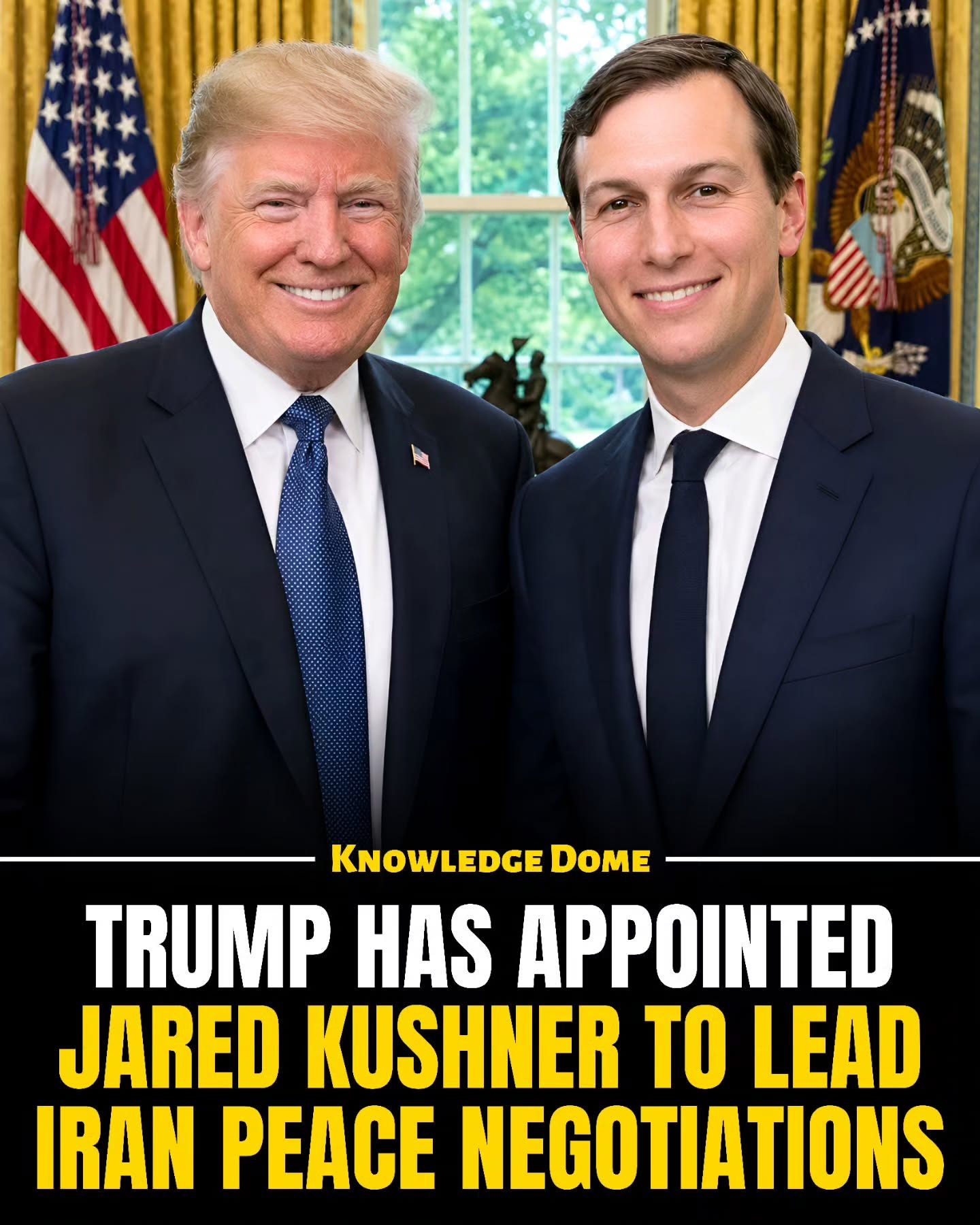
Iran Peace Negotiations and Jared Kushner's Appointment
The political landscape is often a complex web of strategies and alliances. Donald Trump, former President of the United States, has appointed his son-in-law, Jared Kushner, to a pivotal diplomatic role. Kushner, now a Peace Envoy, will work alongside Special Envoy Steve Witkoff in efforts to support U.S.-Iran peace talks. This appointment has significant implications for the ongoing negotiations and the broader geopolitical scene.
Why This Matters
The Middle East is a region rife with tension and conflict, and any move that could alleviate some of that turmoil is inherently important. The U.S.-Iran peace talks are currently centered on a technical round taking place in Doha, Qatar. Doha is a strategic location for such talks, known for its neutral stance and diplomatic acumen. The primary goals of these negotiations are to reduce tensions, halt the fighting, and protect critical shipping routes, particularly the Strait of Hormuz. Over 20% of the world's petroleum passes through this narrow waterway, making it essential for global trade. Additionally, the release of about $6 billion in frozen Iranian assets is a significant point of contention.
Main Discussion
The Role of Jared Kushner
Donald Trump's decision to bring Jared Kushner back into a major diplomatic role is not without precedent. Kushner has a history of involvement in Middle East negotiations, including the controversial Abraham Accords, which normalized relations between Israel and several Arab countries. His appointment as a Peace Envoy underscores the seriousness with which the U.S. is approaching these talks.
Key Challenges in the Negotiations
The negotiations face numerous obstacles, both internally and externally. Critics within the U.S. and abroad argue that the deal, as currently structured, might grant Iran too many concessions. There are also concerns about potential conflicts of interest, given Kushner's private business ties in the Gulf. These commercial interests could complicate the talks, as they add a layer of complexity and potential bias to the negotiations.
Issues at Stake
Several issues are at the forefront of the current negotiations. The release of frozen Iranian assets is a critical point. The $6 billion in assets has been a contentious issue, with opponents arguing that releasing these funds could embolden Iran's aggressive policies. The Strait of Hormuz is another major concern. The narrow waterway is a vital artery for global trade, and any disruption to its flow could have severe economic repercussions.
Diplomacy in the Region
Negotiations with Iran are always fraught with challenges, but the appointment of Kushner could signal a renewed commitment to finding a diplomatic solution. His past experience in the region, while controversial, has shown his ability to navigate complex political landscapes. This, coupled with the strategic location of Doha, could provide a conducive environment for talks.
Practical Tips
For those interested in following the U.S.-Iran peace talks, it's important to stay informed about the key players and the issues at stake. Here are some practical tips:
- Stay Updated: Follow reliable news sources that provide up-to-date information on the negotiations. This will help you stay informed about any developments or changes in the talks.
- Understand the Key Issues: Familiarize yourself with the main issues at stake, such as the release of frozen assets and the protection of shipping routes.
- Consider Multiple Perspectives: Try to understand the viewpoints of all parties involved, including the U.S., Iran, and other stakeholders in the region. This will give you a more balanced understanding of the situation.
Important Takeaways
The appointment of Jared Kushner as a Peace Envoy is a significant move in the ongoing U.S.-Iran peace talks. The negotiations, centered in Doha, Qatar, aim to reduce tensions and secure critical shipping routes. However, the talks face numerous challenges, including potential conflicts of interest and internal and external pressures.
Conclusion
The appointment of Jared Kushner as a Peace Envoy marks a significant development in the U.S.-Iran peace talks. As the negotiations continue, it is essential to stay informed about the key issues and the roles of the key players. The outcome of these talks could have far-reaching implications for regional stability and global trade. Stay tuned for further developments as the situation unfolds.
Watch the Reel
Questions readers ask
Who is Jared Kushner and why is his appointment significant?
Jared Kushner is the son-in-law of former U.S. President Donald Trump. His appointment as a U.S. Peace Envoy for the U.S.-Iran peace talks is significant because it brings a prominent Trump administration figure into the diplomatic sphere, potentially influencing the direction and outcomes of the negotiations.
What are the primary goals of the U.S.-Iran peace talks in Doha, Qatar?
The primary goals of the U.S.-Iran peace talks in Doha, Qatar, are to ease regional tensions in the Middle East and secure vital trade routes, including the Strait of Hormuz. These talks aim to foster stability and open channels for dialogue between the two nations.
Who will Jared Kushner be working with in his new role?
In his role as a Peace Envoy, Jared Kushner will be working alongside Steve Witkoff, who has been appointed as the Special Envoy for the U.S.-Iran peace talks. Their collaboration is intended to strengthen the U.S. diplomatic efforts in the region.
What is the expected impact of Kushner's appointment on U.S.-Iran relations?
Kushner's appointment could potentially bring a new perspective to the negotiations and boost efforts to reach a breakthrough in U.S.-Iran relations. However, it may also attract criticism and scrutiny due to his close ties to former President Trump and potential biases.
Why was Doha, Qatar chosen as the location for the U.S.-Iran peace talks?
Doha, Qatar, was chosen for the U.S.-Iran peace talks due to its strategic location and neutrality. The city serves as a hub for diplomatic activities, offering a neutral ground for discussions that could potentially ease tensions and foster progress in the peace process.
What role does the Strait of Hormuz play in the U.S.-Iran peace talks?
The Strait of Hormuz is a critical waterway through which a significant portion of the world's oil supplies pass. Securing this vital trade route is a key objective of the U.S.-Iran peace talks, as it directly impacts global energy security and economic stability.
How might Kushner's appointment influence the broader geopolitical scene in the Middle East?
Kushner's appointment could potentially influence the broader geopolitical scene by bringing a fresh approach to U.S. diplomacy in the Middle East. His involvement may lead to new alliances and strategies, or it could provoke reactions from other regional players and global powers.
Recent articles
Fresh deep dives from the latest Reels we unpacked.




Comments
Be the first to comment.