Political Image: Trump's Accusations and the Obama Administration
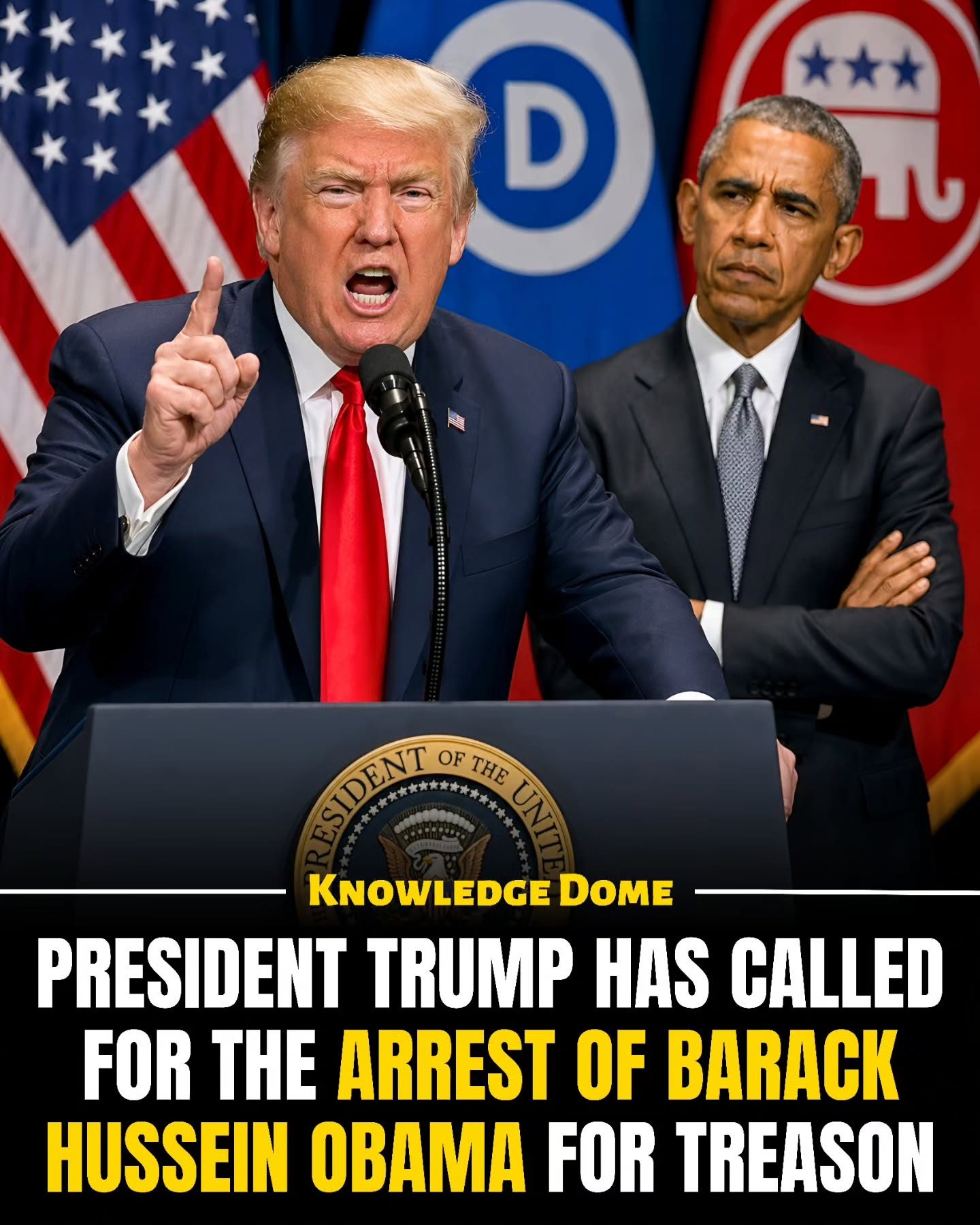
The political landscape in the United States has been marked by intense debate and prominent figures, particularly in recent years. The image that's been circulating depicts both Donald Trump and Barack Obama, but it's the text overlay that has grabbed attention. It states that President Trump has called for the arrest of Barack Obama for treason. This image captures a moment in the ongoing political discourse, where serious allegations have been leveled and hotly contested.
Context: The Significance of Political Controversies
Political controversies can shape public discourse and influence how information is consumed and perceived. The claims made by Trump, which include accusations of treason, have reintroduced discussions about the 2016 election and the activities of the Obama administration.
Trump's Allegations: Treason and Treachery
Trump's recent posts on Truth Social have reignited a contentious issue from the 2016 election. The claims focus on what Trump sees as treasonous actions by the Obama administration, specifically the alleged spying on his campaign and the fabrication of intelligence regarding Russian election interference. Terms such as "treachery," "treason," and "seditious conspiracy" have been used in these posts, escalating the rhetoric and raising eyebrows among political observers and the public alike.
Obama's Denial and Legal Perspectives
In response to these claims, Barack Obama's team has strongly rejected the allegations, labeling them as "outrageous and ridiculous." They contend that the accusations are baseless and devoid of evidence. Legal experts have echoed this sentiment, underscoring that Trump has not presented any concrete proof to substantiate his claims.
The Claims: Unproven and Under Scrutiny
The claims about the Obama administration's alleged spying and the creation of false intelligence regarding Russian interference in the 2016 election have been a recurring theme in Trump's rhetoric. These allegations are tied to a broader narrative that Trump and his supporters have promoted, often without concrete evidence to back them up. News reports have highlighted that Trump's recent posts have brought these old claims back into the spotlight, even though multiple bipartisan investigations have found no evidence to support them.
The 2016 Election and Allegations of Spying
One of the central claims revolves around the idea that the Obama administration spied on Trump's 2016 campaign. The accusation suggests that this surveillance was an attempt to undermine Trump’s campaign and has been characterized as a form of political sabotage.
Intelligence on Russian Election Interference
Another key aspect of the allegations involves the intelligence regarding Russian interference in the 2016 election. Trump and his supporters have questioned the validity of these intelligence reports, suggesting that they were fabricated to harm his campaign. However, these claims have been widely discredited, with multiple bipartisan investigations concluding that there is no evidence to support the notion that the 2016 election results were altered or that the intelligence was falsified.
Analyzing the Political Rhetoric
The controversy surrounding these claims raises important questions about the role of political rhetoric in shaping public opinion and influencing political discourse.
The Role of Political Rhetoric
Political rhetoric plays a critical role in shaping public perception and driving political debates. The use of strong language and accusations can significantly impact how issues are perceived and discussed, even if the claims lack substantiation.
Impact on Public Trust
The ongoing allegations and counter-accusations can erode public trust in political institutions and the integrity of the democratic process. The controversy underscores the importance of evidence-based claims and the need for transparency in political investigations.
Practical Tips for Staying Informed
Navigating through political controversies can be challenging, but staying informed is essential. To better understand and engage with these issues, consider the following practical tips:
Verify Information
Always verify information from reliable sources. Political claims can be misleading, so it's crucial to seek out well-researched and fact-checked information.
Consider Multiple Perspectives
Engaging with diverse viewpoints can provide a more comprehensive understanding of complex issues. Be open to multiple perspectives and conduct your own research to form a balanced opinion.
Stay Updated
Keep an eye on ongoing investigations and updates from credible news outlets. Political controversies evolve, and staying informed can help you make sense of the latest developments.
Important Takeaways
The allegations made by Trump against the Obama administration are complex and multifaceted. Understanding the context and the responses to these claims is crucial for a nuanced understanding of the political landscape.
The Perks of Skepticism
Skepticism is an essential tool for evaluating political claims. Questioning the evidence and the intentions behind such claims can help prevent misinformation from spreading.
The Role of Evidence
Evidence is the cornerstone of credible claims. Without concrete evidence, claims can quickly turn into baseless accusations, undermining trust in political institutions.
The Value of Transparency
Transparency in political investigations and communications is vital. It ensures that the public can trust the process and that political debates are grounded in facts rather than speculation.
Conclusion
Political controversies, such as the accusations made by Trump against the Obama administration, highlight the complexities and challenges of navigating political discourse. The image of Trump and Obama side-by-side, with the text overlay calling for Obama's arrest, encapsulates a moment of intense political rhetoric. Understanding the context, the claims, and the responses to these allegations can provide valuable insights into the broader landscape of political debates. Staying informed, verifying information, and considering multiple perspectives are essential for engaging effectively with these issues.
Watch the Reel
Questions readers ask
What specific accusations has Donald Trump made against Barack Obama?
Donald Trump has accused Barack Obama of treason, alleging that Obama's administration engaged in spying on his campaign and fabricated intelligence during the 2016 presidential election. These claims have been a significant part of the political discourse surrounding the two administrations.
Why has Donald Trump called for the arrest of Barack Obama?
Trump has called for Obama's arrest based on his accusations of treason, saying that the former president should be held accountable for his actions. This demand has sparked intense debate and controversy, with many questioning the validity of Trump's claims.
What evidence has Trump presented to support his claims against Obama?
Trump has repeatedly asserted that there is evidence to support his claims, but he has not provided specific details or documentation. He has often referenced intelligence reports and surveillance activities, but concrete evidence has not been made public.
How has the Obama administration responded to Trump's accusations?
The Obama administration, including former President Obama himself, has denied Trump's accusations. They have maintained that there was no wrongdoing and that the allegations are politically motivated. The former administration has consistently refuted claims of spying and intelligence fabrication.
What impact have these accusations had on the political discourse in the U.S.?
Trump's accusations have significantly influenced the political landscape, reigniting debates about the integrity of elections, the role of intelligence agencies, and the boundaries of political accountability. The controversy has divided public opinion and continues to fuel ongoing discussions.
What legal implications could arise from Trump's calls for Obama's arrest?
Calling for the arrest of a former president is a serious matter with potential legal ramifications. It could involve issues of defamation, obstruction of justice, and the misuse of political power. Legal experts have weighed in on both sides, with some arguing that Trump's actions are politically motivated and others suggesting that they could lead to further investigations.
How have these accusations influenced public perception of both Trump and Obama?
The accusations have polarized public perception, with supporters of Trump viewing his actions as a necessary call for accountability, while critics see them as baseless and politically motivated. Conversely, Obama's supporters view the accusations as a smear campaign, while his detractors may see them as evidence of wrongdoing. The controversy has reinforced existing political divisions and shaped how each figure is viewed.
Recent articles
Fresh deep dives from the latest Reels we unpacked.




Comments
Be the first to comment.