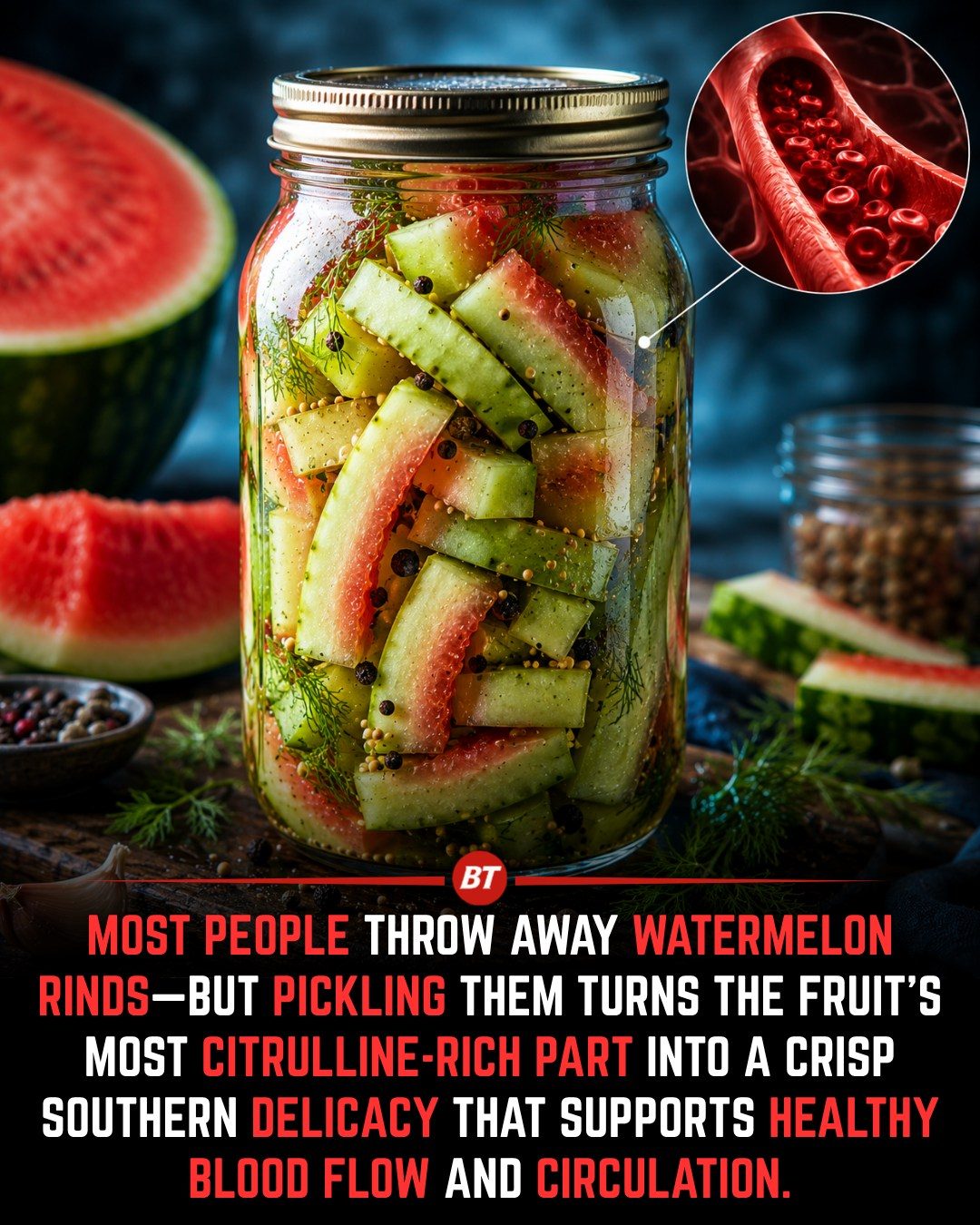
Pickled watermelon rinds are a unique and flavorful delicacy that have long been a staple in Southern American cuisine. While many people discard the rind, it is actually a rich source of L-citrulline, an amino acid with notable health benefits. By pickling the rind, you can transform this often-overlooked part of the watermelon into a tangy, crunchy snack that is both delicious and nutritious.
Context / Why this matters
The watermelon's white rind, located just beneath the green skin, is where much of the fruit's L-citrulline is concentrated. Citrulline is a naturally occurring amino acid that the body converts into L-arginine. This process is crucial because L-arginine is then used to produce nitric oxide, which helps relax the muscles lining your blood vessels, allowing them to widen and improve circulation.
Benefits of Citrulline
Improved Blood Flow
Citrulline has been widely studied for its role in supporting healthy blood flow. By increasing the production of nitric oxide, citrulline helps to relax and widen blood vessels, which can improve circulation throughout the body. This makes it a valuable nutrient for maintaining cardiovascular health.
Enhanced Exercise Performance
Nitric oxide also plays a key role in muscle function and recovery. Many athletes and fitness enthusiasts consume citrulline supplements to enhance their performance and reduce muscle soreness. Pickled watermelon rinds offer a natural and tasty way to incorporate more citrulline into your diet.
Cardiovascular Health
The improved blood flow and circulation stimulated by citrulline can also contribute to overall cardiovascular health. Regular consumption of foods rich in citrulline, like pickled watermelon rinds, may help support healthy blood pressure levels and reduce the risk of heart disease.
Nutrient-Rich and Low in Calories
Pickled watermelon rinds are not only high in citrulline but also rich in fiber and beneficial plant compounds. They make for a low-calorie snack that can help you feel full and satisfied without adding excess calories to your diet.
Southern Culinary Tradition
For generations, Southern cooks have turned watermelon rinds into a beloved pickled delicacy. This culinary tradition dates back to the 1800s and is a great way to reduce food waste. Instead of discarding the rind, you can enhance its flavor and nutritional value through pickling – making it a versatile and tasty addition to salads, sandwiches, or as a stand-alone snack.
Pickling Process
The process of pickling watermelon rinds is quite simple. First, peel away the tough green outer skin, then cut the white rind into cubes. Next, pickle the rind with a mixture of apple cider vinegar, water, sea salt, garlic, mustard seeds, and a touch of honey. After a few days of chilling, the rinds transform into a tangy, crunchy delicacy that is as unique as it is flavorful.
Practical Tips
Preparation Tips
- Choose the Right Watermelon: Opt for a ripe, juicy watermelon to ensure the rind is tender and flavorful.
- Peeling the Rind: To make the peeling process easier, use a vegetable peeler or a sharp knife to remove the green outer skin.
- Cutting the Rind: Cut the rind into uniform cubes to ensure even pickling and consistent texture.
Pickling Tips
- Use Fresh Ingredients: Fresh garlic, mustard seeds, and other spices will enhance the flavor of your pickled rinds.
- Adjust the Seasoning: Feel free to adjust the amount of salt and sugar in the pickling liquid to suit your taste preferences.
- Chilling Time: Allow the rinds to chill in the pickling liquid for at least a few days to develop the best flavor.
Storage Tips
- Airtight Containers: Store your pickled watermelon rinds in an airtight container in the refrigerator. They can last up to several weeks if stored properly.
- Use Within a Week: For the best flavor and texture, consume the pickled rinds within a week of pickling. The longer they sit, the softer they can become.
Important Takeaways
- Citrulline Content: The white rind of the watermelon, often thrown away, contains a high concentration of L-citrulline, an amino acid that supports healthy blood flow and cardiovascular health.
- Southern Delicacy: Pickled watermelon rinds are a traditional Southern delicacy that turns a often-discarded part of the watermelon into a tangy, crunchy snack.
- Reducing Food Waste: Pickling watermelon rinds is a great way to reduce food waste and create a nutritious and flavorful side dish.
- Versatile Use: Pickled watermelon rinds can be enjoyed on their own or added to salads, sandwiches, and other dishes for a unique flavor twist.
Conclusion
Pickled watermelon rinds offer a delicious and nutritious way to enjoy a part of the watermelon that is often overlooked and discarded. By pickling the rind, you can transform it into a tangy, crunchy delicacy that is rich in citrulline, fiber, and beneficial plant compounds. This Southern culinary tradition not only reduces food waste but also provides a tasty and healthy addition to your diet.
Watch the Reel
Questions readers ask
What are the primary health benefits of consuming pickled watermelon rinds?
Pickled watermelon rinds are rich in L-citrulline, an amino acid that promotes better blood flow, boosts exercise performance, and supports overall cardiovascular health. By incorporating this tangy snack into your diet, you can reap these benefits while enjoying a unique and flavorful treat.
What part of the watermelon should I use for pickling?
To make pickled watermelon rinds, use the white part located just beneath the green skin. This is where most of the L-citrulline is concentrated, making it the ideal part of the watermelon to pickle. Avoid using the green skin and the pink flesh.
How long does it take to pickle watermelon rinds?
The pickling process for watermelon rinds typically takes about 3-5 days for a quick pickle. However, you can let them sit in the refrigerator for up to 2 months. The longer they sit, the more flavor they will absorb, resulting in a more tangy and flavorful snack.
What are some creative ways to incorporate pickled watermelon rinds into meals?
Pickled watermelon rinds can be enjoyed as a standalone snack or added to various dishes. They pair well with salads, sandwiches, and charcuterie boards. You can also chop them up and use them as a garnish for cocktails or add them to stir-fries and stews for an extra tangy kick.
Can I pickle watermelon rinds without vinegar?
Traditional pickling methods for watermelon rinds involve using vinegar as a primary ingredient. However, you can experiment with lacto-fermentation, which uses only salt and water to create a tangy flavor. This method may take longer and requires careful monitoring to ensure safety and proper fermentation.
What is the best way to store pickled watermelon rinds?
Store pickled watermelon rinds in an airtight container in the refrigerator. They will keep for up to 2 months, allowing you to enjoy them long after the initial pickling process. Make sure the rinds are completely submerged in the pickling liquid to maintain their texture and flavor.
Related deep dives
Similar reads based on topic and creator.




Recent articles
Fresh deep dives from the latest Reels we unpacked.




Comments
Be the first to comment.