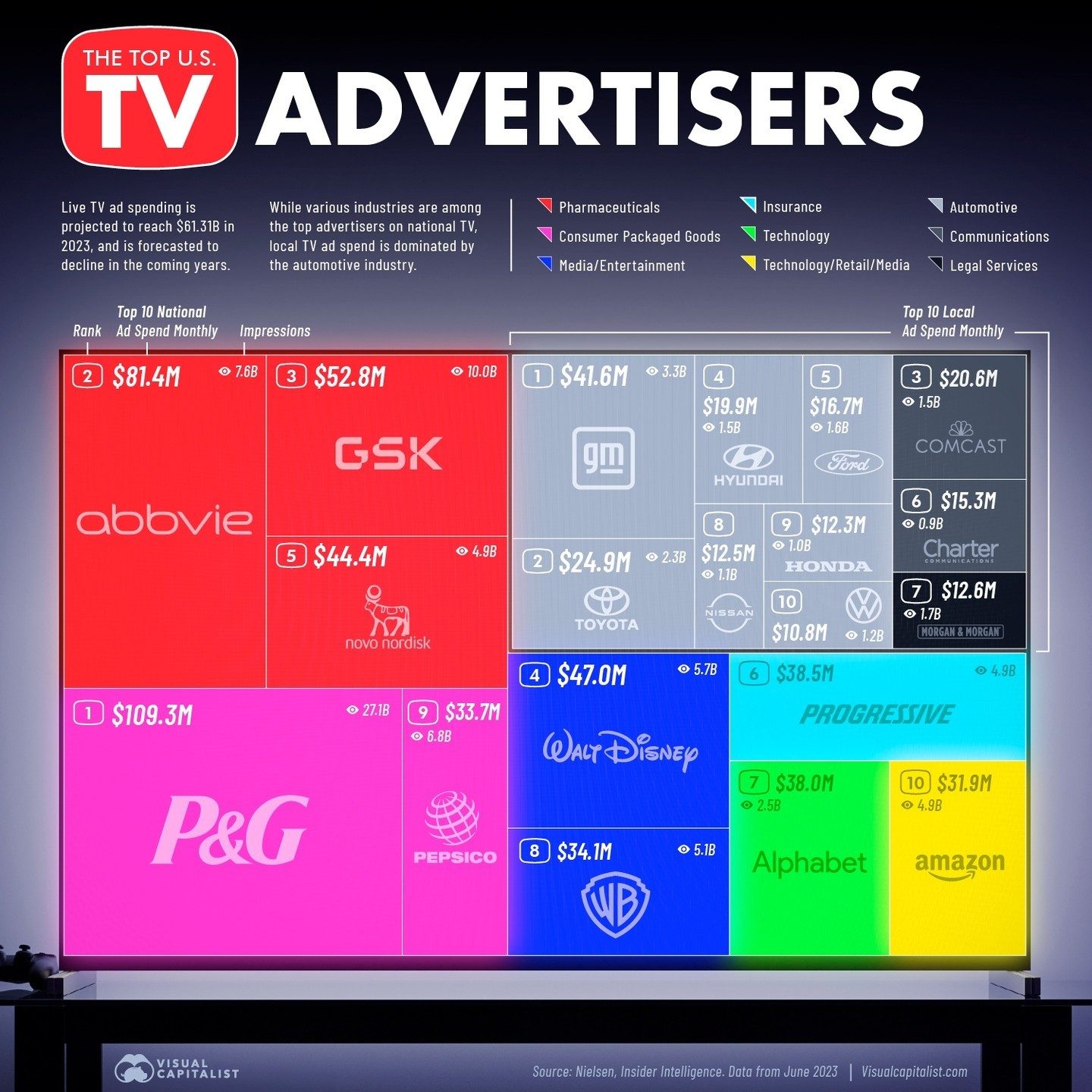
TV Advertising Spend in 2023
In 2023, U.S. broadcast and cable TV is expected to receive a substantial investment in advertising, with projections indicating a $61.3 billion expenditure. This significant spending underscores the enduring relevance of traditional TV as a powerful medium for advertising, despite the widespread narrative of declining viewership. The unique storytelling capabilities of TV, combined with advanced targeting methods, make it an optimal platform for reaching specific viewer segments.
Why This Matters
The sustained investment in TV advertising reflects a strategic shift towards leveraging the medium's storytelling prowess and targeted audience reach. While many industries have transitioned to digital marketing, traditional TV continues to hold its ground due to its ability to capture audience attention and deliver compelling narratives. This trend is particularly pertinent for large-scale advertisers, such as those in the consumer packaged goods, pharmaceuticals, automotive, and insurance sectors.
Factors Driving TV Advertising Spend
Storytelling and Audience Engagement
Traditional TV offers a rich, immersive experience that allows brands to tell their stories in a way that digital media often cannot match. The combination of visual and auditory elements in TV advertisements creates a synergy that can evoke emotions and foster brand loyalty. This makes TV an ideal platform for brands looking to make a lasting impression on their audience.
Targeted Advertising
Contrary to popular belief, traditional TV advertising has evolved to include sophisticated targeting capabilities. Similar to digital marketing channels, advertisers can now segment their audience based on various demographic and behavioral factors. This precision targeting ensures that advertising dollars are spent more effectively, reaching the most relevant viewers at the optimal times.
Industry Dominance
Certain industries dominate the spending on TV ads due to their reliance on broad reach and impact. Consumer packaged goods, pharmaceuticals, automotive, and insurance sectors frequently appear among the top advertisers. This is largely because these industries benefit from the widespread visibility and credibility that TV advertising provides. According to the data from Nielsen, companies such as P&G, GSK, and Walt Disney are among the top spenders, highlighting the critical role that TV advertising plays in their overall marketing strategies.
Main Industries Dominating TV Advertising
Consumer Packaged Goods
Leading the pack, companies like P&G, PepsiCo, and others in the consumer packaged goods sector invest heavily in TV advertising. These companies rely on TV to build brand awareness and foster long-term consumer loyalty. The immersive storytelling and emotional appeal of TV ads help these brands to connect with their diverse customer base effectively.
Pharmaceuticals
Pharmaceuticals companies like GSK, Abbvie, and Novo Nordisk are also significant players in TV advertising. These companies leverage TV to communicate the efficacy and benefits of their products directly to consumers. The credibility and reach of TV make it an ideal platform for pharmaceutical advertising, ensuring that critical health information reaches a broad audience.
Automotive
The automotive industry, represented by brands like GM, Hyundai, Toyota, and Honda, continues to invest heavily in TV advertising. The high production value and emotional storytelling capabilities of TV ads make it a powerful tool for showcasing new vehicle models and driving brand preference. The ability to reach a wide audience and create a lasting impression is a significant factor in the automotive industry's continued investment in TV advertising.
Insurance and Communications
Insurance companies like Progressive and Morgan & Morgan, along with communication giants like Comcast, Alphabet, and Amazon, also feature prominently among the top TV advertisers. These companies use TV to build trust and credibility, conveying complex information in a digestible and engaging format. The broad reach of TV allows these companies to communicate with a wide audience, ensuring that their messages resonate with potential customers.
Practical Tips for Effective TV Advertising
Understand Your Audience
To maximize the impact of TV advertising, it is crucial to understand your target audience intimately. Identify their preferences, behaviors, and viewing patterns to tailor your ad content effectively. Use data-driven insights to segment your audience and deliver personalized messages that resonate with each group.
Utilize Data and Analytics
Leverage data and analytics to measure the effectiveness of your TV advertising campaigns. Track key metrics such as ad spend, impressions, and viewer engagement to optimize your advertising strategy. Advanced analytics can help you refine your targeting and ensure that your ads reach the most relevant audience.
Embrace Storytelling
Incorporate compelling storytelling into your TV ads to create a lasting emotional connection with your audience. A well-crafted narrative can capture viewers' attention and convey your brand's message in a memorable way. Use visual and auditory elements creatively to enhance the storytelling experience and make your ads stand out.
Integrate with Digital Channels
Combine TV advertising with digital marketing channels to create a cohesive and comprehensive advertising strategy. Use digital media to extend the reach of your TV ads and engage with your audience across multiple platforms. Integrating TV and digital advertising can amplify your brand's visibility and drive better results.
Important Takeaways
The Enduring Power of Traditional TV
Despite the rise of digital media, traditional TV remains a powerful platform for advertising. Its unique storytelling capabilities and targeted advertising options make it an essential part of any comprehensive marketing strategy. The high levels of ad spend in 2023 reflect the continued relevance and effectiveness of TV advertising.
Targeted Advertising on TV
Traditional TV advertising has evolved to include sophisticated targeting capabilities, similar to digital marketing channels. This allows advertisers to reach specific viewer segments with precision, ensuring that their advertising dollars are spent effectively.
Industry Investment in TV
Key industries, including consumer packaged goods, pharmaceuticals, automotive, and insurance, continue to invest heavily in TV advertising. These industries benefit from the broad reach and credibility of TV, making it an essential component of their marketing strategies.
Conclusion
With a projected $61.3 billion in ad spend for 2023, traditional TV remains a critical platform for advertisers across various industries. Its storytelling prowess, coupled with advanced targeting capabilities, makes it an optimal choice for reaching and engaging specific viewer segments. As the advertising landscape continues to evolve, the enduring relevance of traditional TV underscores its importance in the broader marketing strategy.
Watch the Reel
Questions readers ask
Who are the top US TV advertisers in 2023 and how does their spending compare to previous years?
The top U.S. TV advertisers in 2023 include major brands like GlaxoSmithKline, which is consistently high on the list. To see how their spending compares to previous years, you can look at annual reports and industry analyses that track yearly expenditures, revealing trends and shifts in investment.
How does the $61.3 billion TV ad spend in 2023 compare to other advertising mediums like digital?
The $61.3 billion allocated to TV advertising in the U.S. in 2023 is a substantial figure, but it's important to note that digital advertising often exceeds this amount. While TV remains a significant player, digital platforms are increasingly capturing larger shares of the advertising spend.
What makes traditional TV advertising a preferred choice for large advertisers in 2023?
Traditional TV advertising offers a wide reach, advanced targeting methods, and unparalleled storytelling capabilities. These factors make it a preferred choice for large advertisers, who value the ability to engage audiences in a meaningful way and reach specific demographic groups.
How can I track monthly TV advertising trends and their impact on viewer engagement?
To track monthly TV advertising trends, you can use resources like Nielsen TV ad ratings. These services provide detailed insights into viewer engagement, ad performance, and industry trends, helping advertisers make informed decisions about their campaigns.
Why is storytelling considered a significant factor in the continued relevance of TV advertising in 2023?
Storytelling on TV allows advertisers to create compelling narratives that resonate with viewers, fostering a deeper connection. This emotional engagement is a key reason why TV advertising remains relevant, as it can drive brand loyalty and recall more effectively than some other mediums.
Recent articles
Fresh deep dives from the latest Reels we unpacked.




Comments
Be the first to comment.