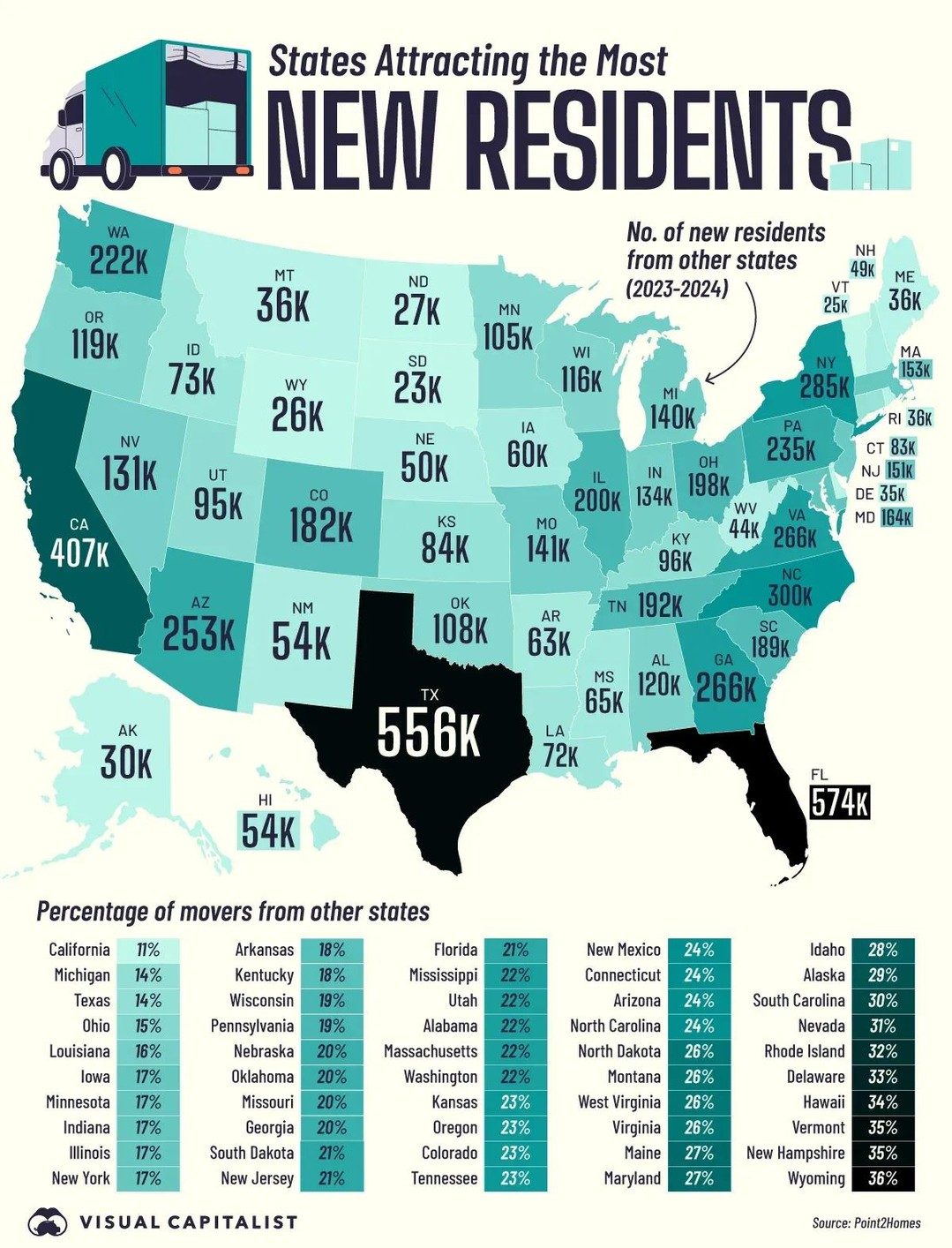
State Migration Trends in the U.S. (2023-2024)
The Sunshine States of Texas and Florida topped the list of U.S. states attracting the most new residents from 2023 to 2024, each welcoming over half a million new arrivals. While overall domestic migration in the U.S. has dropped to historic lows, Southern and Sun Belt states continue to be the primary destinations for Americans on the move.
Why This Matters
Understanding where Americans are moving is crucial for a variety of reasons. These migration patterns influence everything from local economies and housing markets to political representation and infrastructure development. The trends also reflect broader social and economic shifts, such as changing job opportunities, cost of living, and lifestyle preferences.
Top States for New Residents
Texas and Florida Lead the Pack
Texas and Florida both surged ahead, each adding over half a million new residents. These states, known for their warm climates, lower taxes, and booming job markets, have long been magnets for newcomers. Texas saw a significant influx of 574,000 new residents, while Florida welcomed 507,000.
Southern and Sun Belt States Dominate
The Southern and Sun Belt regions continue to dominate the list of top destinations for new residents. States like Georgia, North Carolina, and South Carolina saw substantial increases in their populations. These regions offer a combination of affordability, job opportunities, and a favorable climate, making them attractive to movers.
Midwest and Northeast See Outflows
Conversely, many Midwestern and Northeastern states experienced net outflows of residents. States like Illinois, New York, and Pennsylvania lost significant numbers of residents, with percentages of movers from other states ranging from 14% to 27%. These regions often grapple with higher costs of living, stricter regulations, and colder climates, which can drive people to seek warmer, more affordable locations.
The Impact of Migration
Economic Implications
Migration trends have significant economic implications. States gaining residents often see boosts in their economies due to increased consumer spending, a larger workforce, and potential investments in housing and infrastructure. Conversely, states losing residents may face economic challenges, including reduced tax revenues and strain on remaining local services.
Social and Cultural Shifts
Migration also brings about social and cultural changes. New residents introduce diverse perspectives, customs, and skills, enriching the cultural fabric of their new communities. However, rapid influxes can also strain resources and lead to tensions if local infrastructure and services cannot keep pace.
Political Representation
Migratory patterns also affect political representation. Population changes influence redistricting, which can shift political power and influence policy decisions at the local, state, and even national levels. States that gain residents may see increased representation in Congress and the Electoral College, while those that lose residents may see their political clout diminish.
Practical Tips for Those Considering a Move
Research the Cost of Living
Before making a move, it's essential to research the cost of living in your potential new home. This includes housing costs, taxes, utilities, and everyday expenses. Websites like Numbeo and Best Places can provide detailed cost-of-living comparisons.
Consider Job Opportunities
Evaluate the job market in your target state. Look for industries that are thriving and align with your skills and experience. Researching job listings, networking with professionals in your field, and considering remote work options can all be helpful.
Assess Quality of Life
Beyond economics, consider the overall quality of life. This includes factors like climate, healthcare, education, and cultural amenities. Visiting the area, if possible, can give you a better sense of whether it aligns with your lifestyle and preferences.
Think About Community and Culture
Each state has its unique culture and community. Reflect on the social environment, local customs, and community values. Joining online forums or social media groups related to the area can provide insights from current residents.
Important Takeaways
Migration trends highlight the dynamic nature of the United States. While overall mobility has decreased, the movement of people continues to shape the country's landscape. Southern and Sun Belt states, with their favorable climates and economic opportunities, are the primary beneficiaries of this migration. Understanding these trends can help individuals, businesses, and policymakers navigate the ever-changing social, economic, and political landscape.
Conclusion
The migration trends between 2023 and 2024 underscore the enduring appeal of Southern and Sun Belt states for Americans seeking new opportunities and lifestyles. As these states continue to attract new residents, they will undoubtedly face both opportunities and challenges. For those considering a move, understanding these trends and the factors driving them can help make informed decisions about the future. Whether motivated by economic prospects, quality of life, or cultural preferences, the choices made by movers will continue to shape the nation's future.
Watch the Reel
Questions readers ask
Which states are the top destinations for new residents in 2023-2024?
Based on the latest trends, Texas and Florida are the top destinations for new residents in the U.S. for 2023-2024, each drawing over half a million new arrivals. The South and Sun Belt regions, in general, are seeing significant population growth as well.
Why are so many people moving to the South and Sun Belt?
The South and Sun Belt regions offer a variety of attractions, including a warmer climate, more affordable housing, and a growing job market. These factors contribute to the appeal of states like Texas and Florida, making them popular choices for new residents.
What are the primary factors driving domestic migration trends in 2023-2024?
The primary factors driving domestic migration in 2023-2024 include job opportunities, cost of living, and lifestyle preferences. People are gravitating towards regions, particularly in the South and Sun Belt, that offer economic growth, lower living expenses and a desirable climate.
How do these population shifts affect local economies and housing markets?
Population shifts can significantly impact local economies and housing markets. An influx of new residents can lead to increased demand for housing, goods, and services, which can spur economic growth and development. However, it can also result in higher living costs and increased competition for housing.
Are there specific reasons why Texas and Florida are leading in new resident growth?
Texas and Florida are leading in new resident growth due to their robust job markets, business-friendly environments, and lack of state income tax. Additionally, these states offer a variety of cultural and recreational opportunities, which attract a diverse range of new residents.
What broader trends are reflected in the recent state migration patterns?
The recent state migration patterns reflect broader trends such as the shift towards warmer climates, the pursuit of better job opportunities and lower cost of living. These patterns also highlight the impact of lifestyle preferences and economic factors on where Americans choose to live.
Recent articles
Fresh deep dives from the latest Reels we unpacked.




Comments
Be the first to comment.