The Highest-Paying Federal Agencies in the U.S. Government
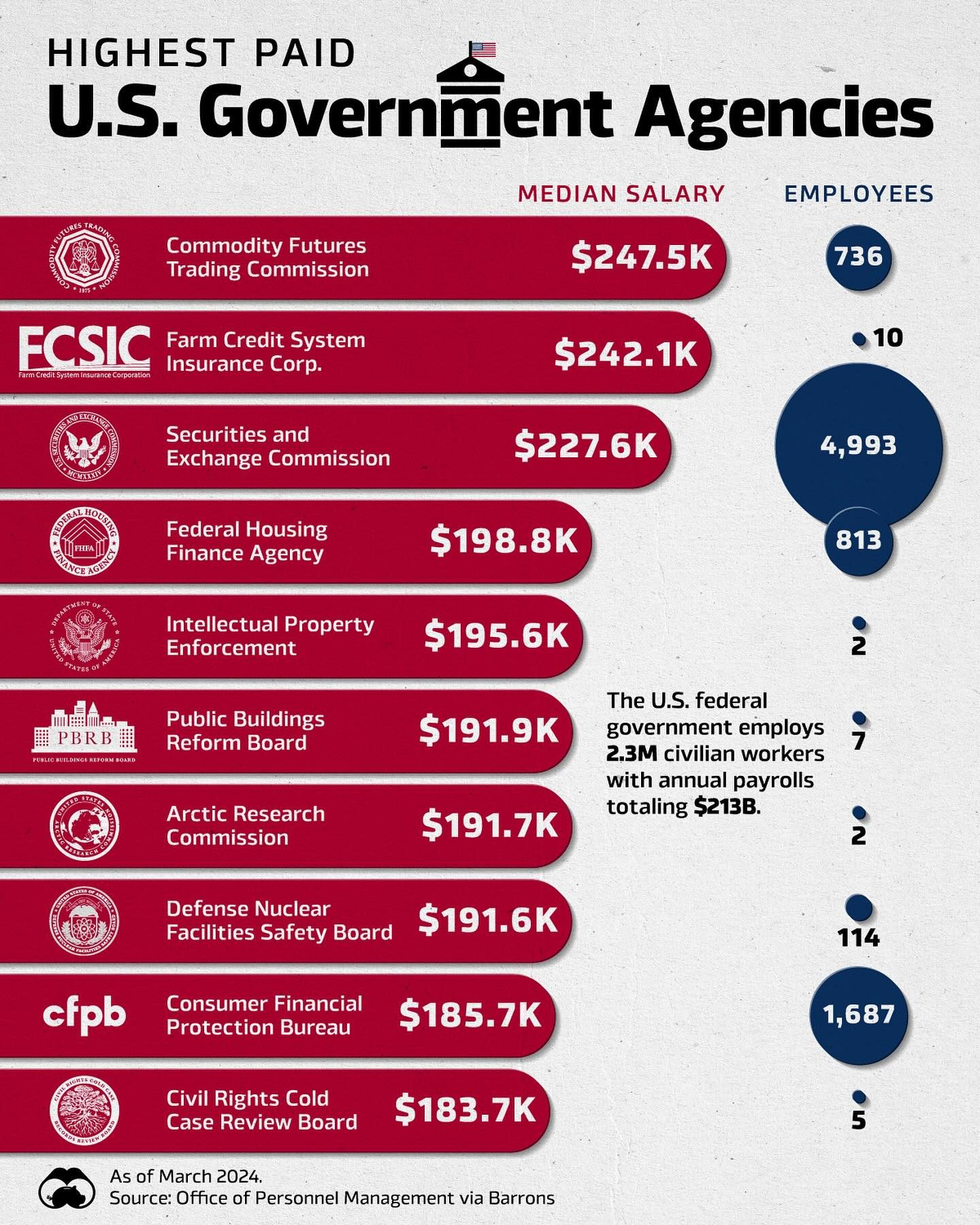
Understanding government salaries, particularly those in federal agencies, offers a unique perspective on the compensation structures within the public sector. The Commodity Futures Trading Commission (CFTC) tops the list with a median salary of $247,518. This compensation is more than five times the national median salary, highlighting the substantial financial rewards available within certain federal roles.
Why This Matters
The U.S. government employs a vast array of professionals across various sectors, from financial regulation to housing and intellectual property. The salaries offered by these agencies reflect the specialized skills and high levels of expertise required to manage complex markets and regulatory environments. For professionals in these fields, understanding the salary structures of different agencies can be crucial for career planning and advancement.
Highest-Paying Federal Agencies
The ranking of the highest-paying federal agencies provides a snapshot of the compensation landscape within the U.S. government. Here’s a breakdown of the top-paying agencies:
Commodity Futures Trading Commission (CFTC)
The CFTC is at the top of the list with a median salary of $247,518. This agency is responsible for regulating the $400 trillion swaps market, as well as commodity and Treasury futures. With 736 staff, the CFTC plays a critical role in ensuring market integrity and protecting investors.
Farm Credit System Insurance Corporation (FCSIC)
Next on the list is the FCSIC, with a median salary of $242,100. This agency oversees the Farm Credit System, providing financial services to agricultural producers and rural communities. Despite having only 10 employees, the FCSIC offers competitive compensation to attract top talent.
Securities and Exchange Commission (SEC)
The SEC, with a median salary of $227,600, is a key regulator of the securities industry. With 4,993 employees, the SEC ensures that investors are protected and that the securities markets operate fairly and efficiently. The agency's work involves enforcing federal securities laws and regulating corporations and financial professionals.
Federal Housing Finance Agency (FHFA)
The FHFA, with a median salary of $198,800, supervises the Federal National Mortgage Association (Fannie Mae), the Federal Home Loan Mortgage Corporation (Freddie Mac), and the Federal Home Loan Banks. With 813 employees, the FHFA plays a vital role in maintaining the stability of the housing finance market.
Intellectual Property Enforcement
Intellectual property enforcement, with a median salary of $195,600, is another high-paying area within the government. This small team of 2 professionals is responsible for enforcing intellectual property rights and protecting against counterfeiting and piracy.
Public Buildings Reform Board
The Public Buildings Reform Board offers a median salary of $191,900. This agency focuses on overseeing the modernization and management of federal buildings, ensuring they are efficient and environmentally sustainable. With 7 employees, the board plays a crucial role in maintaining the infrastructure of federal properties.
Arctic Research Commission
The Arctic Research Commission, with a median salary of $191,700, consists of 2 employees who are responsible for advising the President and Congress on matters related to Arctic research and policy. This small but critical agency ensures that the U.S. remains at the forefront of Arctic exploration and climate research.
Defense Nuclear Facilities Safety Board
The Defense Nuclear Facilities Safety Board, with a median salary of $191,600, oversees the safety of the Department of Energy's nuclear facilities. With 114 employees, the board ensures that nuclear activities are conducted safely and in compliance with regulations.
Consumer Financial Protection Bureau (CFPB)
The CFPB, with a median salary of $185,700, protects consumers from unfair or abusive practices in the financial marketplace. With 1,687 employees, the bureau enforces consumer financial protection laws and ensures that financial institutions treat consumers fairly.
Civil Rights Cold Case Review Board
The Civil Rights Cold Case Review Board, with a median salary of $183,700, focuses on investigating unsolved civil rights cases. With 5 employees, this board plays a crucial role in bringing justice to historic civil rights violations.
Other Notable Agencies
Several other agencies also offer competitive salaries, including:
- Federal Communications Commission (FCC): Regulates communications and media industries.
- Department of Transportation (DOT): Manages the national transportation system and ensures safety.
- Department of Defense (DOD): Oversees national security and defense policies.
These agencies, while not listed in the top rankings, also offer substantial compensation packages that attract highly skilled professionals.
Practical Tips for Navigating Federal Agencies
If you're considering a career in a federal agency, here are some practical tips to help you navigate the landscape:
- Research the Agency: Understand the mission, responsibilities, and work environment of the agency you're interested in. Each agency has unique demands and opportunities.
- Tailor Your Resume: Highlight relevant skills and experiences that align with the agency's needs. Federal resumes often require more detail than private-sector resumes, so ensure you include all relevant information.
- Network: Attend industry conferences, join professional organizations, and connect with current and former employees. Networking can provide valuable insights and potential job leads.
- Prepare for the Application Process: Federal job applications can be lengthy and competitive. Allow ample time to complete the application and tailor it to each position.
- Stay Updated on Job Listings: Regularly check the USAJobs website for new job postings and set up alerts for roles that match your interests and qualifications.
Important Takeaways
- Compensation Varies Widely: Salaries in federal agencies can vary widely, with some offering substantially higher compensation than others.
- Specialized Skills Are Valued: Agencies that require specialized skills, such as financial regulation and intellectual property enforcement, tend to offer higher salaries.
- Career Planning: Understanding the compensation landscape can help professionals make informed career decisions and plan their paths within the government.
- Diverse Opportunities: The federal government offers a wide range of opportunities across various sectors, from financial regulation to housing and intellectual property.
Conclusion
The U.S. government offers a variety of high-paying roles across different agencies, each with its unique responsibilities and compensation structures. Whether you're interested in financial regulation, intellectual property, or housing, there are opportunities to build a rewarding career in the public sector. By understanding the compensation landscape and tailoring your skills and experiences to the needs of these agencies, you can position yourself for success in the federal workforce.
Watch the Reel
Questions readers ask
What factors influence the high salaries at the Commodity Futures Trading Commission (CFTC)?
The high salaries at the CFTC are influenced by the agency's crucial role in regulating complex financial markets and safeguarding the economy. These roles require specialized expertise and experience, which commands a higher compensation.
Which federal agencies besides the CFTC offer the highest salaries?
Besides the CFTC, other federal agencies that offer high median salaries include the Farm Credit System Insurance Corporation and the Federal Deposit Insurance Corporation. These agencies also prioritize specialized expertise and experience in their roles.
Why do federal agencies like the CFTC pay more than the national median?
Federal agencies such as the CFTC pay more than the national median to attract and retain professionals with specialized skills. These roles often involve managing and regulating complex systems, which require a high level of expertise and dedication.
How do federal salaries in 2023 compare to previous years?
Federal salaries in 2023 continue to reflect the specialized nature of the roles. Agencies like the CFTC have consistently offered high salaries over the years, with the median salary at CFTC being more than five times the national median.
Which federal government jobs provide the highest median salary?
The highest median salaries in the federal government are typically found in regulatory agencies such as the Commodity Futures Trading Commission and the Farm Credit System Insurance Corporation. These roles often involve complex financial regulations and management.
How do federal board, office, and commission salaries compare?
Federal board, office, and commission salaries can vary widely, with commissions and regulatory boards often providing much higher salaries. This is due to the specialized nature and significant responsibilities of these roles, which require experts in their fields.
Recent articles
Fresh deep dives from the latest Reels we unpacked.




Comments
Be the first to comment.