Turkey Production & Distribution in the U.S.
The supply chain for turkeys in the U.S. is a fascinating blend of agriculture, logistics, and real estate. Understanding the nuances of turkey production and distribution can offer insights into the complexities of modern food supply chains. The top turkey-producing states play a crucial role in ensuring that Thanksgiving dinners across the country are well-stocked with these traditional birds.
Why This Matters
The turkey supply chain is a significant part of the U.S. economy. Turkey production is concentrated in a few states, making logistics and storage critical components of the supply chain. Understanding where turkeys come from and how they are distributed can highlight the strategic importance of certain states and the infrastructure that supports this industry.
Turkey Production by State
Top Producing States
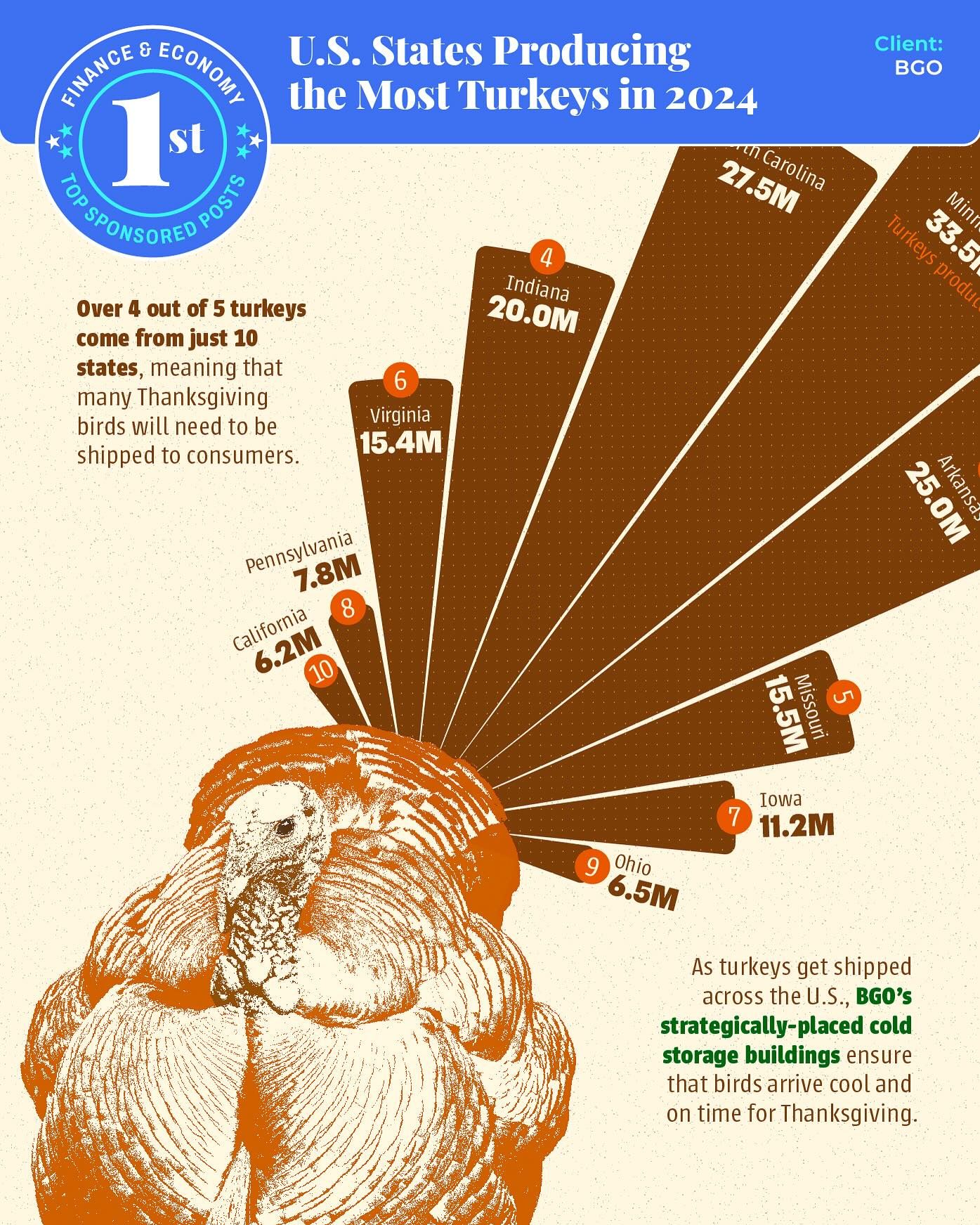
The top turkey-producing states in the U.S. in 2024 are:
- North Carolina: 27.5 million turkeys
- Indiana: 20.0 million turkeys
- Virginia: 15.4 million turkeys
- Arkansas: 15.5 million turkeys
- Missouri: 15.1 million turkeys
- California: 6.2 million turkeys
- Iowa: 11.2 million turkeys
- Ohio: 6.5 million turkeys
- Pennsylvania: 6.2 million turkeys
These states collectively produce the majority of turkeys in the U.S., with the top four states accounting for nearly 80% of the total production. This concentration means that a significant portion of the turkey supply must be transported across the country to meet demand, particularly during peak seasons like Thanksgiving.
The Role of Cold Storage
The transportation and distribution of turkeys require precise logistics to ensure freshness and timely delivery. Cold storage plays a critical role in this process, as it ensures that turkeys remain cool and fresh during transit. Companies like BGO, a global real estate investment firm, specialize in providing storage solutions that are essential for the timely delivery of turkeys.
The Importance of Cold Storage
Cold storage facilities are crucial for maintaining the quality and freshness of perishable goods, including turkeys. These facilities are strategically located to support the distribution network, ensuring that turkeys can be transported efficiently from production sites to consumers. The quality of cold storage can significantly impact the shelf life and overall quality of the turkeys, making it a vital component of the supply chain.
Key Considerations
- Temperature Control: Maintaining the correct temperature is essential to prevent spoilage. Cold storage facilities must be designed to keep turkeys at optimal temperatures throughout the storage and transportation process.
- Hygiene and Safety: Cold storage units must adhere to strict hygiene standards to prevent contamination and ensure food safety. Proper sanitation and pest control measures are crucial.
- Efficiency and Capacity: Cold storage facilities must be efficient and have sufficient capacity to handle peak demands, such as the holiday season. This involves not only storing the turkeys but also ensuring a smooth flow of inventory to avoid overcrowding and delays.
Turkey Distribution Challenges
Logistical Hurdles
Distributing turkeys across the country involves several logistical challenges, including:
- Avoiding Spoilage: Ensuring that turkeys remain fresh during long-distance transportation.
- Efficiency and Cost: Balancing the cost of transportation with the need for efficiency.
- Seasonal Demand: Managing peak demand during holidays, which requires additional planning and resources.
Solutions
Cold storage solutions, such as those provided by BGO, are essential for addressing these challenges. By providing reliable and efficient cold storage, BGO ensures that turkeys arrive at their destinations in optimal condition, ready for consumers to enjoy.
Practical Tips for Ensuring Fresh Turkeys
For consumers and businesses involved in the turkey supply chain, here are some practical tips to ensure freshness:
- Plan Ahead: Order turkeys well in advance to ensure availability and to allow for any potential delays in transportation.
- Choose Reputable Suppliers: Work with suppliers who have a proven track record of providing fresh, high-quality turkeys.
- Check Storage Conditions: Ensure that the turkeys are stored in optimal conditions, and ask suppliers about their cold storage practices.
- Inspect Delivery: Upon receiving the turkeys, inspect them for any signs of spoilage or damage.
- Proper Handling: Handle and store turkeys properly to maintain freshness until they are cooked.
Important Takeaways
Understanding the nuances of turkey production and distribution in the U.S. can offer valuable insights into the broader supply chain. The concentration of turkey production in a few states highlights the importance of logistics and cold storage in ensuring timely and fresh delivery. Companies like BGO play a crucial role in this process, providing the necessary infrastructure to support the supply chain.
Conclusion
The supply chain for turkeys in the U.S. is a complex network of production, logistics, and storage. By understanding the key components of this supply chain, from the top-producing states to the role of cold storage, we can appreciate the intricate processes that ensure our Thanksgiving dinners are well-stocked with fresh, delicious turkeys.
Watch the Reel
Questions readers ask
Which state is expected to produce the most turkeys in the U.S. for Thanksgiving 2024?
North Carolina is projected to be the top turkey-producing state in the U.S. for Thanksgiving 2024. This state has been a leading producer of turkeys for several years and is known for its robust poultry industry.
How do turkey-producing states ensure a smooth supply for Thanksgiving?
States that produce turkeys implement intricate logistics and cold storage solutions to ensure a smooth supply for Thanksgiving. This involves coordinating transportation, maintaining cold storage facilities, and managing inventory to meet the increased demand during the holiday season.
What role do top turkey-producing states play in the national turkey supply?
The top turkey-producing states are crucial for the national turkey supply, as they provide the majority of turkeys consumed during holidays like Thanksgiving. Their production capabilities and efficient logistics networks help ensure that turkeys are available nationwide.
How are turkeys transported for Thanksgiving to ensure freshness?
Turkeys are transported using refrigerated trucks to maintain freshness during transit. These vehicles are equipped with temperature-controlled environments to preserve the quality of the turkeys from the production sites to distribution centers and ultimately to retailers.
What are the key considerations in turkey production and distribution?
Key considerations in turkey production and distribution include maintaining high standards of animal welfare, ensuring food safety, and optimizing logistics to minimize waste and maximize efficiency. Additionally, cold storage solutions are vital to preserve the quality of turkeys during transportation and storage.
Related deep dives
Similar reads based on topic and creator.

Recent articles
Fresh deep dives from the latest Reels we unpacked.




Comments
Be the first to comment.