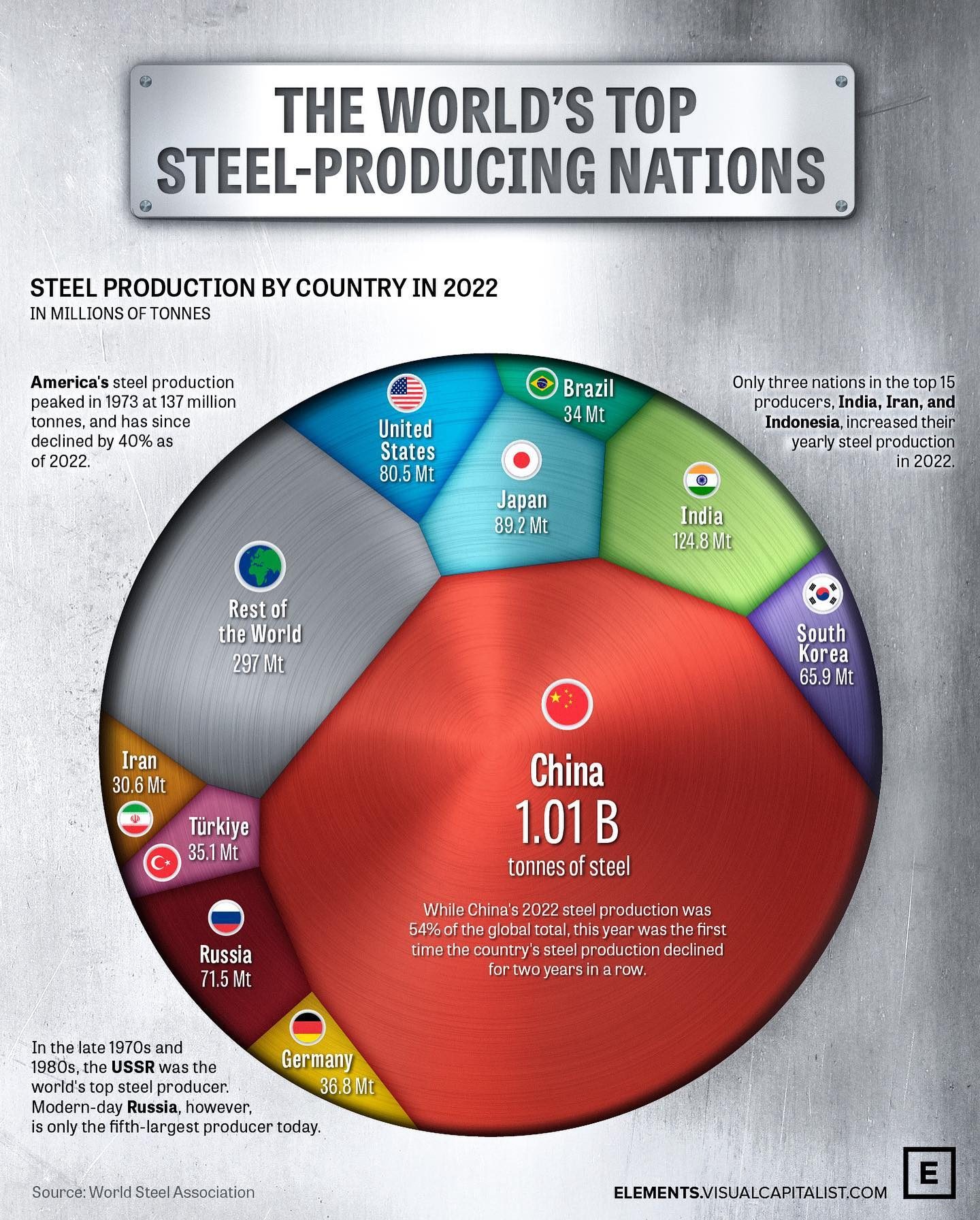
Steel Production by Country
Steel is a fundamental material in modern industry and economy, crucial for the construction of buildings, automobiles, and various appliances and infrastructure that support our daily lives. Understanding the global distribution of steel production provides valuable insights into the economic strengths and industrial capabilities of different nations. Data from the World Steel Association reveals the top steel-producing countries and highlights the dominance of China in this sector.
Why This Matters
Steel production is a key indicator of a country's industrial capacity and economic health. The distribution of steel production across different nations reflects global economic trends, technological advancements, and the resource availability of each country. This data is essential for policymakers, investors, and industry professionals seeking to understand the global landscape of steel production and its implications for various sectors.
Main Discussion
Global Steel Production Trends
The global steel production landscape has seen significant shifts, with China emerging as the world's leading producer. According to data from the World Steel Association, China produced a staggering 1.01 billion tonnes of steel in 2022, accounting for more than half of the world's total steel production. This dominance underscores China's pivotal role in the global steel industry and its influence on global steel prices and supply chains.
Top Steel-Producing Countries
Several countries contribute significantly to global steel production. Here is a breakdown of the top producers:
- China: 1.01 billion tonnes
- India: Production figures available but specific amounts are not detailed.
- Japan: 124.8 million tonnes
- South Korea: 65.9 million tonnes
- Russia: 71.5 million tonnes
- Germany: 36.8 million tonnes
- Brazil: 89.2 million tonnes
- Iran: 30.6 million tonnes
- Türkiye: 35.1 million tonnes
These figures highlight the diversity and competitiveness of the global steel industry, with each country leveraging its unique resources and technological capabilities to maintain a significant share of the market.
Historical Trends and Declines
Historical data provides additional context to the current state of steel production. For example, America's steel production peaked in 1973 at 137 million tonnes and has since declined by 40% as of 2022. This decline reflects broader economic and industrial shifts in the United States, including changes in labor laws, energy costs, and competition from other countries. Understanding these historical trends helps in projecting future changes and identifying potential challenges and opportunities in the global steel market.
Recent Developments
China's steel production declined for two consecutive years, marking a significant shift in the global steel industry. This decline can be attributed to various factors, including environmental regulations, economic slowdowns, and efforts to reduce overcapacity. Despite this decline, China remains the leading producer, and any fluctuations in its production strongly influence global supply and demand.
Practical Tips
For investors and industry professionals, monitoring steel production trends is crucial. Here are some practical tips for staying informed and making strategic decisions:
- Regularly Monitor Data: Keep an eye on reports from the World Steel Association and other reliable sources to stay updated on the latest trends and figures.
- Analyze Economic Indicators: Understand the economic health of top-producing countries, as it directly impacts steel production and global supply.
- Evaluate Technological Advancements: Stay informed about technological innovations in steel production that could enhance efficiency and reduce costs.
- Consider Environmental Regulations: Be aware of environmental policies and regulations that might affect steel production in different regions.
Important Takeaways
- China's Dominance: China is the world's leading steel producer, with more than half of the global production.
- Historical Context: Understanding historical trends, such as America's decline in steel production, provides valuable insights into the industry's future.
- Economic and Environmental Factors: Economic health, technological advancements, and environmental regulations significantly influence steel production.
- Global Competitiveness: The steel production landscape is highly competitive, with various countries leveraging their strengths to maintain a significant market share.
Conclusion
Steel production is a vital component of the global economy, affecting numerous industries and influencing economic stability. By examining the top steel-producing countries and understanding the trends and factors that drive production, one can gain a comprehensive view of the global steel market. Monitoring these trends and staying informed about economic, technological, and environmental factors is essential for navigating the complexities of the steel industry. Whether you are an investor, a policymaker, or an industry professional, keeping a close eye on steel production trends can provide valuable insights and strategic advantages in the ever-evolving global market.
Watch the Reel
Questions readers ask
Which country produced the most steel in 2022?
China was the top steel producer in 2022, with an impressive production of 1.01 billion tonnes. This output significantly outpaces that of other countries, solidifying China's position as the global leader in steel production.
What are the top five steel-producing countries in 2022?
As of 2022, the top five steel-producing countries are China, India, Japan, the United States, and South Korea. These nations are crucial players in the global steel industry, contributing significantly to the world's steel output.
How does India's steel production compare to other major producers?
India is the second-largest steel producer, closely following China. In 2022, India's steel production was significantly lower than China's but still substantial, reflecting its growing industrial base and infrastructure development.
Why is steel production an important indicator of a country's industrial strength?
Steel production is a key indicator of a country's industrial strength because it reflects the capacity to manufacture essential goods and infrastructure. High steel production often correlates with robust industrial capabilities and economic activity.
Which European country is among the top steel producers in 2022?
Germany is a notable top steel-producing country in 2022. Germany's advanced industrial infrastructure and technological expertise contribute to its significant steel production, making it a key player in the global steel industry.
How does South Korea's steel production compare to other major producers?
South Korea is among the top steel-producing countries, known for its advanced steel-making technologies. In 2022, South Korea's steel production is competitive, reflecting its strong industrial sector and focus on technological innovation.
What insights can be gained from understanding the global distribution of steel production?
By examining the global distribution of steel production, one can gain insights into the economic strengths and industrial capabilities of different nations. This information also highlights global economic trends and the availability of resources in each country.
Recent articles
Fresh deep dives from the latest Reels we unpacked.




Comments
Be the first to comment.