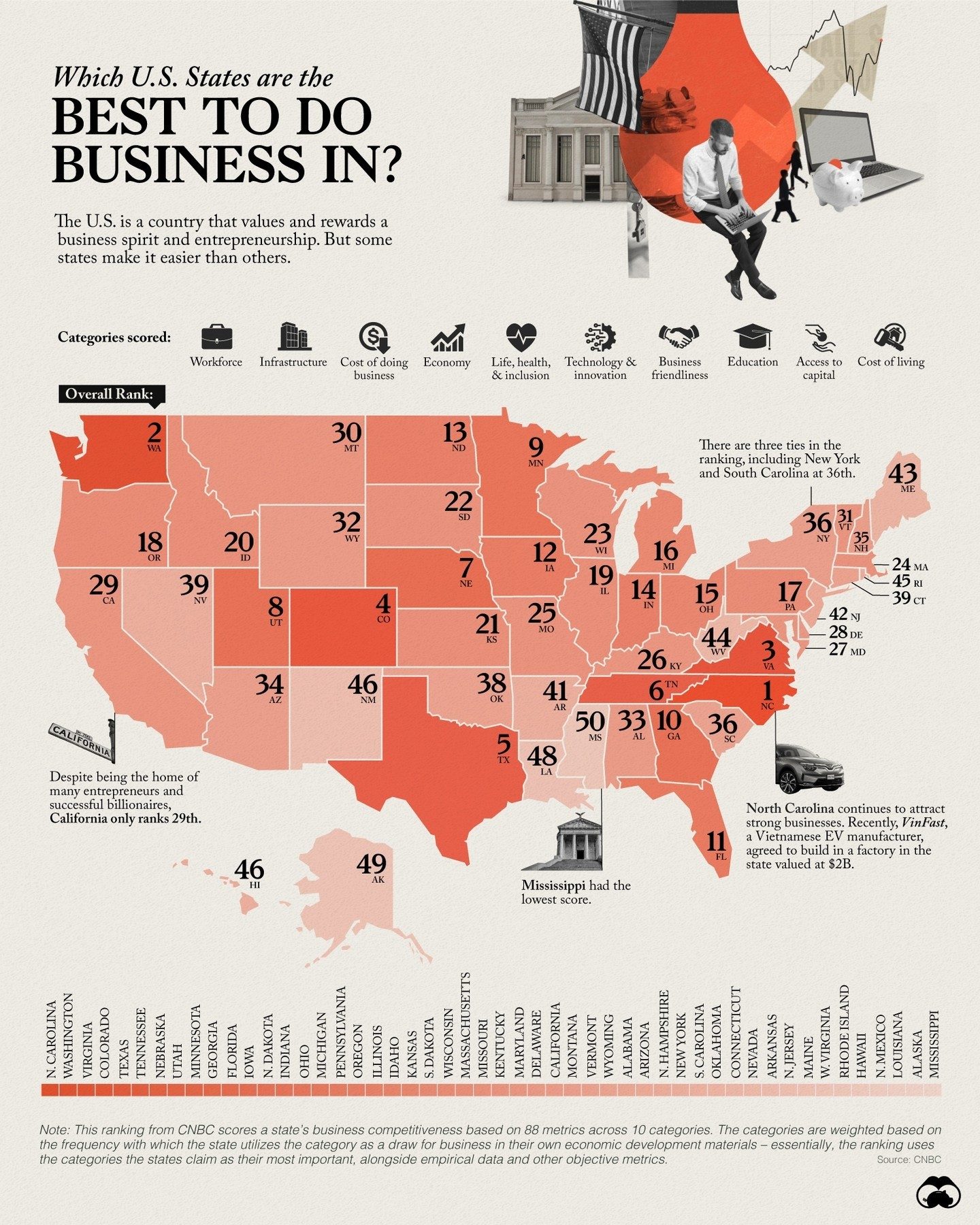
Best States for Business in the U.S.
Starting a business in the United States can be highly rewarding, thanks to a supportive environment and various opportunities. However, the ease and success of starting a business can greatly vary from one state to another. Factors such as the availability of skilled workers, the quality of local infrastructure, access to investors, and an overall business-friendly culture play crucial roles in determining the best states for entrepreneurs.
Why This Matters
Understanding the landscape of business-friendly states is essential for entrepreneurs seeking to establish or expand their ventures. Making informed decisions based on these factors can lead to better operational efficiency, growth opportunities, and long-term success. Whether you are a startup founder or an established business owner, choosing the right state can significantly impact your business's trajectory.
Key Factors Influencing Business-Friendly States
Workforce
A skilled and available workforce is a cornerstone of any successful business. The best states for business boast a diverse and educated workforce. States with strong education systems and vocational training programs often rank higher in this category. Areas with high concentrations of universities and colleges typically offer a steady supply of fresh talent, which can be a significant asset for tech and innovative ventures.
Infrastructure
The quality of infrastructure, including roads, public transportation, and digital connectivity, directly impacts a business's operational efficiency. States with well-developed infrastructure facilitate easier transportation of goods, better access to markets, and enhanced connectivity for remote work and digital services. Business-friendly states often prioritize infrastructure investment to ensure smooth operations and attract more businesses.
Cost of Business
The cost of doing business, including taxes, labor costs, and operational expenses, varies widely across the U.S. Lower operational costs can result in higher profitability and better cash flow, making it easier for businesses to grow and thrive. States that offer tax incentives, lower labor costs, and affordable utilities often top the list of best places to do business.
Economy
A robust and stable economy is crucial for business success. States with strong economic indicators, such as GDP growth, employment rates, and consumer spending, provide a favorable environment for businesses. Economic stability can also lead to increased investment opportunities, making it easier for businesses to secure funding and grow.
Life and Health
For businesses, the quality of life and health of the workforce are critical. States with excellent healthcare systems, affordable housing, and low crime rates often attract and retain a healthy and productive workforce. Businesses in these states can benefit from higher employee satisfaction and lower turnover rates, which can lead to increased productivity and innovation.
Technology and Innovation
Innovative ecosystems and technological advancements play a pivotal role in shaping the future of businesses. States with high levels of innovation, strong Research and Development (R&D) investments, and supportive startup ecosystems provide fertile ground for new ideas and disruptive technologies. These states often have vibrant tech hubs, incubators, and accelerators that foster innovation and entrepreneurship.
Education and Access to Capital
Education and access to capital are essential for the long-term success of any business. States with top-tier educational institutions and robust capital markets offer businesses the resources and expertise needed to grow and compete on a global scale. Access to venture capital, angel investors, and other funding sources can be a game-changer for startups and emerging companies.
Practical Tips for Choosing the Best State for Your Business
-
Conduct Thorough Research: Before selecting a state, conduct comprehensive research on the factors that matter most to your business. Utilize resources like state economic reports, business climate surveys, and industry-specific data to make an informed decision.
-
Consider Long-Term Goals: Think about your business's long-term objectives and choose a state that aligns with your growth plans. Some states may offer immediate benefits, but others may provide more sustainable long-term advantages.
-
Seek Professional Advice: Consult with business consultants, legal advisors, and financial experts who have experience in the states you are considering. Their insights can help you navigate complex regulations and identify potential pitfalls.
-
Evaluate Tax Incentives: Different states offer various tax incentives for businesses. Evaluate these incentives and understand how they can impact your bottom line. Tax breaks on income, property, and sales can significantly reduce your operational costs.
-
Explore Local Networks: Engage with local business communities, chambers of commerce, and industry associations. Building a strong network can provide valuable support, resources, and opportunities for collaboration.
Important Takeaways
- Workforce Availability and Skills: A skilled and available workforce is essential for business success. States with strong education systems and vocational training programs are more likely to offer a diverse and talented workforce.
- Infrastructure Quality: Well-developed infrastructure, including roads, public transportation, and digital connectivity, facilitates smoother operations and better market access.
- Cost of Doing Business: Lower operational costs, including taxes, labor, and utilities, can result in higher profitability and better cash flow.
- Economic Stability: A robust and stable economy provides a favorable environment for business growth and investment opportunities.
- Quality of Life: States with excellent healthcare, affordable housing, and low crime rates offer a better quality of life for employees, leading to higher satisfaction and productivity.
- Innovation and Technology: States with strong innovation ecosystems and technological advancements foster new ideas and disruptive technologies, making them ideal for startups and emerging companies.
- Education and Access to Capital: Top-tier educational institutions and robust capital markets provide businesses with the resources and expertise needed to grow and compete globally.
Conclusion
The United States offers a diverse landscape for entrepreneurs, with each state presenting unique advantages and challenges. By carefully considering factors such as workforce availability, infrastructure quality, cost of business, economic stability, and access to capital, entrepreneurs can make informed decisions about where to start or expand their ventures. The best states for business provide a supportive environment that fosters growth, innovation, and long-term success. Whether you are a startup founder or an established business owner, choosing the right state can significantly impact your business's future.
Watch the Reel
Questions readers ask
Which states are currently ranked as the best for starting a business in 2023?
The rankings can vary slightly depending on the source, but states like Texas, Florida, and Oklahoma are frequently recognized for their business-friendly environments, including factors like low operational costs and a supportive regulatory environment. Other states, such as Utah and North Carolina, are also gaining attention for their strong economies and access to skilled workers.
How does workforce availability impact the choice of state for starting a business?
Workforce availability is crucial because it directly affects your ability to hire and retain talented employees. States with a high concentration of skilled workers, such as Massachusetts and California, can provide a competitive edge in industries that require specialized knowledge. Conversely, states with lower workforce availability might offer incentives to attract businesses, which can be beneficial for certain types of ventures.
What role does infrastructure quality play in determining the best states for business?
Infrastructure quality is essential for operational efficiency. States with well-developed infrastructure, such as transportation networks, reliable utilities, and advanced technology, can significantly reduce operational costs and improve supply chain management. Tennessee and Indiana, for example, are known for their robust infrastructure, making them attractive options for businesses.
How do operational costs vary by state, and why is this important for entrepreneurs?
Operational costs can vary greatly by state, including factors like taxes, rent, and labor costs. States with lower operational costs, such as Oklahoma and Nevada, can be more appealing for startups and small businesses looking to maximize their budget. Higher costs in states like New York and California might be justified by access to larger markets or specific industry clusters, but entrepreneurs need to weigh these factors carefully.
What are some key factors that make a state business-friendly?
A business-friendly state typically offers a combination of low taxes, minimal regulatory burdens, access to capital, a supportive business culture, and a strong workforce. States like Texas and Utah are often highlighted for their pro-business policies and incentives, which can make it easier for new businesses to thrive. Additionally, states with a focus on innovation, such as California and Massachusetts, can offer unique advantages for tech and research-focused ventures.
How can a new business owner access workforce data for a particular state?
New business owners can access workforce data through various sources, including state government websites, labor market information systems, and reports from organizations like the Bureau of Labor Statistics. These resources provide detailed insights into the availability of skilled workers, employment trends, and industry-specific workforce data, helping entrepreneurs make informed decisions about where to locate their business.
What are the benefits of starting a business in a state with a strong economy, such as Oklahoma?
Starting a business in a state with a strong economy, like Oklahoma, can offer numerous benefits including access to a larger customer base, more investment opportunities, and a higher likelihood of attracting and retaining skilled employees. Additionally, a strong economy often correlates with a more stable and supportive business environment, which can be crucial for the long-term success of a new venture.
Related deep dives
Similar reads based on topic and creator.


Recent articles
Fresh deep dives from the latest Reels we unpacked.




Comments
Be the first to comment.