Introduction
Renewable energy installations in the United States are poised for a significant surge, particularly in the solar sector. In 2023, the U.S. is projected to derive over 80% of its new energy installations from renewable sources, including solar, wind, and battery storage. This shift is driven by both policy changes and technological advancements. Let's delve into the states leading this renewable energy revolution and the specific contributions of solar power.
Context / Why this matters
Renewable energy is crucial for reducing greenhouse gas emissions and mitigating climate change. The transition to renewable energy sources like solar and wind power also enhances energy independence and creates job opportunities in green technologies. For consumers, understanding these trends can provide insights into future energy costs, grid stability, and the potential for personal investments in renewable energy systems.
The Role of Solar Power
Dominance of Solar Power
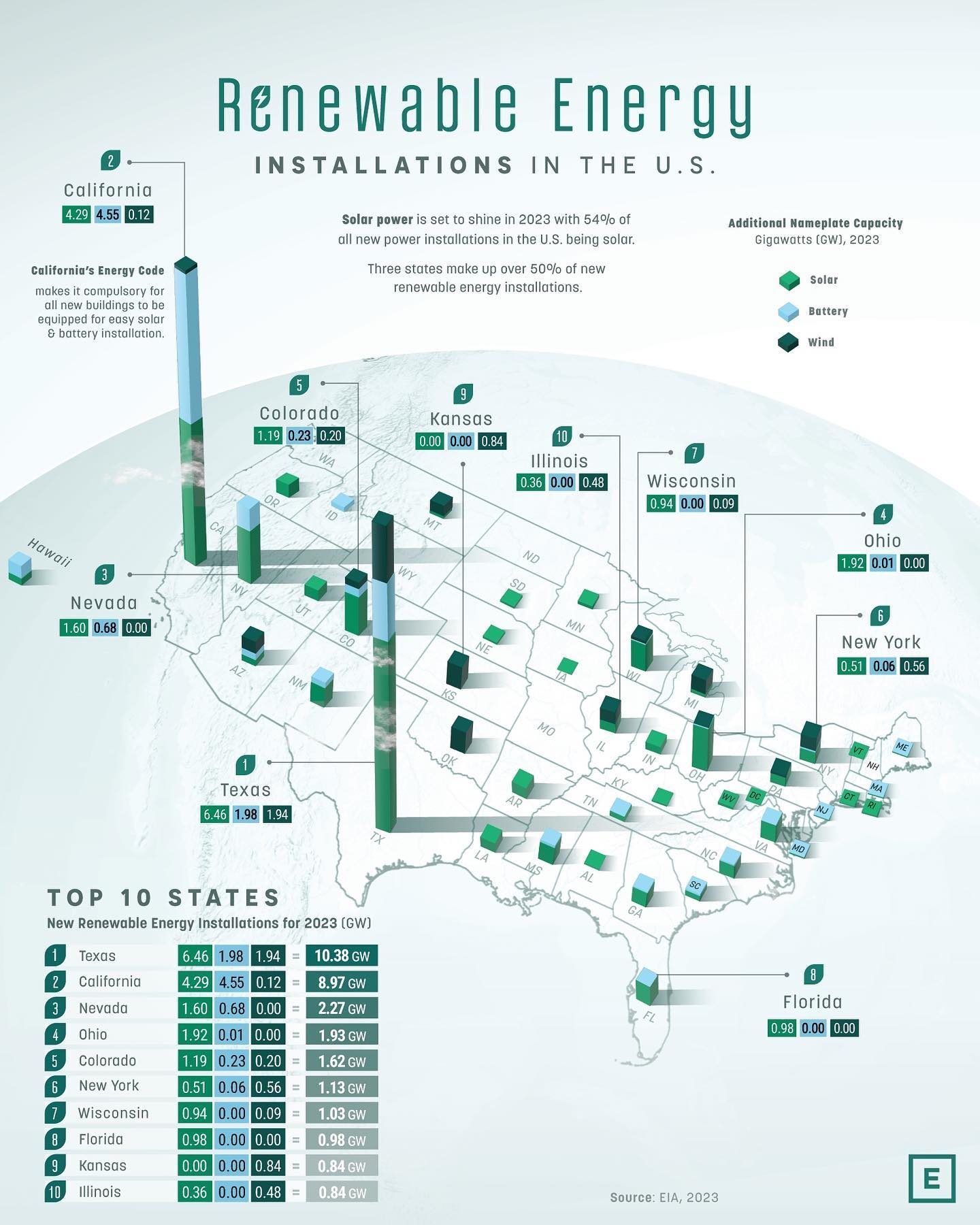
Solar power is set to be the dominant force in new energy installations for 2023, accounting for 54% of all new power installations in the U.S. This surge in solar installations can be attributed to several factors, including advancements in solar technology, falling costs of solar panels, and supportive government policies.
California's Energy Code
California’s Energy Code mandates that all new buildings must be equipped for easy solar battery installation. This policy is a game-changer, ensuring that the infrastructure for renewable energy is integrated into new developments from the start. This proactive approach not only encourages the adoption of solar power but also supports the overall energy efficiency of new buildings.
Top States for Renewable Energy Installations
Top 10 States
Three states—California, Nevada, and Texas—are leading the way in renewable energy installations, making up over 50% of the new capacity. Here is a closer look at the top 10 states and their respective contributions:
-
California
- Additional Nameplate Capacity: 8.97 GW
- Renewable Energy: 4.29 GW
- Battery Storage: 4.55 GW
- California is a powerhouse in renewable energy, driven by its favorable climate, policy support, and technological innovation.
-
Nevada
- Additional Nameplate Capacity: 2.27 GW
- Renewable Energy: 1.60 GW
- Battery Storage: 0.68 GW
- Nevada’s solar capacity is bolstered by its abundant sunshine and a growing number of large-scale solar farms.
-
Ohio
- Additional Nameplate Capacity: 1.93 GW
- Renewable Energy: 1.92 GW
- Battery Storage: 0.01 GW
- Ohio is making strides in wind and solar energy, with community projects and utility-scale installations.
-
Texas
- Additional Nameplate Capacity: 6.46 GW
- Renewable Energy: 1.98 GW
- Battery Storage: 1.94 GW
- Texas is a leader in renewable energy, with a particular focus on wind power and significant investments in storage solutions.
-
Wisconsin
- Additional Nameplate Capacity: 2.27 GW
- Renewable Energy: 1.60 GW
- Battery Storage: 0.68 GW
- Wisconsin is enhancing its energy grid with renewable sources, especially solar and wind.
-
New York
- Additional Nameplate Capacity: 1.13 GW
- Renewable Energy: 0.94 GW
- Battery Storage: 0.20 GW
- New York is investing in renewable energy to meet its ambitious climate goals, focusing on solar and wind.
-
Colorado
- Additional Nameplate Capacity: 1.10 GW
- Renewable Energy: 0.94 GW
- Battery Storage: 0.009 GW
- Colorado benefits from its sunny climate and is a key player in the national solar energy landscape.
-
Florida
- Additional Nameplate Capacity: 0.84GW
- Renewable Energy: 0.51 GW
- Battery Storage: 0.006 GW
- Florida’s abundance of sunshine makes it an ideal location for solar energy installations.
-
Kansas
- Additional Nameplate Capacity: 0.94 GW
- Renewable Energy: 0.36 GW
- Battery Storage: 0.48 GW
- Kansas is boosting its wind energy capacity and making significant progress in solar energy.
-
Illinois
- Additional Nameplate Capacity: 1.62 GW
- Renewable Energy: 0.94 GW
- Battery Storage: 0.09 GW
- Illinois is focusing on both wind and solar energy to diversify its energy portfolio.
Practical tips for those interested in renewable energy
For individuals and businesses looking to tap into the growing trend of renewable energy, here are some practical tips:
- Evaluate Your Energy Needs: Determine your energy consumption to understand the appropriate size and type of renewable energy system.
- Research Local Incentives: Many states offer tax incentives, rebates, and net metering programs for renewable energy installations. Check your state's policies to maximize savings.
- Choose Quality Installers: Select experienced and certified installers to ensure the efficiency and longevity of your renewable energy system.
- Consider Battery Storage: Pairing your renewable energy system with battery storage can enhance energy independence and provide backup power.
Important takeaways
- Solar power is expected to dominate new energy installations in 2023, accounting for 54% of all new power installations in the U.S.
- California, Nevada, and Texas are leading the way in renewable energy installations, contributing over 50% of the new capacity.
- The U.S. is projected to derive over 80% of its new energy installations from renewable sources, including solar, wind, and battery storage.
- California’s Energy Code is driving the integration of solar battery installations in new buildings.
- States are implementing various renewable energy policies and incentives to support the transition to clean energy.
Conclusion
The surge in renewable energy installations, particularly in solar power, is a positive step toward a sustainable future. States like California, Nevada, and Texas are paving the way with significant contributions to the national energy grid. As the U.S. aims to achieve over 80% of its new energy installations from renewable sources, understanding these trends can help individuals and businesses make informed decisions about their energy needs. Whether through policy support, technological advancements, or personal investments, the future of energy in the U.S. is increasingly green.
Watch the Reel
Questions readers ask
Which states are leading the way in renewable energy installations in 2023?
In 2023, California, Nevada, and Texas are the top states for renewable energy installations in the U.S. These states are expected to account for over 50% of the new renewable energy capacity, with solar power being a significant contributor.
What is the primary driver behind the increase in renewable energy installations?
The increase in renewable energy installations is driven by both policy changes and technological advancements. These factors are pushing the U.S. towards a significant surge in renewable energy, particularly in solar, wind, and battery storage sectors.
How much of the new energy installations in 2023 will come from renewable sources?
In 2023, the U.S. is projected to derive over 80% of its new energy installations from renewable sources. This highlights a substantial shift towards clean energy and away from traditional fossil fuels.
What role does solar power play in the renewable energy landscape of 2023?
Solar power is leading the way in renewable energy installations in 2023. This is evident in the significant contributions from states like California, Nevada, and Texas, which are at the forefront of this renewable energy revolution.
Which other states are noteworthy for their renewable energy projects besides the top three?
While California, Nevada, and Texas lead the pack, other states like Illinois and Wisconsin are also making notable contributions to renewable energy. These states are undertaking significant energy projects that add to the overall growth in renewable energy capacity.
How does the expansion of renewable energy sources benefit the environment and economy?
Renewable energy sources, such as solar and wind, are crucial for reducing greenhouse gas emissions and mitigating climate change. Additionally, the transition to renewables enhances energy independence and creates job opportunities in green technologies, providing a dual benefit to both the environment and the economy.
What is the significance of battery storage in the renewable energy sector?
Battery storage is a critical component of the renewable energy sector as it helps to store excess energy generated by renewable sources. This stored energy ensures a reliable supply during periods of low generation, thereby enhancing the overall efficiency and stability of the energy grid.
Related deep dives
Similar reads based on topic and creator.

Recent articles
Fresh deep dives from the latest Reels we unpacked.




Comments
Be the first to comment.