AI and Data Centers Fueling Electricity Demand
The rise in artificial intelligence (AI) and data centers has led to a significant increase in electricity demand. This surge in demand can strain power grids, potentially leading to outages. However, some states are better equipped to handle these power demand surges than others. This is where demand-response programs come into play, helping to balance the grid during peak usage times.
Why This Matters
Understanding which states are most prepared for power demand surges is crucial for ensuring grid stability and sustainability. With the growth of AI and data centers, the demand for electricity is expected to rise exponentially. States that can effectively manage this surge will be better positioned to avoid outages and maintain reliable power supply. Additionally, understanding the capabilities of different states can inform infrastructure investments and policy decisions aimed at enhancing grid resilience.
Detailed Analysis
Peak Demand Savings by State
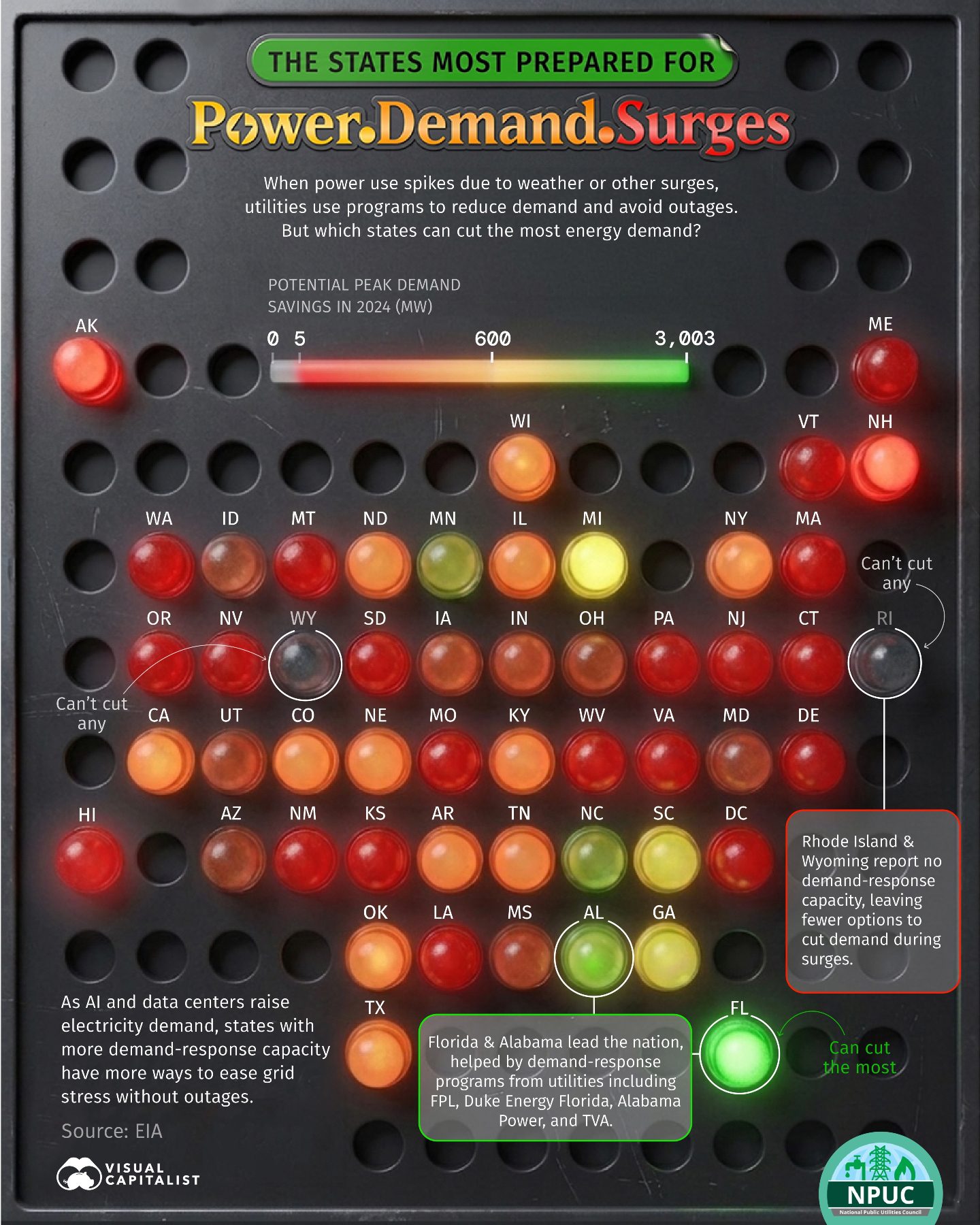
The infographic, which draws on data from the Energy Information Administration (EIA), provides a comprehensive overview of the potential peak demand savings in 2024 for various states. This visual representation allows for a quick comparison of the demand savings in megawatts (MW) across different states.
Leading States in Demand-Response Programs
Florida and Alabama stand out as leaders in demand-response programs. These programs are crucial for managing electricity demand during peak periods, ensuring that the grid remains stable. Florida's initiatives, led by entities like Duke Energy Florida, along with Alabama's efforts spearheaded by Alabama Power and TVA, highlight the effectiveness of well-implemented demand-response strategies.
The Role of Utility Companies
Utility companies play a pivotal role in implementing demand-response programs. For example, Duke Energy Florida and Alabama Power have been instrumental in leading demand-response initiatives in their respective regions. These companies work closely with the Tennessee Valley Authority (TVA) to manage electricity demand effectively, ensuring grid stability.
Practical Tips for Enhancing Grid Stability
Investing in Renewable Energy
Investing in renewable energy sources can help mitigate the strain on the grid. States with robust renewable energy portfolios are often better equipped to manage peak demand, as these sources can provide a steady supply of electricity without the variability of fossil fuels.
Implementing Smart Grid Technologies
Smart grid technologies enable real-time monitoring and management of electricity demand. These technologies can help utility companies predict and respond to peak demand more effectively, ensuring a stable power supply.
Encouraging Energy Efficiency
Promoting energy efficiency through incentives and education can reduce overall electricity demand. States that encourage energy-efficient practices and technologies are better prepared to handle peak demand surges.
Important Takeaways
- Florida and Alabama Lead the Way: These states are currently at the forefront of demand-response programs, providing a model for other states to follow.
- Demand-Response Programs Are Essential: Effective demand-response programs are crucial for managing peak electricity demand and ensuring grid stability.
- Utility Companies Play a Key Role: Entities like Duke Energy Florida, Alabama Power, and TVA are instrumental in implementing and managing demand-response initiatives.
Conclusion
As AI and data centers continue to drive up electricity demand, it is essential for states to be prepared for power demand surges. Florida and Alabama, with their robust demand-response programs, serve as excellent examples of how states can effectively manage peak demand. By investing in renewable energy, implementing smart grid technologies, and promoting energy efficiency, states can enhance their grid stability and sustainability. Understanding the potential peak demand savings in 2024, as highlighted by the EIA, provides valuable insights into which states are best positioned to handle future electricity demands.
Watch the Reel
Questions readers ask
Which states are leading in managing AI-driven power demand surges?
States like Florida and Alabama are notably effective in managing AI-driven power demand surges. They employ demand-response programs that help balance the grid during peak usage times, ensuring stability and reliability. These programs are crucial as AI and data centers continue to drive up electricity demand.
How do demand-response programs work to maintain grid stability?
Demand-response programs incentivize consumers to reduce or shift their electricity usage during peak demand periods. This can be achieved through automated systems or voluntary participation, helping to prevent grid overloads and potential outages. These programs are particularly important as AI and data centers increase electricity consumption.
How can understanding power demand surges guide infrastructure investments?
By identifying which states are best prepared for power demand surges, policymakers and investors can make informed decisions about where to allocate resources. This includes investing in grid upgrades, renewable energy sources, and advanced energy management technologies. Florida and Alabama are strong examples of states ready for AI-driven power demand surges.
What role do AI data centers play in increasing electricity demand?
AI data centers require significant amounts of electricity to operate, contributing to the overall surge in power demand. As AI technologies continue to advance, the need for data processing and storage increases, placing additional strain on power grids. States that can effectively manage this demand will be better positioned to support the growth of AI and data centers.
Which states are among the best for AI energy demand according to the EIA peak demand data?
States that rank high in managing peak demand, such as Florida and Alabama, are often well-prepared for AI energy demand. The Energy Information Administration (EIA) peak demand data can provide insights into which states have robust energy management strategies. These states are typically equipped with advanced grid technologies and effective demand-response programs.
What are the benefits of energy savings from AI-driven demand-response programs?
Energy savings from AI-driven demand-response programs can be significant. These programs optimize energy use by reducing consumption during peak times, leading to cost savings for consumers and lower strain on the grid. Additionally, they contribute to sustainability goals by promoting more efficient use of resources and reducing the need for additional power generation.
How can states prepare for the increasing AI energy demand from data centers?
States can prepare for the increasing AI energy demand from data centers by investing in advanced grid technologies, renewable energy sources, and demand-response programs. Collaborating with technology companies to develop energy-efficient data center solutions and promoting policies that incentivize energy conservation can also help. States like Florida and Alabama serve as models for effective energy management strategies.
Related deep dives
Similar reads based on topic and creator.


Recent articles
Fresh deep dives from the latest Reels we unpacked.




Comments
Be the first to comment.