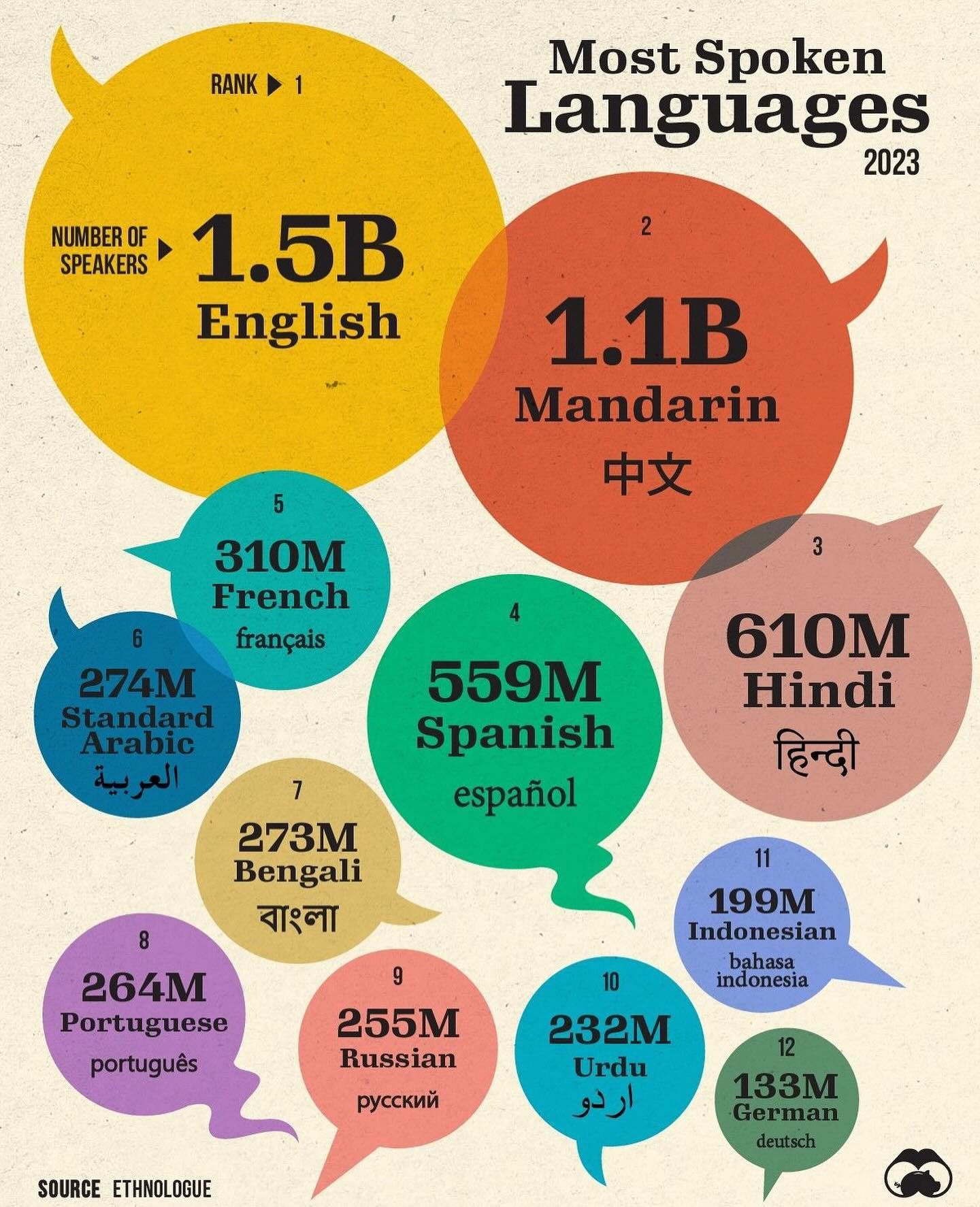
Most Spoken Languages: A Global Ranking
English, with its origins in the United Kingdom, has become the dominant global language for business and politics. As of 2023, it boasts 1.5 billion speakers worldwide, making it the most spoken language globally. Language enthusiasts and professionals alike might be interested in the diverse landscape of the world's most spoken languages. This article ranks the top spoken languages, offering insights into the global linguistic tapestry.
Context / Why This Matters
The distribution of language speakers around the world reflects historical, cultural, and economic influences. Understanding the most spoken languages provides valuable context for global communication, trade, and diplomacy. Whether you're a traveler, a linguist, or a business professional, knowing which languages are most widely used can enhance your interactions and strategies.
Main Discussion
English: The Global Language
English tops the list with 1.5 billion speakers. Its prevalence in international business, diplomacy, and academia makes it an essential language for global communication. English is also the official language in many countries, further solidifying its status as a global lingua franca.
Mandarin Chinese: The Most Natives Speakers
Mandarin Chinese follows closely with 1.1 billion speakers. While it is predominantly spoken in China, it also has significant speaker populations in countries like Singapore and Taiwan. Mandarin's complex writing system and tonal nature present unique challenges to non-native speakers, but its growing influence in global markets makes it a crucial language to learn.
Hindi: The Power of South Asia
Hindi, spoken by approximately 610 million people, is a significant language in South Asia. It is one of the official languages of India and holds cultural and literary importance in the region. Hindi's influence extends beyond India, with speakers in countries like Nepal and Fiji.
Spanish: The Language of the Americas
Spanish, with 559 million speakers, is widely spoken in Latin America and Spain. It is a romance language, sharing roots with Italian, French, and Portuguese. Spanish's cultural and historical significance makes it a key language for communication in the Americas and Europe.
Other Prominent Languages
French, with 310 million speakers, is an official language in 29 countries and is widely spoken across Europe, Africa, and parts of Asia. It is known for its rich literature and cultural heritage.
Indonesian, also known as Bahasa Indonesia, has 199 million speakers. It is the official language of Indonesia, a country with the fourth-largest population in the world. Indonesian's simplicity and phonetic nature make it relatively easy to learn.
Bengali, spoken by 264 million people, is the official language of Bangladesh and the Indian state of West Bengal. It has a rich literary tradition and is an important language in South Asia.
Portuguese, with 255 million speakers, is the official language of Portugal, Brazil, and several African countries. It is a romance language known for its melodious sound and is widely spoken in the Lusophone world.
Russian, spoken by 232 million people, is the official language of Russia and is widely spoken in Eastern Europe and Central Asia. It is known for its complex grammar and rich literary tradition.
Urdu, with 133 million speakers, is the official language of Pakistan and is also widely spoken in India. It has a rich literary and poetic tradition.
German, spoken by 132 million people, is the official language of Germany, Austria, and Switzerland. It is known for its complex grammar and is an important language in academia and science.
The World's Languages: A Global Mosaic
This ranking provides a snapshot of the world's linguistic diversity. Languages evolve and change over time, influenced by cultural interactions, globalization, and technological advancements. Understanding the distribution and influence of languages offers a deeper appreciation for the cultural richness of our world.
Practical Tips
Learning a New Language
If you're interested in learning a new language, consider the following tips:
- Set Clear Goals: Define why you want to learn the language and set achievable goals.
- Immerse Yourself: Surround yourself with the language through media, travel, and social interactions.
- Practice Regularly: Consistency is key. Practice speaking, listening, reading, and writing daily.
- Use Language Learning Apps: Tools like Duolingo, Babbel, and Rosetta Stone can be very helpful.
- Join a Language Exchange Program: Partner with a native speaker to practice and learn from each other.
Choosing the Right Language
When deciding which language to learn, consider the following factors:
- Interest and Motivation: Choose a language that you find interesting or that aligns with your personal or professional goals.
- Practicality: Consider languages that are widely spoken in regions you plan to visit or work in.
- Cultural Significance: Learn about the culture and history associated with the language to enhance your learning experience.
Navigating Language Diversity
Understanding the intricate web of languages spoken around the world can offer numerous advantages, whether for personal growth, career advancement, or cultural exchange. Embrace the diversity and explore the richness of languages with an open mind.
Important Takeaways
- Global Dominance: English remains the most influential and widely spoken language globally, followed by Mandarin Chinese.
- Regional Significance: Languages like Hindi, Spanish, and Bengali hold significant cultural and political importance in their respective regions.
- Cultural Richness: Each language offers unique insights into its associated culture, history, and literature.
- Practical Applications: Learning a new language can open doors to new opportunities, enrich personal experiences, and foster a deeper understanding of the world.
Conclusion
The world's most spoken languages reflect a rich tapestry of cultures, histories, and societies. Whether you're a language enthusiast, a traveler, or a professional, understanding the global linguistic landscape can enhance your interactions and broaden your perspective. Embrace the diversity of languages and explore the beauty and complexity of human communication.
Watch the Reel
Questions readers ask
Which language has the most native speakers in 2023?
Mandarin Chinese has the most native speakers in 2023, with over 918 million people speaking it as their first language. However, English is the most spoken language overall, including both native and non-native speakers.
How many people speak Spanish worldwide in 2023?
Spanish is spoken by over 559 million people worldwide in 2023, making it the second most spoken language by number of speakers. It is an official language in 21 countries, primarily in Latin America and Spain.
Why is English so widely spoken globally?
English is widely spoken globally due to historical factors such as British colonialism and American cultural influence. It is often used as a lingua franca in international business, science, technology, and aviation, further boosting its prevalence.
How many people speak Hindi in 2023?
Hindi is spoken by over 645 million people in 2023, including both native and non-native speakers. It is one of the official languages of India and is widely spoken in countries with large Indian diaspora populations.
What are the top 3 most spoken languages in the world in 2023?
The top 3 most spoken languages in the world in 2023 are English, Mandarin Chinese, and Hindi. English has the most total speakers, while Mandarin has the most native speakers, and Hindi comes in third with a significant number of speakers.
How do language rankings reflect global dynamics?
Language rankings reflect global dynamics by showing the spread of languages based on historical, cultural, and economic factors. They provide insights into communication patterns, cultural influences, and the prevalence of languages in international contexts, such as business, politics, and diplomacy.
What is the difference between native and total speakers?
Native speakers are those who have learned a language since birth or from a very young age. Total speakers include both native speakers and non-native speakers, who have learned the language at a later stage in life. The difference between the two provides insights into a language's reach and influence beyond its traditional native communities.
Recent articles
Fresh deep dives from the latest Reels we unpacked.




Comments
Be the first to comment.