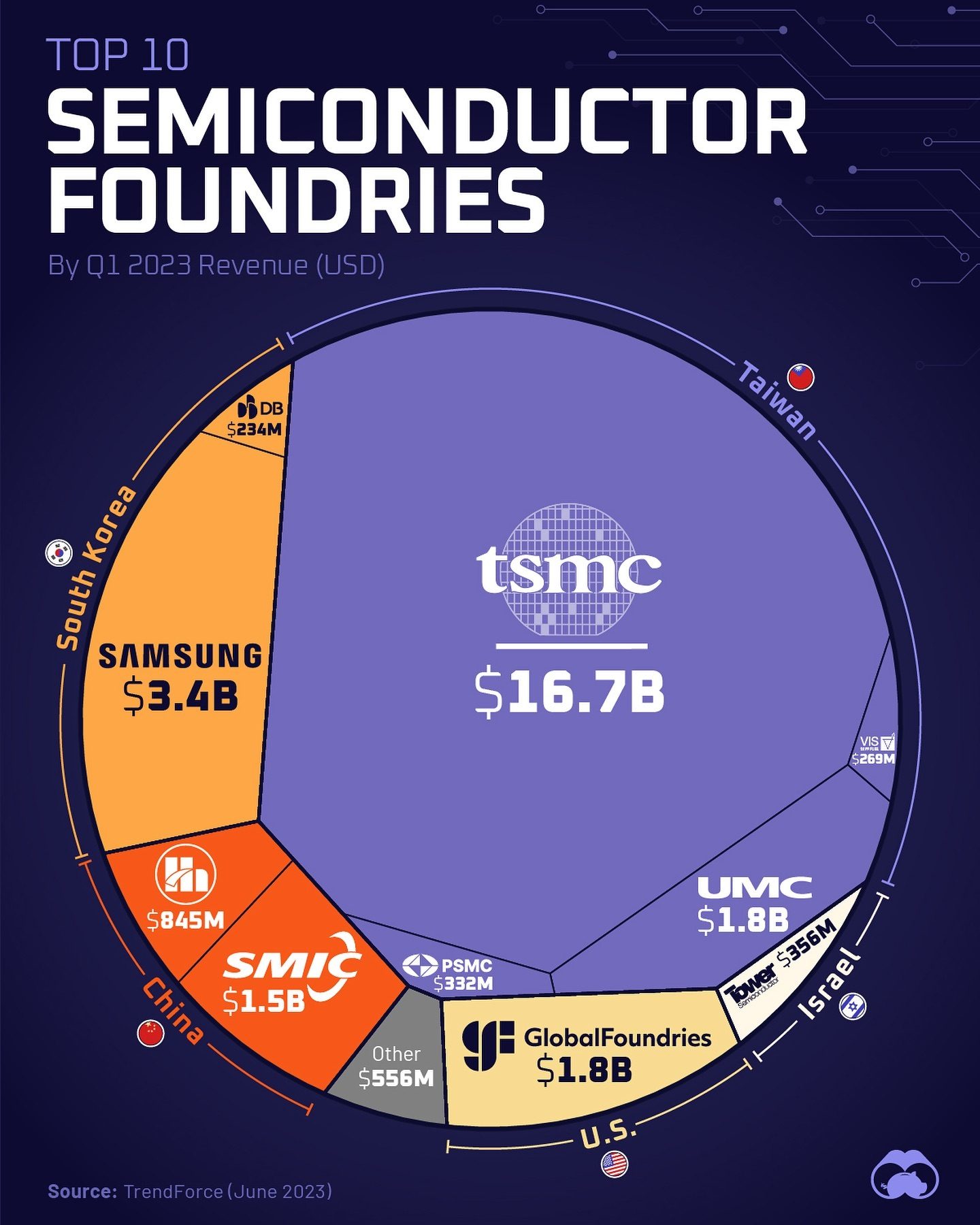
Semiconductor Foundries Revenue
Semiconductor chips are essential to modern technology, with foundries generating billions of dollars in revenue. The semiconductor industry is a cornerstone of today's technological landscape, powering everything from smartphones to advanced computing systems. To understand the current state of the semiconductor market, let's delve into the revenue data of the top semiconductor foundries in Q1 2023.
Why This Matters
The semiconductor industry is pivotal for global technological advancements. Semiconductor foundries are the manufacturers that produce these crucial chips, and their financial performance reflects the broader demand and supply dynamics in the tech sector. Understanding the revenue figures of these top players provides insights into market trends, technological leadership, and future investment opportunities.
Main Discussion
Global Revenue Breakdown
In Q1 2023, the top semiconductor foundries reported significant revenues, reflecting the widespread demand for their products. The data, sourced from Trendforce, gives a clear picture of the market leaders and their contributions to the global semiconductor revenue.
Top Revenue Earners
-
TSMC (Taiwan):
- TSMC, the largest semiconductor foundry, reported $16.3 billion in revenue. This is a testament to its leading position in the industry, driven by its advanced manufacturing capabilities and partnerships with major tech companies.
- TSMC's success is attributed to its cutting-edge technology, particularly in the production of 5nm and 7nm chips, which are in high demand for applications such as smartphones, artificial intelligence, and high-performance computing.
-
Samsung (South Korea):
- Following closely, Samsung generated $3.4 billion in revenue. Samsung's foundry business is a key player in the industry, leveraging its extensive manufacturing expertise and vertical integration with its own semiconductor products.
- Samsung's revenue comes from a diverse range of chips, including memory chips (DRAM and NAND) and logic chips, catering to various market segments.
-
SMIC (China):
- Semiconductor Manufacturing International Corporation (SMIC) earned $1.5 billion in revenue. SMIC is a significant player in the Chinese semiconductor market, focusing on both domestic and international markets.
- The company's revenue is driven by its role in supporting China's growing demand for semiconductors, as well as its efforts to reduce the country's reliance on foreign technology.
-
UMC (Taiwan) and GlobalFoundries (Israel):
- Both companies reported $1.8 billion in revenue. UMC and GlobalFoundries are known for their specialized manufacturing capabilities and diverse customer base.
- UMC's revenue is bolstered by its strong presence in the automotive and IoT sectors, while GlobalFoundries focuses on areas like communications, computing, and consumer electronics.
-
GlobalFoundries (USA) and Taiwan:
- The company has two key locations, globalFoundries reported $1.8 billion in revenue for each location.
- It has strategic importance in the automotive, communications, and consumer electronics sectors.
- The company's revenue comes from its focus on specialized manufacturing processes, such as 14nm and 22nm.
-
PSMC (Taiwan):
- PSMC generated $332 million in revenue. PSMC is a key player in the semiconductor industry, leveraging its manufacturing capabilities and partnerships with major tech companies.
-
Other Foundries:
- Collectively, other foundries accounted for $556 million in revenue. These include smaller players and specialized manufacturers that cater to niche markets and specific technological needs.
Regional Insights
The revenue data also highlights the regional distribution of semiconductor manufacturing. Taiwan, South Korea, and China are the key regions driving the global semiconductor industry. These regions collectively make up the lion's share of the market, reflecting their advanced manufacturing capabilities and strategic importance in the global supply chain.
Practical Tips
For those interested in investing in the semiconductor industry, here are a few practical tips:
- Diversify Your Portfolio: Investing in multiple semiconductor foundries can help mitigate risk and maximize returns. Look for companies with diverse product portfolios and strong market positions.
- Stay Informed on Technological Trends: Keep an eye on advancements in semiconductor technology, such as the transition to smaller node sizes (e.g., 5nm, 3nm). These trends can significantly impact the financial performance of foundries.
- Consider Geopolitical Factors: The semiconductor industry is highly sensitive to geopolitical events. Stay informed about trade policies, supply chain disruptions, and regional market dynamics that could affect the industry.
- Analyze Financial Metrics: Pay attention to key financial metrics, such as revenue growth, profit margins, and return on investment. These metrics can provide valuable insights into a company's financial health and long-term prospects.
Important Takeaways
- Market Dominance by TSMC and Samsung: TSMC and Samsung lead the market in terms of revenue, reflecting their technological prowess and extensive customer base.
- Regional Concentration: Taiwan, South Korea, and China are the powerhouses of the semiconductor industry, each contributing significantly to global revenues.
- Specialized Manufacturing: Companies like UMC and GlobalFoundries demonstrate the importance of specialized manufacturing capabilities in catering to diverse market segments.
- Emerging Players: Companies like PSMC and SMIC are emerging as significant players, driven by regional demand and strategic partnerships.
Conclusion
The semiconductor industry is a dynamic and highly competitive sector, with foundries playing a crucial role in driving technological advancements. The revenue data for Q1 2023 provides a snapshot of the market leaders and their contributions to the global semiconductor ecosystem. As the demand for semiconductors continues to grow, driven by advancements in technology and increasing adoption across various industries, the role of these foundries will only become more critical. Staying informed about the latest trends and developments in the semiconductor industry can help stakeholders make strategic decisions and capitalize on emerging opportunities.
Watch the Reel
Questions readers ask
Which companies were the top semiconductor foundries in terms of revenue for Q1 2023?
The top semiconductor foundries for Q1 2023 were Samsung and TSMC. TSMC generated over $16 billion in revenue, demonstrating its significant market position. Samsung, along with other major players, also contributed notably to the overall semiconductor industry revenue.
What factors contributed to the high semiconductor foundry revenue in Q1 2023?
The high revenue can be attributed to the increasing demand for semiconductor chips, driven by the growth in various tech sectors like smartphones, computing, and advanced technologies. The demand for these chips has significantly boosted the revenue of top semiconductor foundries.
How does TSMC's Q1 2023 revenue compare to other top semiconductor companies?
TSMC's Q1 2023 revenue of over $16 billion positions it as a leader in the semiconductor foundry market. This figure is a strong indicator of TSMC's dominance in advanced manufacturing, outpacing other major players such as Samsung, SMIC, UMC, and GlobalFoundries.
What insights can be gained from analyzing Q1 2023 semiconductor foundry revenues?
Analyzing Q1 2023 semiconductor foundry revenues provides a snapshot of the broader tech industry's health and demand trends. High revenues indicate a robust market for semiconductor chips, which are crucial for various modern technologies. This analysis can help predict future market trends and the performance of key semiconductor players.
Why is the semiconductor industry considered pivotal for global technological advancements?
The semiconductor industry is pivotal because it supplies the chips that power modern technologies, from consumer electronics to advanced computing systems. The financial performance of semiconductor foundries reflects the global demand for these chips, influencing the tech sector's growth and innovation.
What trends in semiconductor chip demand are evident from Q1 2023 revenue reports?
Q1 2023 revenue reports indicate a sustained high demand for semiconductor chips, fueled by the increasing reliance on technology across various sectors. This trend underscores the importance of semiconductor foundries in meeting global technological needs and driving innovation.
Related deep dives
Similar reads based on topic and creator.


Recent articles
Fresh deep dives from the latest Reels we unpacked.




Comments
Be the first to comment.