U.S. Electricity Demand: A 46% Surge by 2050
The U.S. electricity demand is projected to increase by 46% by 2050, driven by several key sectors. This significant growth is not just a statistic; it reflects broader trends in energy consumption and infrastructure development. Understanding which sectors are driving this surge can help stakeholders, from policymakers to investors, to prepare for the future.
Context / Why this matters
Electricity demand is a critical indicator of economic activity and technological advancement. With a projected 46% increase by 2050, it highlights the growing reliance on electricity across various sectors. This surge is driven by factors such as population growth, technological advancements, and the shift towards electric vehicles (EVs) — all of which demand significant amounts of energy.
Main discussion
Residential Sector
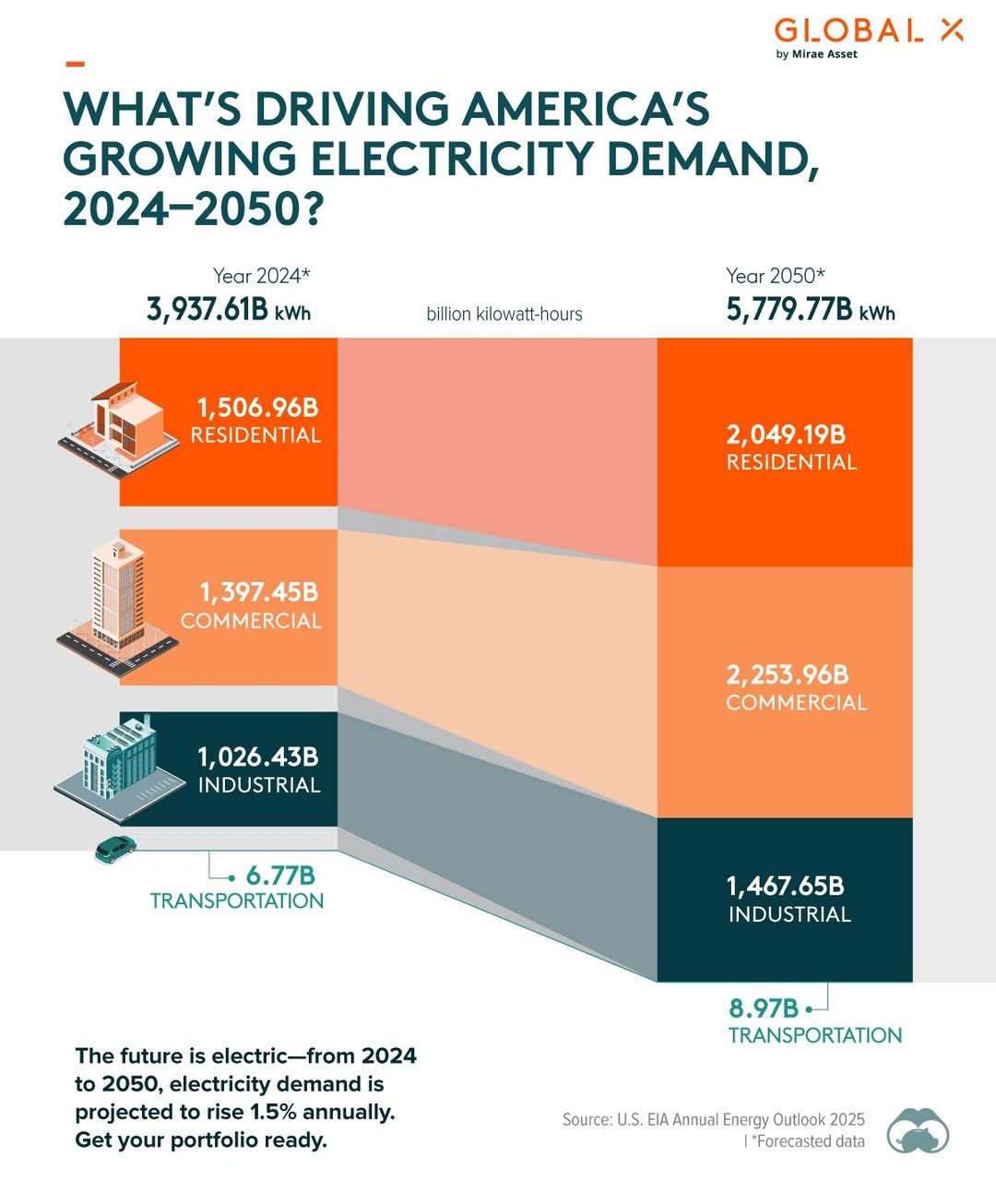
The residential sector is expected to see a substantial increase in electricity demand. By 2050, the demand is forecasted to reach 2,049.19 billion kilowatt-hours (kWh), up from 1,506.96 billion kWh in 2024. This growth can be attributed to several factors, including an increase in household size, the adoption of smart home technologies, and the rise in remote work, all of which require more electricity.
Commercial Sector
The commercial sector is also projected to experience significant growth, with demand expected to rise from 1,397.45 billion kWh in 2024 to 2,253.96 billion kWh by 2050. This sector includes offices, retail spaces, and other commercial buildings, all of which are increasingly reliant on electricity for lighting, heating, cooling, and powering digital infrastructure. The integration of advanced technologies, such as AI and IoT, in commercial settings further fuels this demand.
Industrial Sector
Industrial demand for electricity is set to increase from 1,026.43 billion kWh in 2024 to 1,467.65 billion kWh by 2050. This growth is driven by the increasing use of automation and digital technologies in manufacturing, as well as the expansion of data centers and other energy-intensive facilities. The industrial sector's demand for electricity is critical for economic development and innovation.
Transportation Sector
The transportation sector, although smaller in comparison, is also expected to see a rise in electricity demand, from 6.77 billion kWh in 2024 to 8.97 billion kWh by 2050. This increase is primarily due to the growing adoption of electric vehicles (EVs), which require reliable and extensive charging infrastructure. As more consumers and businesses switch to EVs, the demand for electricity in this sector will continue to grow.
Practical tips
To prepare for the projected surge in electricity demand, several strategies can be implemented:
-
Invest in Renewable Energy: Transitioning to renewable energy sources can help meet the growing demand for electricity while reducing carbon emissions. Investing in solar, wind, and other renewable energy sources can provide a sustainable solution for the energy needs of the future.
-
Improve Energy Efficiency: Enhancing energy efficiency in residential, commercial, and industrial sectors can help manage the increased demand. This can be achieved through the use of energy-efficient appliances, smart grids, and building technologies that optimize energy use.
-
Increase Electricity Generation Capacity: Expanding the capacity of existing power plants and building new ones can help meet the rising demand. This includes investing in both traditional and renewable energy sources to ensure a reliable supply of electricity.
-
Develop Advanced Storage Solutions: Advances in energy storage technologies, such as batteries and pumped hydro storage, can help balance the supply and demand of electricity. These solutions can store excess energy during periods of low demand and release it during peak usage times.
Important takeaways
The projected 46% increase in U.S. electricity demand by 2050 highlights the need for strategic planning and investment in the energy sector. Understanding the drivers of this growth, from the residential to the transportation sectors, can help stakeholders make informed decisions. By focusing on renewable energy, energy efficiency, and advanced storage solutions, the U.S. can meet the rising demand for electricity while promoting a sustainable energy future.
The future is electric, and preparing for the energy needs of tomorrow will require a multifaceted approach. From investing in renewable energy to improving energy efficiency, these strategies will help ensure a reliable and sustainable energy supply.
Conclusion
The projected 46% increase in U.S. electricity demand by 2050 underscores the need for proactive measures. By understanding the key sectors driving this growth and implementing practical strategies, stakeholders can prepare for the future and ensure a reliable energy supply.
Watch the Reel
Questions readers ask
What are the primary sectors contributing to the 46% surge in U.S. electricity demand by 2050?
The primary sectors driving the surge in U.S. electricity demand by 2050 include residential, commercial, industrial, and transportation. The shift towards electric vehicles, population growth, and increased reliance on technology are key contributors to this significant increase.
How will the transportation sector impact future electricity demand in the U.S.?
The transportation sector is expected to significantly impact future electricity demand due to the growing adoption of electric vehicles (EVs). As more consumers and businesses switch to EVs, the demand for electricity to power these vehicles will rise substantially.
What role does the industrial sector play in the anticipated electricity demand growth by 2050?
The industrial sector will play a crucial role in the anticipated electricity demand growth by 2050. As industries adopt more automated and technologically advanced processes, the need for reliable and efficient electricity sources will increase.
What factors are driving the rise in commercial electricity demand in the U.S.?
The rise in commercial electricity demand is driven by factors such as increased use of digital technologies, growth in data centers, and the expansion of e-commerce. Commercial buildings will require more electricity to support these advancements, leading to higher demand.
Why is understanding the future electricity demand trends important for stakeholders?
Understanding future electricity demand trends is important for stakeholders to make informed decisions about infrastructure development, policy-making, and investment. By anticipating the growth in demand, stakeholders can better prepare for the necessary changes and ensure a stable and efficient electricity supply.
How does the projected 46% increase in electricity demand by 2050 impact policy-making and infrastructure development?
The projected 46% increase in electricity demand by 2050 will have significant implications for policy-making and infrastructure development. Policymakers will need to prioritize investments in renewable energy sources and grid modernization to meet the growing demand sustainably. Infrastructure development will focus on expanding and upgrading power generation and distribution systems to accommodate the surge in electricity usage.
What are the key considerations for the residential sector in the context of increasing electricity demand by 2050?
In the residential sector, key considerations include the growing need for electricity to power smart homes, electric vehicles, and energy-efficient appliances. Homeowners and policymakers should focus on adopting energy-efficient practices and investing in renewable energy sources to manage the increasing demand and reduce environmental impact.
Related deep dives
Similar reads based on topic and creator.


Recent articles
Fresh deep dives from the latest Reels we unpacked.




Comments
Be the first to comment.