Pharmaceutical Market Analysis
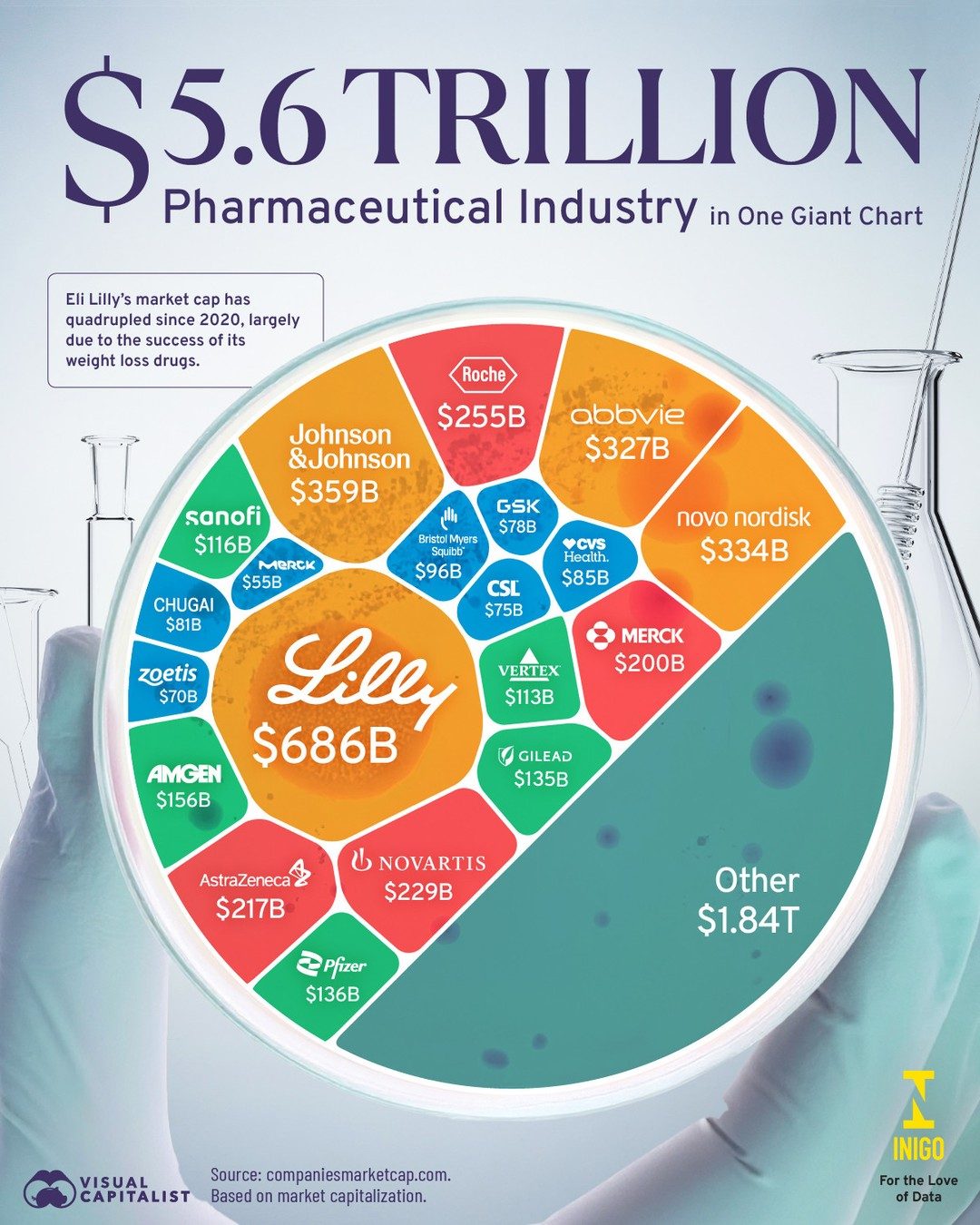
The pharmaceutical industry, valued at a staggering $5.66 trillion, plays a pivotal role in shaping healthcare. From influencing drug pricing and driving innovation to impacting patient care and global markets, pharmaceutical companies are key players in the healthcare ecosystem.
Context / Why this matters
The pharmaceutical market's size and influence are undeniable, making it crucial to understand the companies that dominate this landscape. Market capitalization serves as a key indicator of a company's value and influence. By examining the market capitalization of leading pharmaceutical companies, we can gain insights into the industry's dynamics and the factors driving its growth.
Main discussion
The top pharmaceutical companies by market capitalization
Several pharmaceutical giants stand out in the industry, each with a significant impact on the market. Here are some of the top players:
Eli Lilly
Eli Lilly & Company, often simply referred to as Eli Lilly, has seen a remarkable increase in its market capitalization. Since 2020, its market cap has quadrupled, largely due to the success of its weight-loss drugs. Currently, Eli Lilly is valued at $686 billion.
Roche
Roche, a Swiss multinational healthcare company, holds a market capitalization of $255 billion. Roche is known for its innovative medicines and diagnostics, contributing significantly to the pharmaceutical industry.
AbbVie
AbbVie, an American biopharmaceutical company, has a market capitalization of $327 billion. The company is renowned for its work in immunology, oncology, and other therapeutic areas.
GSK
GSK (GlaxoSmithKline) is a British multinational pharmaceutical company with a market capitalization of $78 billion. GSK focuses on research in vaccines, consumer healthcare, and pharmaceuticals.
Johnson & Johnson
Johnson & Johnson, a multinational corporation that develops, manufactures, and sells a wide range of healthcare products, has a market capitalization of $359 billion. The company is a leader in pharmaceuticals, medical devices, and consumer packaged goods.
Sanofi
Sanofi, a French multinational pharmaceutical company, has a market capitalization of $168 billion. Sanofi is known for its work in rare diseases, multiple sclerosis, and oncology.
Merck
Merck & Co., Inc. (known as Merck Sharp & Dohme outside the United States and Canada), is a global healthcare company with a market capitalization of $81 billion. Merck is involved in pharmaceuticals, vaccines, biologic therapies, and animal health.
Other notable companies
Several other pharmaceutical companies also hold significant market shares. Vertex Pharmaceuticals, with a market capitalization of $113 billion, is known for its work in cystic fibrosis treatments. Amgen, valued at $156 billion, focuses on biotechnology. Gilead Sciences, with a market capitalization of $135 billion, is renowned for its HIV and hepatitis treatments.
Practical tips
Understanding the pharmaceutical market can provide valuable insights for investors, healthcare professionals, and patients alike. Here are some practical tips:
- Investors: Pay attention to a company's market capitalization and its recent innovations, as these factors can significantly impact stock performance.
- Healthcare professionals: Stay informed about the latest research and developments from top pharmaceutical companies to provide the best care for patients.
- Patients: Be aware of the companies behind the medications you are prescribed, as this can provide context for pricing and availability.
Important takeaways
- The pharmaceutical industry is a multi-trillion-dollar market with significant influence on global healthcare.
- Top pharmaceutical companies, such as Eli Lilly, Roche, and AbbVie, have substantial market capitalizations, reflecting their impact on the industry.
- Innovations in drug development, particularly in areas like weight loss and rare diseases, are driving market growth.
- Understanding the pharmaceutical market's dynamics can provide valuable insights for investors, healthcare professionals, and patients.
Conclusion
The pharmaceutical industry is a complex and dynamic landscape. By examining the market capitalization of leading companies, we gain insights into the factors driving growth and innovation. Eli Lilly's success with weight-loss drugs, Roche's contributions to healthcare innovation, and the diverse portfolio of Johnson & Johnson are just a few examples of how these companies shape the industry. Whether you are an investor, a healthcare professional, or a patient, understanding the pharmaceutical market's dynamics can provide valuable insights and context for navigating this critical sector.
Watch the Reel
Questions readers ask
What is market capitalization and why is it important in the pharmaceutical industry?
Market capitalization, often referred to as market cap, is the total market value of a company's outstanding shares. In the pharmaceutical industry, market cap is a crucial metric as it reflects a company's size, influence, and financial health. It provides insights into a company's ability to invest in research and development, acquire other firms, and drive industry trends.
Who are the top pharmaceutical companies by market capitalization?
As of the latest data, the top pharmaceutical companies by market capitalization include industry giants such as Johnson & Johnson, Roche Pharmaceuticals, and Eli Lilly. Other notable mentions include AbbVie, which has a significant presence in the healthcare market. These companies are among the biggest players in the pharmaceuticals market, influencing drug pricing, innovation, and global healthcare trends.
How does market capitalization reflect a pharmaceutical company's influence on healthcare?
A high market capitalization often correlates with a company's ability to shape healthcare policies, drive innovation, and impact patient care. Leading pharmaceutical companies with substantial market caps can invest heavily in research and development, leading to new drug discoveries and treatments. They also have a significant influence on drug pricing and access to medications, making them key players in the healthcare ecosystem.
What factors drive the growth of the pharma industry?
The growth of the pharmaceutical industry is driven by several factors, including advancements in medical research, increasing demand for innovative treatments, and the aging population. Additionally, mergers and acquisitions, strategic partnerships, and investments in biotechnology play a crucial role in driving industry growth. The top pharmaceutical companies often lead these initiatives, contributing to the overall expansion of the market.
How does the market capitalization of companies like Johnson & Johnson and Eli Lilly compare?
Johnson & Johnson and Eli Lilly are both prominent players in the pharmaceutical industry, but their market capitalizations can vary significantly. Johnson & Johnson, with its diverse portfolio of pharmaceuticals, consumer health products, and medical devices, generally has a higher market cap. Eli Lilly, known for its focus on diabetes, oncology, and immunology, also has a substantial market capitalization but typically ranks lower than Johnson & Johnson in terms of market cap.
What role do mergers and acquisitions play in the pharmaceutical industry's top 10 market cap rankings?
Mergers and acquisitions (M&A) are significant drivers in the pharmaceutical industry's top 10 market cap rankings. These strategic moves allow companies to expand their product portfolios, enter new markets, and enhance their competitive positions. By acquiring other firms, pharmaceutical companies can access innovative therapies, increase market share, and boost their overall market capitalization, often leading to shifts in the rankings of the industry's top players.
Why is it important to analyze the market capitalization of pharmaceutical companies?
Analyzing the market capitalization of pharmaceutical companies provides valuable insights into the industry's competitive landscape, investment opportunities, and future trends. By understanding the financial health and influence of leading pharmaceutical companies, investors, healthcare providers, and policymakers can make informed decisions. This analysis helps in assessing the potential impact of new drugs, mergers, and acquisitions on the market, as well as the overall direction of the pharmaceutical industry.
Recent articles
Fresh deep dives from the latest Reels we unpacked.




Comments
Be the first to comment.