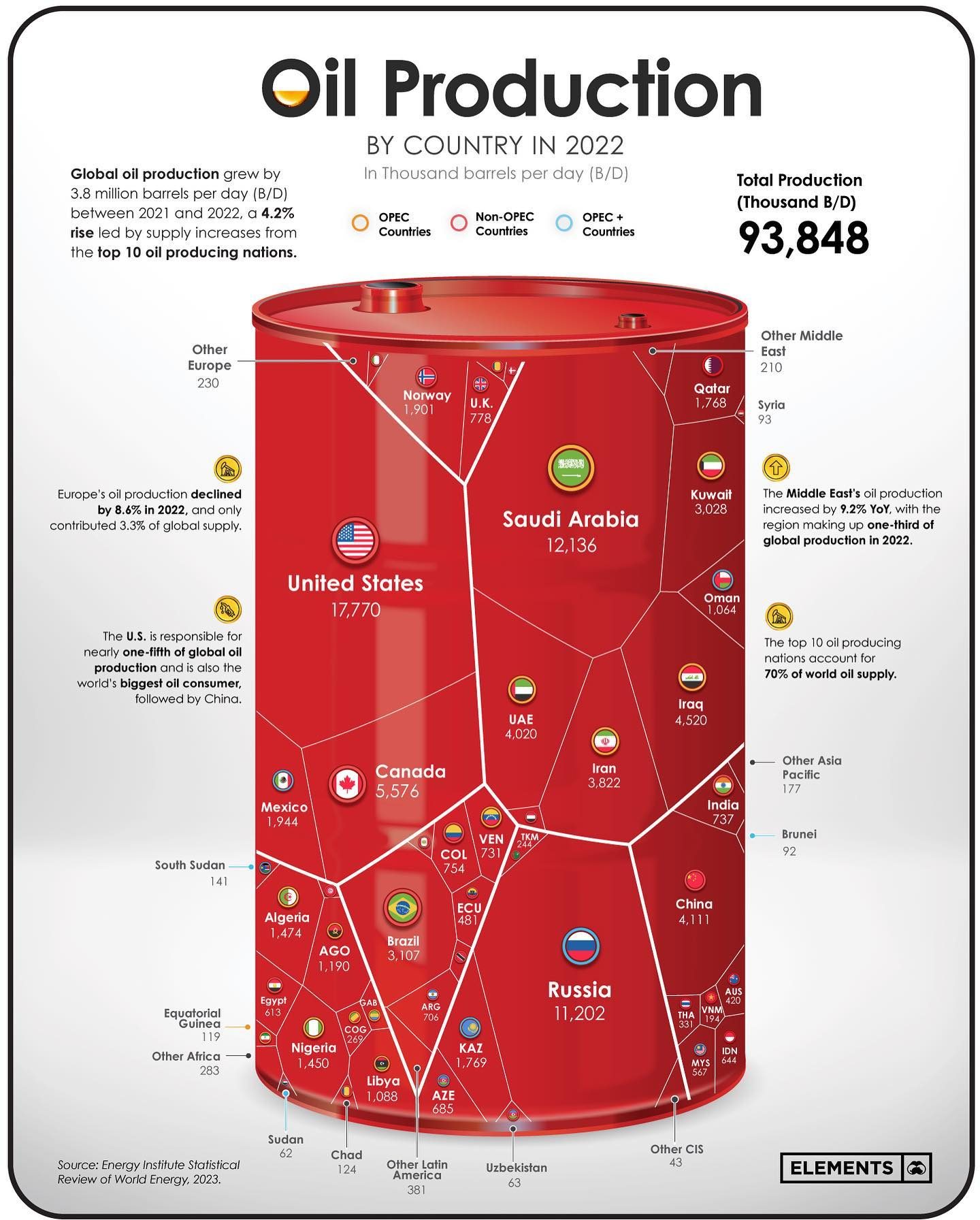
Oil production is a critical component of the global energy economy, influencing geopolitics, economic stability, and energy security. In 2022, oil prices reached an eight-year high of over $100 per barrel, driven by turmoil in energy markets due to the Russian invasion of Ukraine. This price surge doubled profits for oil companies and significantly boosted the economies of the world’s largest oil producers.
Context / Why this matters
Understanding global oil production is essential for grasping the dynamics of the world’s energy landscape. The supply and demand of oil can impact everything from economic policies to energy security. With the world's reliance on oil remaining significant, knowing which countries contribute the most to global production is crucial for making informed decisions about energy investments and consumption.
Main discussion
Global Oil Production Trends
Global oil production increased by 3.8 million barrels per day (B/D) between 2021 and 2022, marking a 4.2% rise. This growth was led by supply increases from the top 10 oil-producing nations. The top 10 countries account for 70% of the world’s oil supply, making them key players in the energy market. These nations include Saudi Arabia, the United States, Russia, and other major producers.
Major Oil-Producing Regions
The global oil market is divided into three main categories: OPEC countries, Non-OPEC countries, and OPEC+ countries. OPEC (Organization of the Petroleum Exporting Countries) includes countries like Saudi Arabia, Iraq, and Venezuela, which collaborate to manage oil supply and prices. Non-OPEC countries, such as the United States and Russia, also play significant roles in the global supply. OPEC+ countries are a broader group that includes OPEC members and other major producers like Russia, aiming to stabilize the market.
The Role of the United States
The United States is a standout in global oil production, responsible for nearly one-fifth of the world’s total output. It is not only a major producer but also the world’s largest oil consumer, followed by China. This dual role underscores the U.S.'s significant influence on global oil markets. The country's production and consumption patterns can impact global prices and supply dynamics.
Europe's Decreasing Role
Europe's oil production decreased by 8.6% in 2022, contributing only 3.3% of the global supply. This decline reflects Europe's shift towards renewable energy sources and stricter environmental regulations. As Europe reduces its reliance on oil, other regions are stepping up to meet the global demand.
Practical tips
Investing in Oil Stocks
For investors, understanding the production trends and key players in the oil market can provide valuable insights. Investing in companies from major oil-producing countries can offer stability and potential growth, especially during periods of high oil prices.
Monitoring Global Energy Policies
Staying informed about global energy policies and geopolitical developments can help individuals and businesses make informed decisions. For example, knowing that Europe is reducing its oil reliance can guide investments towards renewable energy sectors.
Energy Diversification
For countries and businesses, diversifying energy sources can mitigate the risks associated with oil market volatility. Investing in renewable energy, natural gas, and other alternatives can provide a more stable energy portfolio.
Tracking Oil Prices
Keeping an eye on oil price fluctuations is crucial for those involved in the energy sector, from producers to consumers. Understanding the factors driving price changes, such as geopolitical events and supply disruptions, can help in making timely decisions.
Important takeaways
Top Oil Producers
The top 10 oil-producing nations are responsible for 70% of the world’s oil supply, making them pivotal in the global energy market. These countries include Saudi Arabia, the United States, Russia, and others.
The U.S. as a Key Player
The United States is both a major producer and consumer of oil, influencing global prices and supply dynamics significantly.
Europe's Declining Role
Europe's decreasing oil production highlights the region’s shift towards renewable energy and stricter environmental regulations.
Conclusion
Global oil production is a complex and dynamic sector influenced by various factors, including geopolitical events, economic policies, and market trends. Understanding the key players and recent trends can provide valuable insights for investors, policymakers, and energy consumers. By staying informed about global oil production, one can better navigate the energy landscape and make informed decisions.
Watch the Reel
Questions readers ask
Which countries were the top oil producers in 2022?
The top oil-producing countries in 2022 were the United States, Saudi Arabia, and Russia. These nations were the leading contributors to global oil supply, significantly influencing market dynamics and economic growth.
How did the Russian invasion of Ukraine impact global oil production and prices in 2022?
The Russian invasion of Ukraine in 2022 sparked turmoil in energy markets, leading to a significant surge in oil prices. By mid-2022, oil prices reached an eight-year high of over $100 per barrel, doubling profits for oil companies and boosting the economies of major oil-producing nations.
What role does OPEC play in global oil supply and production in 2022?
OPEC, or the Organization of the Petroleum Exporting Countries, plays a crucial role in global oil supply. In 2022, OPEC members, including Saudi Arabia, collectively managed their oil production to stabilize prices and maintain market share. Their decisions significantly influenced global oil dynamics, especially during times of market volatility.
How did the United States perform as an oil producer in 2022?
The United States was one of the top oil producers in 2022, maintaining its position as a global leader in oil production. The U.S. benefitted from increased domestic oil extraction, contributing significantly to global oil supply and enhancing its energy security.
What factors contributed to the significance of oil production in 2022?
Oil production in 2022 was significant due to its impact on geopolitics, economic stability, and energy security. The surge in oil prices, driven by market turmoil and geopolitical events, highlighted the critical role of oil in the global energy landscape. The performance of top oil producers, including the United States, Saudi Arabia, and Russia, was closely monitored for its influence on global economics and politics.
Recent articles
Fresh deep dives from the latest Reels we unpacked.




Comments
Be the first to comment.