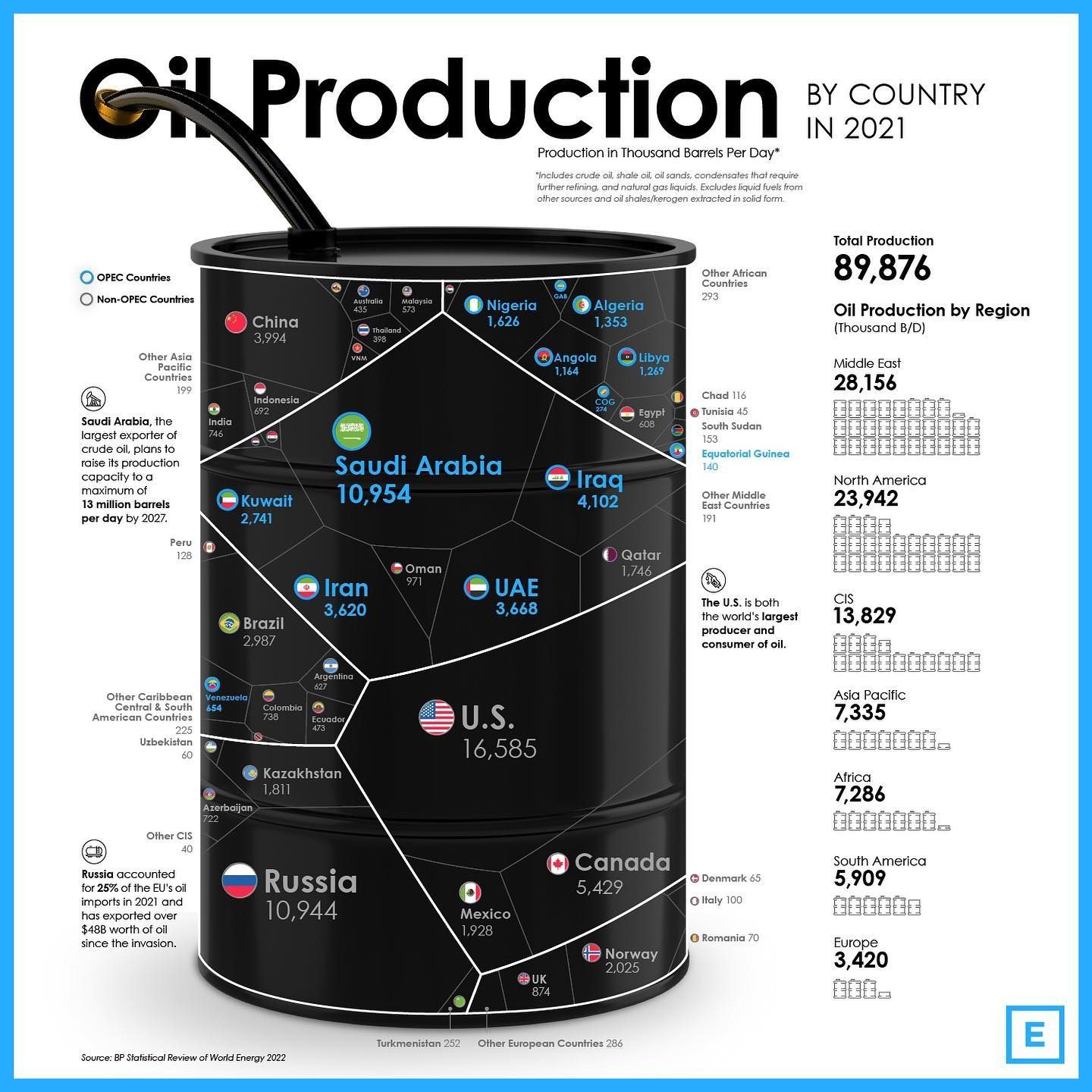
Oil Production by Country
The global energy landscape is currently grappling with an unprecedented crisis, characterized by surging energy prices and shortages that have driven inflation to levels not seen in decades. This crisis is exacerbated by geopolitical tensions, particularly Russia’s invasion of Ukraine, which has disrupted global oil and gas supplies. To understand the magnitude of this crisis, it’s crucial to examine oil production data by country, highlighting the world's top producers and their significant roles in the global energy market.
Context / Why This Matters
Oil production is a fundamental component of the global energy sector. It fuels various industries, from transportation to manufacturing, and is a critical factor in the economic stability of many countries. The recent geopolitical developments, including Russia’s invasion of Ukraine, have underscored the importance of understanding which countries are the major players in oil production. This knowledge is essential for policymakers, energy analysts, and businesses to navigate the current energy crisis and plan for future stability.
Main Discussion
Global Production and Key Players
In 2021, the total global oil production reached 89,876 thousand barrels per day (BPD). This staggering figure underscores the immense scale of the oil industry and its central role in the world economy. The largest contributors to this production are a mix of OPEC (Organization of the Petroleum Exporting Countries) and non-OPEC countries, each with distinct production capacities and export strategies.
OPEC and Non-OPEC Countries
OPEC countries, traditionally known for their significant influence on global oil prices, continue to be major producers. Saudi Arabia, one of the largest OPEC countries, produced 10,954 thousand BPD in 2021, making it a key player in the global market. Iraq, another significant OPEC member, produced 4,102 thousand BPD. Other notable OPEC countries include the UAE, Iran, Kuwait, Algeria, Libya, and Angola, each contributing significantly to the total production.
Non-OPEC countries, however, are also major contributors. The United States, for instance, produced 16,585 thousand BPD, making it the second-largest producer in the world. Canada, with 4,102 thousand BPD, and China, with 1,626 thousand BPD, are among the top non-OPEC producers. These countries, along with others like Brazil and Nigeria, play a crucial role in maintaining global oil supply.
Regional Contributions
Oil production varies significantly by region, with each region contributing uniquely to the global supply.
Asia Pacific
The Asia Pacific region, including countries like China, India, and Australia, produced 23,942 thousand BPD in 2021. China, in particular, is a major producer within this region, contributing 1,626 thousand BPD. The region's production is driven by its rising energy demands and the need to support rapid industrialization and economic growth.
Middle East
The Middle East, home to some of the world’s largest oil reserves, is a powerhouse in the oil production landscape. Saudi Arabia, with its production of 10,954 thousand BPD, leads the pack, followed by countries like Iraq, UAE, and Kuwait. The region’s significant production capacity makes it a cornerstone of the global energy market, influencing both supply and prices.
North America
North America, particularly the United States and Canada, is another critical region in the global oil landscape. The U.S. produced 16,585 thousand BPD, making it the second-largest producer worldwide. Canada, with 4,102 thousand BPD, also plays a significant role in the region's oil production. Both countries are pivotal in maintaining the stability of the global oil supply and mitigating the impact of geopolitical tensions on the energy market.
Other Regions
Other regions, including Africa, Latin America, and Central Asia, also contribute to global oil production. Nigeria, for instance, produced 1,164 thousand BPD, while Brazil contributed 2,786 thousand BPD. These regions, though not as dominant as the Asia Pacific or Middle East, play a significant role in the global energy market, providing essential resources to support global energy needs.
Future Outlook
The global oil market is undergoing significant changes, driven by both geopolitical and economic factors. Saudi Arabia, for example, plans to increase its production capacity to a maximum of 13 million barrels per day by 2027, potentially altering the dynamics of the global market. Such strategic moves by major producers are essential for understanding future trends in oil production and supply.
Oil exports in 2021 reached $490 billion, and projections indicate that this figure could rise to $1 trillion by 2024. These projections highlight the growing demand for oil and the critical role of oil-producing countries in meeting global energy needs.
Practical Tips
For investors, policymakers, and businesses, understanding the nuances of global oil production is vital. Here are some practical tips to navigate the current energy landscape:
- Diversify Energy Sources: Dependence on a single source of energy can be risky. Diversifying energy sources can help mitigate the impact of geopolitical tensions and price fluctuations.
- Stay Informed: Keep track of global energy trends and projections. Understanding future trends can help in making informed decisions.
- Engage with Multiple Suppliers: Engaging with multiple suppliers can ensure a stable supply chain, reducing the risk of disruptions.
- Invest in Technology: Investing in energy-efficient technologies and renewable energy sources can help reduce dependence on oil and mitigate risks associated with price volatility.
- Monitor Geopolitical Developments: Geopolitical tensions can significantly impact the global energy market. Staying informed about these developments can help in preparing for potential disruptions.
Important Takeaways
- Global Production: The total global oil production in 2021 was 89,876 thousand BPD, with both OPEC and non-OPEC countries contributing significantly.
- Key Players: Saudi Arabia, the U.S., and China are among the largest oil producers, each with substantial production capacities.
- Regional Contributions: The Middle East, Asia Pacific, and North America are major contributors to global oil production, with each region playing a unique role in the energy market.
- Future Trends: Saudi Arabia’s plans to increase production capacity and the expected rise in oil exports underscore the dynamic nature of the global oil market.
- Geopolitical Impact: The recent invasion of Ukraine by Russia has highlighted the vulnerabilities in the global energy supply chain, making it essential to understand and prepare for potential disruptions.
Conclusion
Understanding the world’s largest oil producers is crucial for navigating the current energy crisis and planning for future stability. Whether it's diversifying energy sources, staying informed about global trends, or investing in technology, the strategies for managing the global oil market are multifaceted and require a deep understanding of the production landscape. By staying informed and adapting to the changing dynamics of the global energy market, countries and businesses can better prepare for future challenges and ensure a stable supply of energy.
Watch the Reel
Questions readers ask
Which countries were the top oil producers in 2021?
In 2021, the top oil-producing countries included the United States, Saudi Arabia, and Russia. These nations are significant players in the global oil market, contributing substantially to worldwide oil production.
What is the significance of OPEC countries in 2021 oil production?
OPEC countries, such as Saudi Arabia, Iraq, and the United Arab Emirates, played a pivotal role in 2021 oil production. OPEC influences global oil supply by coordinating production among its member countries, making it a key factor in market stability and pricing.
How did the energy crisis of 2021 impact global oil production?
The 2021 energy crisis, driven by surging energy prices and geopolitical tensions, significantly impacted global oil production. Supply disruptions, notably from Russia's invasion of Ukraine, led to shortages and inflation, underscoring the importance of stable oil production.
Which non-OPEC countries were significant oil producers in 2021?
Non-OPEC countries such as the United States, Canada and Brazil were significant oil producers in 2021. These countries have substantial oil reserves and advanced extraction technologies, making them crucial to the global oil supply.
Why is it important to track oil and gas production by country?
Tracking oil and gas production by country provides insights into global energy dynamics. This information is vital for understanding market trends, geopolitical influences, and economic impacts, helping stakeholders make informed decisions.
What role did Middle East countries play in global oil production in 2021?
Middle East countries, notably Saudi Arabia and the UAE, were pivotal in global oil production in 2021. These nations possess vast reserves and advanced infrastructure, making them essential for maintaining global energy security.
How did Russia's oil production affect global markets in 2021?
Russia's oil production in 2021 was significant, but geopolitical events, particularly the invasion of Ukraine, led to major disruptions in global supply. This highlighted Russia's crucial role in the global oil market and the potential impacts of geopolitical tensions on energy security.
Recent articles
Fresh deep dives from the latest Reels we unpacked.




Comments
Be the first to comment.