North American Freight Hubs
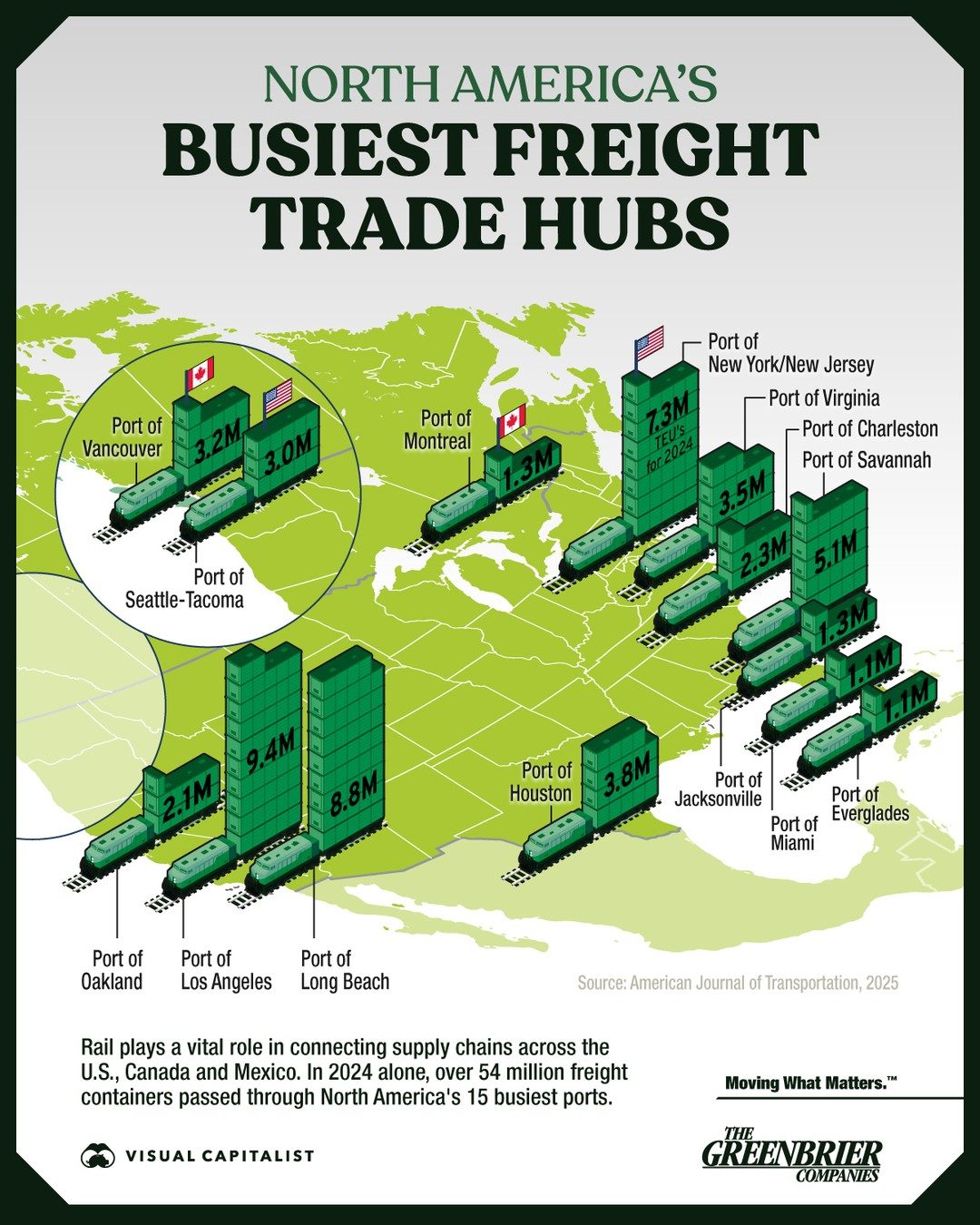
In 2024, North America's 15 busiest freight ports handled over 54 million TEUs (Twenty-foot Equivalent Units), showcasing the region's vital role in global trade. This immense activity underscores the significance of efficient logistics and supply chains in moving goods across the continent. Understanding which trade hubs saw the most activity is crucial for businesses and logistics experts.
Why This Matters
The freight industry is the backbone of North American trade. The efficient movement of goods through these ports impacts everything from consumer prices to the availability of essential goods. The bustling activity at these ports not only drives economic growth but also highlights the importance of infrastructure, technology, and logistical planning in maintaining a robust supply chain.
North America’s Busiest Ports
Port of Seattle-Tacoma
The Port of Seattle-Tacoma, with 9.4 million TEUs, is a major gateway for trade between the United States and Asia. This port's strategic location and extensive facilities make it a pivotal player in the global supply chain. Seattle-Tacoma serves as a critical hub for the import and export of goods, handling a diverse range of cargo, including electronics, automotive parts, and machinery. The port's efficiency and capacity for handling large vessels contribute significantly to the region's economic prosperity.
Port of Vancouver
The Port of Vancouver, with 3.2 million TEUs, is a pivotal trade hub in North America. Located in Canada, this port plays a crucial role in facilitating trade between the United States, Asia, and Europe. Vancouver's strategic location and state-of-the-art infrastructure make it a preferred destination for shipping companies. The port handles a variety of goods, including bulk cargo, containers, and breakbulk. Its efficient operations and advanced logistics systems ensure the smooth movement of goods, contributing to the economic growth of the region.
Port of Montreal
The Port of Montreal, with 1.3 million TEUs, is one of Canada's busiest freight ports. Strategically located, it serves as a gateway for trade between North America and Europe. The port plays a crucial role in facilitating the movement of goods, handling a variety of commodities, including containers, bulk cargo, and breakbulk. Montreal's efficient operations and advanced logistics infrastructure make it a key player in the global supply chain.
The Role of Rail in Connecting Supply Chains
Rail plays a vital role in connecting supply chains across the United States, Canada, and Mexico. The extensive rail network in North America facilitates the efficient movement of goods between ports, warehouses, and distribution centers. This interconnectedness is essential for ensuring the smooth flow of goods and maintaining a robust supply chain. The integration of rail with maritime and road transport systems enhances the overall efficiency of the freight industry, making it a critical component of North American trade.
Practical Tips for Navigating North American Freight Hubs
Optimize Route Planning
Efficient route planning is crucial for minimizing delays and maximizing cost savings. Utilize advanced logistics software to plan the most efficient routes, taking into account factors like traffic, weather, and port schedules. This approach ensures timely delivery and reduces the risk of disruptions in the supply chain.
Leverage Technology
Embrace technology to streamline operations and enhance efficiency. Implementing technologies like IoT (Internet of Things), blockchain, and AI (Artificial Intelligence) can help in monitoring shipments, tracking inventory, and managing logistics more effectively. These technologies provide real-time data and insights, enabling better decision-making and improved supply chain management.
Enhance Collaboration
Cooperation and collaboration among stakeholders, including ports, railways, and logistics providers, are essential for a seamless supply chain. Engage in partnerships and alliances to ensure better coordination, reduce bottlenecks, and improve overall efficiency. Collaboration can lead to shared resources, knowledge exchange, and innovative solutions that benefit all parties involved.
Invest in Infrastructure
Infrastructure development is key to maintaining the efficiency and capacity of freight hubs. Investing in modernizing port facilities, expanding rail networks, and upgrading logistics infrastructure can significantly improve the handling of goods. This includes building more efficient loading docks, installing advanced cargo handling systems, and enhancing storage capacities. A robust infrastructure ensures faster turnaround times and reduces the risk of congestion.
Implement Sustainable Practices
Incorporating sustainable practices into freight operations can have long-term benefits. Adopt eco-friendly technologies and practices, such as using electric vehicles, optimizing fuel consumption, and reducing waste. Sustaining sustainable operations not only reduces environmental impact but also optimizes costs and enhances the overall efficiency of supply chains.
Important Takeaways
The freight industry is a critical component of North American trade, with over 54 million TEUs handled by the 15 busiest ports in 2024. Ports like Seattle-Tacoma, Vancouver, and Montreal are pivotal hubs that facilitate the movement of goods across the continent. The efficient operation of these ports, supported by a robust rail network, is essential for maintaining a robust supply chain.
Conclusion
Understanding the dynamics of North American freight hubs is essential for businesses and logistics experts. The strategic importance of ports like Vancouver, Montreal, and Seattle-Tacoma cannot be overstated. Implementing practical strategies such as optimizing route planning, leveraging technology, enhancing collaboration, investing in infrastructure, and adopting sustainable practices can significantly improve the efficiency and effectiveness of freight operations. As North American trade continues to grow, the role of these freight hubs will only become more pronounced, making it crucial for stakeholders to stay informed and adapt to the evolving landscape.
Watch the Reel
Related deep dives
Similar reads based on topic and creator.

Recent articles
Fresh deep dives from the latest Reels we unpacked.




Comments
Be the first to comment.