Russian Fossil Fuel Imports
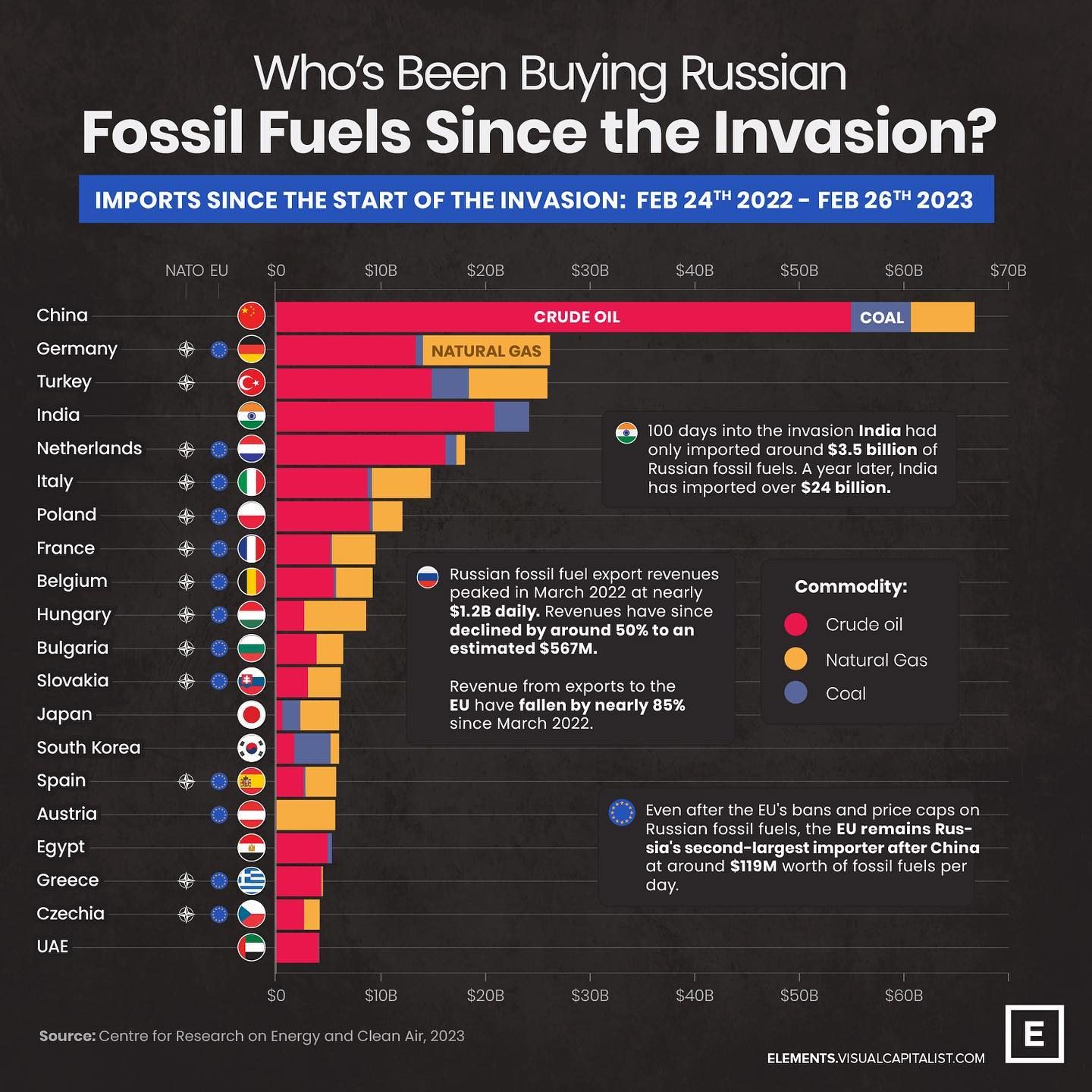
Russia's fossil fuel exports have remained a significant global concern, especially since the start of the Ukraine invasion on February 24, 2022. The data reveals a complex landscape of international trade, with various nations continuing to import Russian fossil fuels despite geopolitical tensions.
Context: Why this Matters
Understanding the flow of Russian fossil fuels is crucial for several reasons. It provides insights into the economic impacts of geopolitical events, the effectiveness of international sanctions, and the global energy market dynamics. Additionally, it highlights the challenges and complexities of transitioning away from fossil fuels in the context of current international relations.
Main Discussion
Key Importers
China
China has consistently been the largest importer of Russian fossil fuels. The country's demand for energy to fuel its industrial growth has kept Russian exports flowing. The infographic highlights that China has been the top buyer, contributing significantly to Russia's revenue from fossil fuel exports.
European Union
The European Union (EU) remains Russia's second-largest importer after China. Despite implementing various bans and price caps on Russian fossil fuels, the EU still imports around $119 million worth of fossil fuels per day. This underscores the continued dependence of European countries on Russian energy, even in the face of geopolitical tensions and efforts to reduce reliance.
Germany, Turkey, and Others
Other notable importers include Germany, Turkey, the Netherlands, Poland, France, and several other European countries. These nations have shown varying levels of dependence on Russian fossil fuels, with Germany and Turkey being among the top buyers. The infographic highlights the significant role these countries play in sustaining Russia's fossil fuel revenue.
Revenue Trends
Initial Surge and Decline
Russian fossil fuel export revenues peaked in March 2022 at nearly $1.2 billion per day. However, revenues have since declined by around 50% to an estimated $567 million per day. This decline can be attributed to various factors, including international sanctions, price caps, and efforts by some countries to reduce their dependence on Russian energy.
EU Revenue Decline
The EU's revenue from Russian fossil fuel exports has fallen by nearly 85% since March 2022. This significant drop reflects the EU's efforts to diversify its energy sources and reduce reliance on Russian fossil fuels. However, the continued imports highlight the challenges and complexities of transitioning away from Russian energy.
India's Increasing Imports
India's imports of Russian fossil fuels have increased significantly. From importing around $3.5 billion in the first 100 days of the invasion, India's imports have grown to over $24 billion a year later. This trend underscores India's growing energy needs and its strategic approach to energy procurement in a volatile global market.
Commodity Breakdown
The infographic also provides a breakdown of the commodities being imported, including crude oil, coal, and natural gas. Each of these commodities plays a crucial role in the global energy market, and their continued export from Russia reflects the enduring demand for these resources.
Practical Tips
For policymakers and energy sector stakeholders, the following tips can help navigate the complexities of Russian fossil fuel imports:
-
Diversify Energy Sources: Focus on diversifying energy sources to reduce reliance on any single supplier. This can include investing in renewable energy sources and exploring alternative fossil fuel suppliers.
-
Enhance Energy Efficiency: Improve energy efficiency to reduce overall demand. This can help mitigate the impact of reduced supply from any single source.
-
Strengthen International Cooperation: Work with international partners to coordinate efforts to reduce dependence on Russian fossil fuels. This can include sharing best practices, technology, and resources.
-
Monitor Market Trends: Keep a close eye on market trends and adjust strategies accordingly. The global energy market is dynamic, and staying informed can help navigate changing conditions.
-
Invest in Renewable Energy: Increase investment in renewable energy sources like solar, wind, and hydro. This can help reduce long-term dependence on fossil fuels and promote sustainable energy practices.
Important Takeaways
The data on Russian fossil fuel imports since the invasion highlights several key points:
- China and the EU remain the top importers of Russian fossil fuels, despite efforts to reduce reliance.
- Revenue from Russian fossil fuel exports has declined significantly since March 2022, reflecting the impact of sanctions and price caps.
- India's imports have increased substantially, highlighting its growing energy needs and strategic approach to energy procurement.
- The global energy market is complex and dynamic, requiring ongoing monitoring and adaptation.
Conclusion
Russian fossil fuel imports continue to be a critical issue in the global energy landscape. The data reveals the complex interplay of economic, political, and environmental factors at work. Understanding these dynamics is essential for policymakers, energy sector stakeholders, and consumers alike. By staying informed and adapting strategies, it is possible to navigate the challenges and opportunities presented by the evolving global energy market.
Watch the Reel
Questions readers ask
Which countries are the primary importers of Russian fossil fuels since the invasion began?
Since the invasion of Ukraine, China and European nations have been the primary importers of Russian fossil fuels. Germany, in particular, has been a significant buyer, although there are signs of decreasing reliance on Russian energy. Turkey, India, and the Netherlands have also increased their imports. Despite international sanctions, these countries continue to drive Russian fuel revenue.
How have Russian fossil fuel exports changed since the invasion?
Since the invasion, the global demand for Russian fossil fuels has shown resilience. While some countries have reduced their imports, others have increased, leading to a complex landscape. The total volume of Russian fossil fuel exports has remained significant, highlighting the challenges in curbing Russia's energy exports.
What impact do Russian fossil fuel exports have on the global energy market?
Russian fossil fuel exports influence global energy prices and supply chains. The continued trade of fossil fuels affects the stability of international energy markets. The fluctuation in Russian oil imports impacts the pricing and availability of energy resources globally, creating a ripple effect on energy-dependent industries.
How has the EU responded to Russian fossil fuel imports since the Ukraine invasion?
The EU has taken steps to reduce its reliance on Russian fossil fuels. Germany, for instance, has been actively working to diversify its energy sources and decrease its dependence on Russian energy. However, the process is slow and complex, and many European countries still rely on Russian fossil fuels to meet their energy needs.
What role does China play in the import of Russian fossil fuels?
China has been a key importer of Russian fossil fuels since the invasion. This dynamic is driven by China's significant energy demands and its strategic geopolitical interests. By increasing its imports of Russian fossil fuels, China helps to sustain Russia's fuel revenue and supports its domestic energy sector.
How do Russian fossil fuel imports affect Russia's economy?
Russian fossil fuel exports are a critical revenue source for Russia. The continued import of Russian fossil fuels by various nations sustains the country's economy, despite international sanctions. Global demand for Russian fossil fuels directly impacts Russia's financial stability and its ability to navigate geopolitical challenges.
What are the challenges in reducing reliance on Russian fossil fuels?
Reducing reliance on Russian fossil fuels involves navigating complex energy supply chains and addressing the immediate energy needs of countries. The transition requires finding alternative energy sources, updating infrastructure, and managing the economic and political ramifications of reducing Russian fossil fuel imports.
Related deep dives
Similar reads based on topic and creator.


Recent articles
Fresh deep dives from the latest Reels we unpacked.




Comments
Be the first to comment.