The World's Biggest Fund Providers and Their 2022 Performance
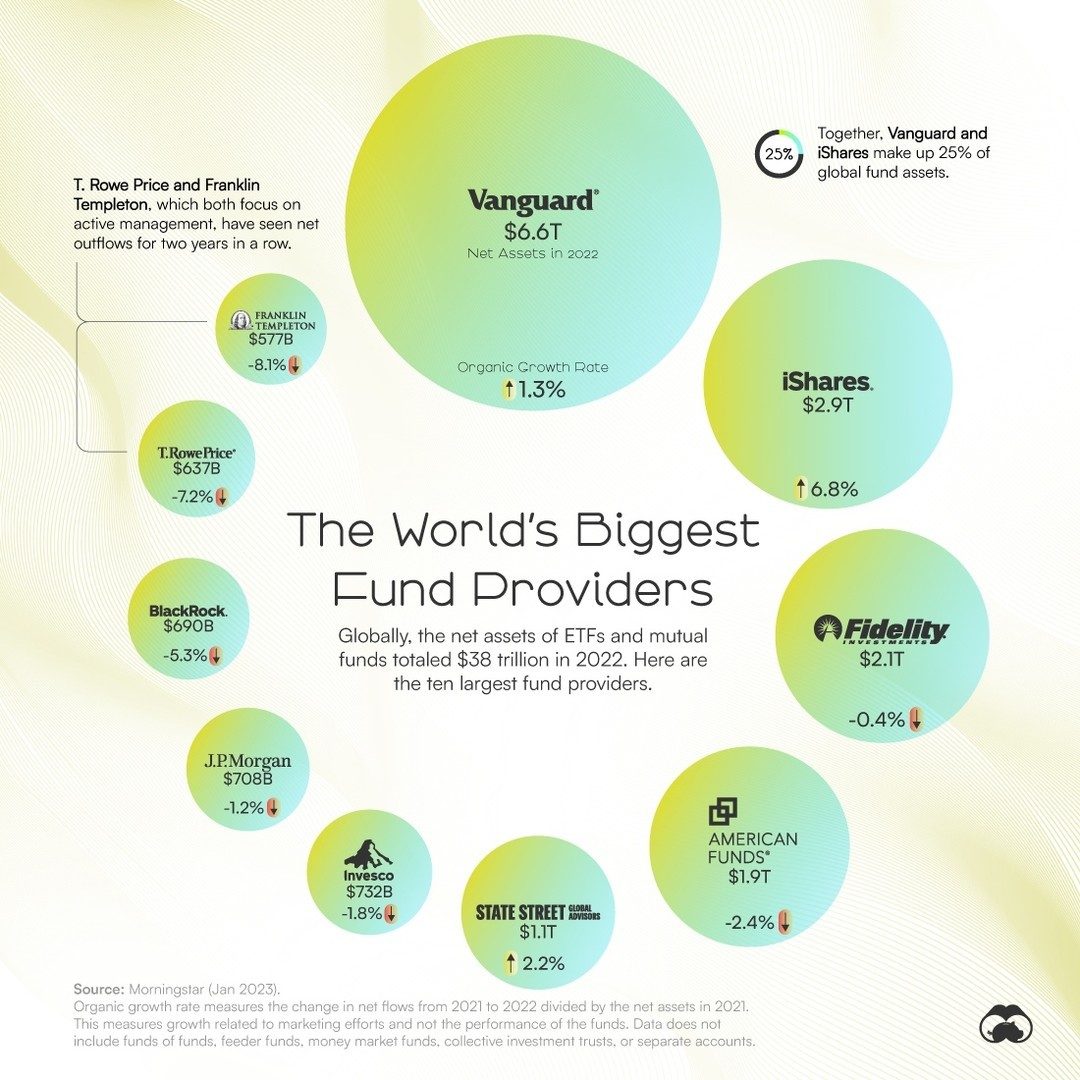
The global net assets of mutual fund and ETF providers reached a staggering $38 trillion in 2022. While this number may seem enormous, the industry is remarkably concentrated, with a small number of brands controlling a significant portion of these assets. Understanding the landscape of these providers can offer valuable insights into the financial market's dynamics.
Context / Why This Matters
The mutual fund and ETF industry plays a crucial role in the global financial ecosystem. It provides investment opportunities for individuals and institutions, helps manage risk, and supports economic growth. Knowing which providers are the largest and how they performed in a given year can give investors, financial advisors, and market analysts a clearer picture of the industry's health and future trends.
The Top Fund Providers in 2022
Vanguard
Leading the pack is Vanguard, which boasts an impressive $6.6 trillion in net assets. Vanguard is renowned for its low-cost index funds and ETFs, making it a popular choice for both individual investors and institutional clients. Vanguard’s organic growth rate of 1.3% indicates steady, albeit modest, growth, reflecting its focus on long-term investment strategies.
iShares
Following closely is iShares, with $2.9 trillion in net assets. iShares is part of the BlackRock family and is known for its diverse range of ETFs. Its organic growth rate of 6.8% suggests strong investor interest and effective marketing strategies. This growth reflects the brand's ability to attract new investors and maintain a robust portfolio.
T. Rowe Price
T. Rowe Price, with $37 billion in net assets, stands out as a smaller, but highly respected player. Its organic growth rate of -8.7% indicates challenges in attracting new investments. However, the firm’s reputation for active management and strong long-term performance remains intact.
Franklin Templeton
Franklin Templeton, with $577 billion in net assets, shows an organic growth rate of -5.3%. Despite this negative growth, Franklin Templeton's long-standing history and diverse investment offerings continue to attract a loyal investor base. The firm’s strategies often focus on global markets and emerging opportunities.
BlackRock
BlackRock, a behemoth in the investment world, has $608 billion in net assets. Its organic growth rate of -1.2% aligns with the broader industry's mixed performance. BlackRock's extensive range of investment products and its role as a global leader in asset management make it a key player in the market.
J.P. Morgan
J.P. Morgan, with $708 billion in net assets, shows an organic growth rate of -1.8%. Known for its comprehensive financial services, J.P. Morgan’s performance underscores the competitive nature of the industry, where even well-established firms face challenges in maintaining growth.
Invesco
Invesco, with $732 billion in net assets, has an organic growth rate of -2.4%. Despite the negative growth, Invesco’s diverse range of investment solutions and global presence offer stability and long-term value to investors.
State Street Global
State Street Global, with $1.1 trillion in net assets, shows a relatively stable organic growth rate of -0.4%. The firm’s focus on institutional clients and its strong ETF offerings make it a reliable choice for investors seeking long-term financial stability.
American Funds
American Funds, with $1.9 trillion in net assets, showcases a resilient performance with a modest organic growth rate of 1.3%. American Funds’ reputation for active management and its extensive portfolio of mutual funds make it a significant player in the market.
Fidelity
Coming in last but certainly not least, Fidelity, with $2.1 trillion in net assets, exhibits a -1.2% organic growth rate. Known for its extensive range of investment products and services, Fidelity remains a trusted name in the industry, offering a broad spectrum of options for both individual and institutional investors.
Practical Tips
Assessing Performance
When evaluating the performance of fund providers, it’s essential to consider both the net assets and the organic growth rate. While a high net asset value indicates a large and stable investor base, the organic growth rate provides insights into the provider’s ability to attract new investments and retain existing ones.
Understanding Growth Rates
Growth rates, particularly organic growth, are crucial metrics. Positive growth rates indicate successful marketing efforts and investor confidence, while negative rates may signal challenges in the provider’s strategy or market conditions. However, it is essential to consider these rates within the broader context of the market and the provider’s historical performance.
Diversification
Given the competitive nature of the industry, investors should consider diversifying their portfolios across multiple providers. This approach can help mitigate risks and take advantage of the diverse strengths of each provider. For example, pairing a provider known for low-cost index funds with one specializing in active management can offer a balanced investment strategy.
Long-Term vs. Short-Term Performance
Another key consideration is the distinction between short-term and long-term performance. Providers like Vanguard, known for their low-cost index funds, often prioritize long-term strategies. In contrast, providers like iShares may exhibit more significant short-term growth due to aggressive marketing and rapid asset accumulation.
Due Diligence
Conducting thorough due diligence involves looking beyond the headline numbers. Understanding a provider’s investment philosophy, management team, and underlying assets can provide a deeper understanding of their potential for future growth.
Monitoring Trends
Keeping an eye on industry trends and market conditions is essential. Factors such as economic indicators, regulatory changes, and geopolitical events can significantly impact the performance of mutual funds and ETFs. Staying informed about these trends can help investors make more informed decisions.
Important Takeaways
The mutual fund and ETF industry is highly competitive, with a small number of providers controlling a significant portion of the $38 trillion in global net assets.
Concentration of Assets
The concentration of assets among a few top providers highlights the importance of choosing a provider with a strong track record and stable performance. Investors should carefully evaluate the strengths and weaknesses of each provider to ensure their investments align with their financial goals.
Organic Growth
Organic growth rates provide valuable insights into a provider’s ability to attract and retain investors. Negative growth rates, while concerning, should be considered within the broader context of the provider’s historical performance and market conditions.
Diversification and Long-Term Planning
Diversifying investments across multiple providers and considering long-term performance are critical strategies for successful investing. Understanding the nuances of each provider’s approach to investment management can help investors make more informed decisions.
Continuous Evaluation
The financial landscape is ever-changing, and continuous evaluation of providers’ performance is essential. Regularly reviewing net assets, growth rates, and investment philosophies can help investors adapt to market changes and optimize their portfolios.
Conclusion
The world’s biggest fund providers, with their massive net assets and varied organic growth rates, offer a fascinating glimpse into the financial market’s inner workings. Understanding the performance of these top players can provide investors with valuable insights and practical strategies for managing their portfolios. Whether you are a seasoned investor or just starting, staying informed about the industry’s dynamics is key to making sound financial decisions.
Watch the Reel
Questions readers ask
Who were the top mutual fund providers in 2022?
In 2022, some of the top mutual fund providers by assets included Vanguard, T. Rowe Price, and Fidelity. These providers are known for their extensive range of funds and strong market presence. They managed significant portions of the industry's total net assets, contributing to their leading positions.
Which ETF providers stood out in 2022?
iShares, a division of BlackRock, was one of the leading ETF providers in 2022. Other notable providers included Vanguard and State Street Global Advisors. These companies were instrumental in driving the growth of ETF assets throughout the year, offering a variety of investment options to cater to diverse investor needs.
What was the total net asset size for mutual funds and ETFs in 2022?
By the end of 2022, the global net assets of mutual funds and ETFs reached an impressive $38 trillion. This figure highlights the substantial scale of the industry and underscores the importance of these investment vehicles in the global financial market.
How did Vanguard perform in 2022?
Vanguard continued to be a dominant player in the mutual fund and ETF market in 2022. The company managed a significant portion of the global assets, known for its low-cost investment options and wide range of products. Vanguard's performance in 2022 was marked by steady growth and strong investor confidence.
What trends were observed in the mutual fund market in 2022?
The mutual fund market in 2022 saw a continued shift towards passive investment strategies, with a notable increase in assets managed by ETFs. Additionally, there was a growing demand for sustainable and socially responsible investment options, reflecting evolving investor preferences and market dynamics.
Why is knowing the top mutual fund and ETF providers important?
Understanding the leading mutual fund and ETF providers can help investors make informed decisions. It provides insights into market trends, investment opportunities, and the performance of different fund types. This knowledge can assist in portfolio diversification and risk management, ultimately enhancing investment strategies.
How did the ETF asset growth fare in 2022?
ETF asset growth in 2022 was robust, with a significant increase in assets under management. This growth was driven by factors such as investor preference for lower-cost, transparent investment options, and the ongoing evolution of the ETF market, which now includes a broader range of products to cater to various investment needs.
Related deep dives
Similar reads based on topic and creator.


Recent articles
Fresh deep dives from the latest Reels we unpacked.




Comments
Be the first to comment.