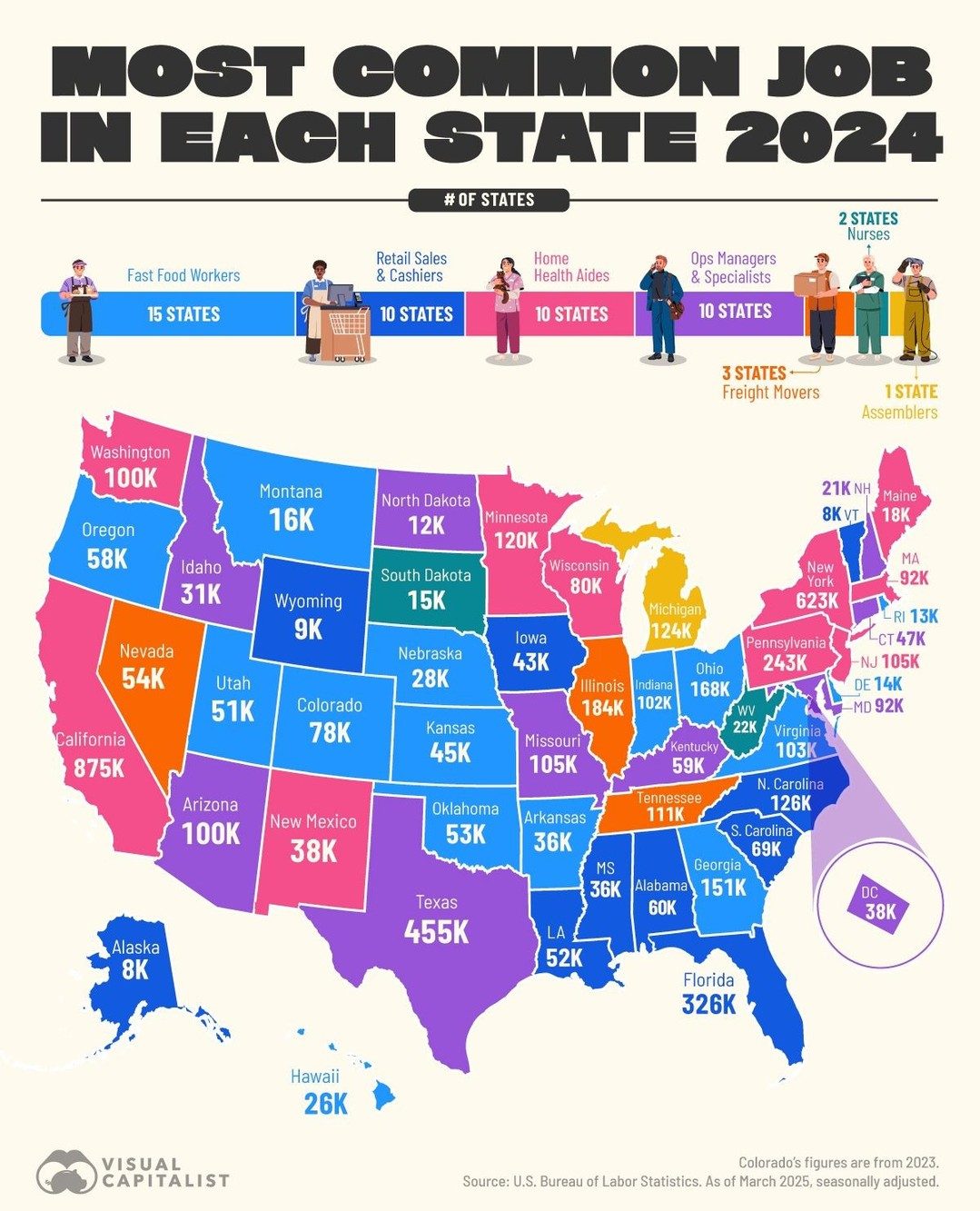
Fast Food Workers Lead Entry-Level Employment in 15 U.S. States
Fast food workers hold the top spot as the most common occupation in 15 U.S. states, making them a significant part of the entry-level employment landscape. This trend is highlighted in a recent visualization by Visualist, which maps out the most prevalent jobs across the United States based on data from the U.S. Bureau of Labor Statistics.
Why This Matters
Understanding the most common jobs in each state provides valuable insights into local economies, regional labor needs, and job market dynamics. These insights can be crucial for job seekers, policymakers, and businesses looking to navigate the job market effectively. The data not only reveals which jobs are most common but also highlights the numbers of workers employed in various roles, offering a clear picture of the labor landscape.
Variety in Prevalent Jobs
While fast food workers dominate in 15 states, there is a wide variety of jobs that are most common in other states. Retail sales and cashiers, for instance, are the most common in several states, reflecting the significant role of the retail sector in many local economies. Home health aides are prevalent in certain states, indicating a high demand for healthcare services. Operations managers, assemblers, and freight movers are also notable, showcasing the diverse nature of the job market across the nation.
Fast Food Workers
Fast food workers are at the top in states like Wyoming, Montana, and North Dakota. These roles provide entry-level opportunities for a significant number of workers. Fast food jobs offer flexibility and accessibility, making them particularly attractive for young and part-time workers.
Retail Sales & Cashiers
In states like Minnesota, Wisconsin, and New York, retail sales and cashiers dominate the job market. These roles are integral to the retail industry, which is a backbone of the U.S. economy. Retail jobs offer a variety of work environments, from small local stores to large retail chains.
Home Health Aides
Home health aides are the most common in states like Pennsylvania, Illinois, and Indiana. The growing demand for healthcare services, especially home care, has led to an increase in these roles. Home health aides provide essential support to individuals who require medical care at home, making them a critical part of the healthcare sector.
Operations Managers
Operations managers are prevalent in states such as Ohio and Virginia. These roles involve overseeing the daily operations of businesses, ensuring that everything runs smoothly. Operations managers are essential in various industries, from manufacturing to logistics, making their presence significant in many regions.
Assemblers and Freight Movers
In states like Kentucky and North Carolina, assemblers and freight movers are the most common. These roles are crucial in manufacturing and logistics, reflecting the industrial and supply chain demands of these regions. Assemblers work on production lines, while freight movers handle the transportation of goods, both of which are vital for economic activity.
Nurses
Nurses are the most common in states like South Carolina, Georgia, and Florida. The healthcare sector's growth has led to a high demand for nursing professionals. Nurses play a critical role in patient care, making them indispensable in the healthcare industry.
Practical Tips for Job Seekers
For job seekers looking to enter these prevalent roles, it's essential to understand the local job market and tailor your job search accordingly. Here are some practical tips:
- Research Local Demand: Use labor statistics to identify the most common jobs in your area. This can give you an edge in your job search.
- Skill Development: If you're aiming for a specific role, consider the necessary skills and qualifications. For instance, healthcare roles often require certifications, while retail jobs may need customer service experience.
- Networking: Connect with local professionals in your desired field. Networking can open doors to job opportunities and provide valuable insights into the local job market.
- Flexibility: Be open to various roles and industries. Sometimes, entry-level positions can lead to unexpected career paths and opportunities for growth.
Important Takeaways
- Regional Variations: The most common jobs vary significantly by state, reflecting regional economic needs and labor market dynamics.
- Entry-Level Opportunities: Fast food workers and retail sales & cashiers offer accessible entry-level opportunities for many job seekers.
- Healthcare Demand: The prevalence of home health aides and nurses highlights the growing demand for healthcare services.
- Industrial Roles: Assemblers and freight movers are crucial in states with strong industrial and logistics sectors.
Conclusion
The job market in the United States is diverse and dynamic, with fast food workers leading the way in entry-level employment in 15 states. However, the landscape varies significantly across different regions, with roles like retail sales, home health aides, and operations managers also being prevalent. Understanding these trends can help job seekers make informed decisions, policymakers develop effective strategies, and businesses navigate the job market successfully. Whether you're a job seeker, a policymaker, or a business owner, staying informed about the most common jobs in each state can provide valuable insights into the labor market.
Watch the Reel
Questions readers ask
Which states have the highest concentration of fast food workers as entry-level employees?
Fast food workers are the most common entry-level employees in 15 states. To find the specific states, you would need to refer to the detailed map or data provided by Visualist, which highlights the most prevalent jobs based on data from the U.S. Bureau of Labor Statistics.
What other sectors have a significant number of entry-level jobs besides fast food?
Besides fast food, other sectors that have a significant number of entry-level jobs include retail, healthcare, and logistics. The prevalence of these jobs varies by state, reflecting the unique economic activities and labor needs of each region.
How can understanding the most common jobs by state benefit job seekers?
For job seekers, understanding the most common jobs by state can help tailor their job search. By knowing which industries are thriving in a particular state, job seekers can focus their efforts on areas with the highest demand, increasing their chances of securing employment. This information can also guide career training and skill development.
What insights can businesses gain from knowing the most prevalent jobs in a state?
Businesses can use this information to make informed decisions about expansion and hiring. For example, if a state has a high demand for healthcare jobs, a healthcare-related business might consider expanding into that market. Conversely, if a state has a low demand for certain jobs, a business might reconsider entering that market.
Are there any trends specific to the Colorado job market in 2024?
Unfortunately, I don't have specific data on the Colorado job market for 2024. However, you can refer to the state jobs infographic 2024 or use the data provided by Visualist to find the most common jobs in Colorado.
How do fast food jobs contribute to the overall job market dynamics in the U.S.?
Fast food jobs are a significant part of the entry-level employment landscape, holding the top spot in 15 U.S. states. This industry provides a large number of job opportunities, which can shape local economies and job market trends. Understanding the prevalence of fast food jobs can provide insights into the overall job market dynamics and the needs of the workforce.
What types of jobs can be found in the healthcare sector in 2024?
The healthcare sector in 2024 encompasses a variety of roles, from entry-level positions like nursing assistants and medical administrative staff to more specialized roles. Specific jobs in healthcare can vary by state, depending on the local demand for healthcare services and the unique needs of the population.
Recent articles
Fresh deep dives from the latest Reels we unpacked.




Comments
Be the first to comment.