Hydroelectricity and the World's Largest Hydro Dams
Hydroelectricity is the world’s largest source of renewable energy. To produce this energy, hydroelectric power stations use large dams that harness the power of water flow to spin a turbine. These dams also serve important secondary functions, such as monitoring water flow and controlling floods. This article explores the five largest hydroelectric dams in the world, ranked by their maximum output.
Why This Matters
Understanding the scale and impact of the world’s largest hydroelectric dams is crucial for appreciating the role of hydroelectricity in global energy production. These dams not only generate significant amounts of power but also play a vital role in managing water resources and preventing floods. By examining the top five, we can gain insights into the engineering and environmental considerations that go into building and maintaining these massive structures.
The Five Largest Hydroelectric Dams
Three Gorges Dam
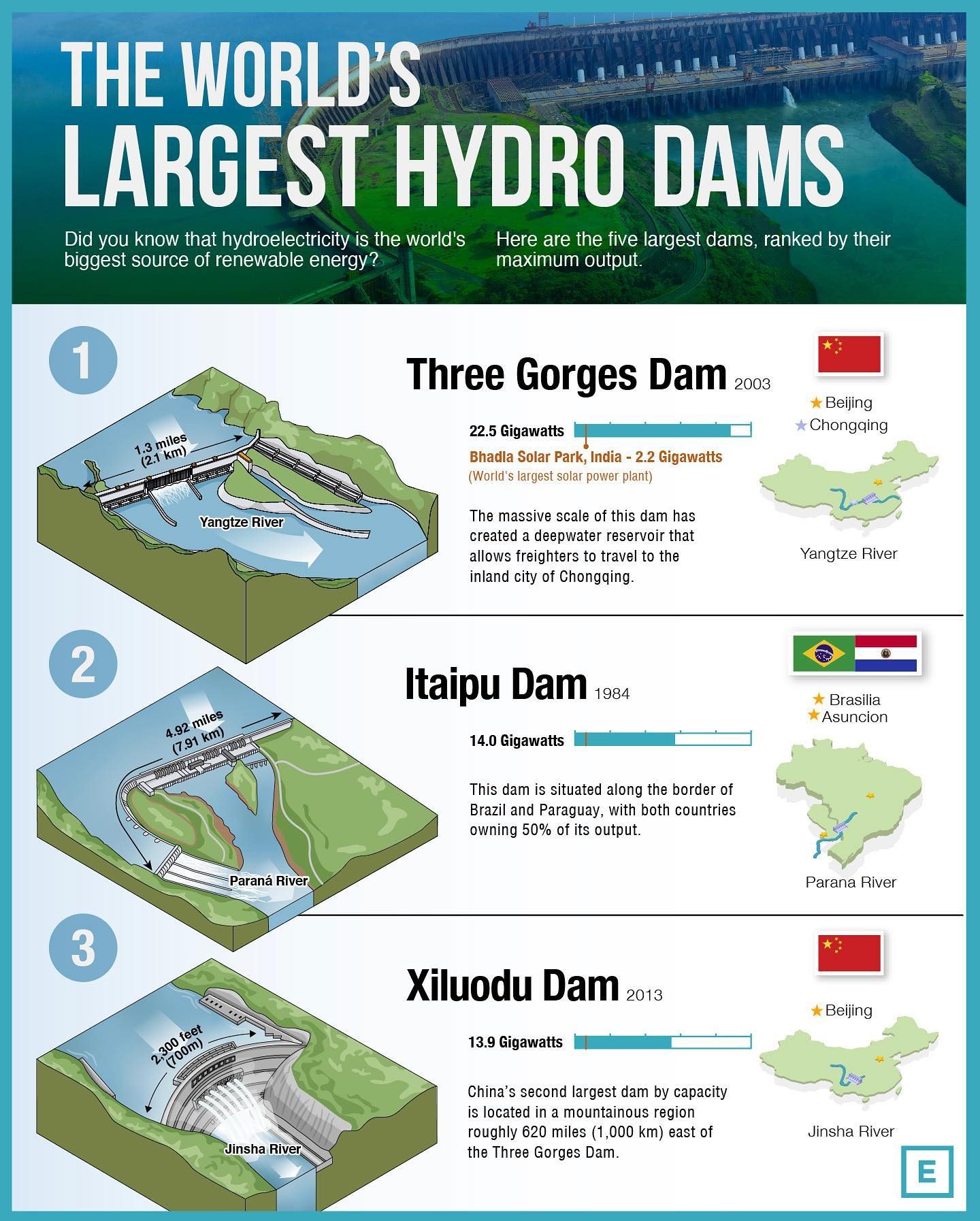
The Three Gorges Dam, located in China, is the largest hydroelectric dam in the world. Completed in 2003, it spans 1.3 miles (2.1 kilometers) and has an installed capacity of 22.5 gigawatts. This dam generates a staggering 10.2 gigawatts of power, making it a cornerstone of China’s energy infrastructure. The Three Gorges Dam also plays a crucial role in flood control and water resource management.
Itaipu Dam
Second on the list is the Itaipu Dam, situated on the border of Brazil and Paraguay. Completed in 1984, it stretches 4.92 miles (7.91 kilometers) and has an installed capacity of 14.0 gigawatts. The Itaipu Dam is a joint venture between the two countries and provides a significant portion of their electricity needs. Its impressive output highlights the collaborative benefits of hydroelectric projects.
Xiluodu Dam
Located in a mountainous region of China, the Xiluodu Dam was completed in 2013. Standing at 2,500 feet (760 meters) tall, it has an installed capacity of 13.9 gigawatts. The dam's height and location allow it to generate substantial amounts of power, contributing to China’s renewable energy portfolio.
Belo Monte Dam
The Belo Monte Dam, completed in 2016, is situated in Brazil. It spans 2.2 miles (3.5 kilometers) and has an installed capacity of 11.2 gigawatts. Despite its significant power output, the Belo Monte Dam has faced criticism for its environmental impact. The construction of the dam has led to concerns about deforestation and displacement of local communities, highlighting the complex trade-offs involved in large-scale hydroelectric projects.
Guri Dam
Completed in 1978, the Guri Dam is located in Venezuela and spans 4.6 miles (7.426 kilometers). It has an installed capacity of 10.2 gigawatts and produces a large portion of Venezuela’s electricity. The Guri Dam plays a crucial role in the country’s energy infrastructure, but it has also faced challenges related to maintenance and political instability.
Practical Tips for Understanding Hydroelectric Dams
When exploring hydroelectric dams, it’s essential to consider several key factors:
Location and Topography
The location and topography of a dam significantly impact its effectiveness. Dams built in mountainous regions, like the Xiluodu Dam, can take advantage of higher elevations and steeper slopes, which increase the potential energy of the water.
Environmental Impact
Building and maintaining large dams can have substantial environmental and social impacts. Projects like the Belo Monte Dam have sparked debates about the balance between energy production and environmental conservation. It’s crucial to consider these factors when planning and evaluating hydroelectric projects.
Technological Advancements
Modern hydroelectric dams utilize advanced technologies to optimize energy production and minimize environmental impact. For example, turbines and generators are designed to be more efficient, and materials used in construction are chosen for their durability and sustainability.
Important Takeaways
The world’s largest hydroelectric dams are engineering marvels that generate significant amounts of renewable energy. These dams play a critical role in ensuring energy security and managing water resources. However, they also present challenges related to environmental impact and social considerations. By understanding the scale, technology, and complexities involved in these projects, we can better appreciate the importance of hydroelectricity in the global energy landscape.
Conclusion
The world's largest hydroelectric dams are not just impressive feats of engineering; they are essential components of the global energy infrastructure. From the Three Gorges Dam in China to the Guri Dam in Venezuela, these structures generate massive amounts of power and serve secondary functions like flood control and water resource management. As we continue to rely on renewable energy sources, understanding the intricacies of these hydroelectric projects will be crucial for sustainable energy production.
Watch the Reel
Questions readers ask
What makes hydroelectric dams a significant source of global energy production?
Hydroelectric dams are significant because they generate a large portion of the world's renewable energy. They use the kinetic energy of water to produce electricity, making them a reliable and sustainable source of power. Additionally, they help manage water resources and mitigate flood risks through controlled water flow.
What is the power output of the Three Gorges Dam in China?
The Three Gorges Dam in China is renowned for its immense power output, which can reach up to 22,500 megawatts. This makes it one of the most powerful hydroelectric dams in the world, contributing significantly to China's energy production and water management efforts.
How does the Itaipu Dam rank among the world's largest hydroelectric dams?
The Itaipu Dam, a collaborative effort between Brazil and Paraguay, is the second-largest hydroelectric dam by power output. It has a maximum capacity of 14,000 megawatts, making it a crucial player in the energy production of both countries and a notable example of international cooperation in energy infrastructure.
What are the benefits of hydroelectric dams beyond energy production?
Beyond power generation, hydroelectric dams offer numerous benefits. They regulate water flow for irrigation, control and prevent floods, and can serve as reservoirs for drinking water. Furthermore, they contribute to recreation and tourism by creating large bodies of water.
Why is the power output of a hydroelectric dam important?
The power output of a hydroelectric dam is important because it indicates the dam's capacity to generate electricity. This metric helps in understanding the dam's role in meeting the energy demands of a region, as well as its potential impact on reducing dependence on fossil fuels and other non-renewable energy sources.
What are the top five largest hydroelectric dams by power output?
The top five largest hydroelectric dams by power output are the Three Gorges Dam in China, the Itaipu Dam between Brazil and Paraguay, the Xiluodu Dam in China, the Belo Monte Dam in Brazil, and the Guri Dam in Venezuela. These dams are notable for their immense power generation capacities, contributing significantly to the world's hydroelectric energy production.
How do hydroelectric dams help in managing water resources?
Hydroelectric dams help manage water resources by regulating water flow, storing water for later use, and controlling floods. They create reservoirs that can be used for irrigation, drinking water, and various recreational activities. This multi-functional aspect makes hydroelectric dams essential for both energy production and sustainable water management.
Related deep dives
Similar reads based on topic and creator.

Recent articles
Fresh deep dives from the latest Reels we unpacked.




Comments
Be the first to comment.