US Trade with Canada & Mexico
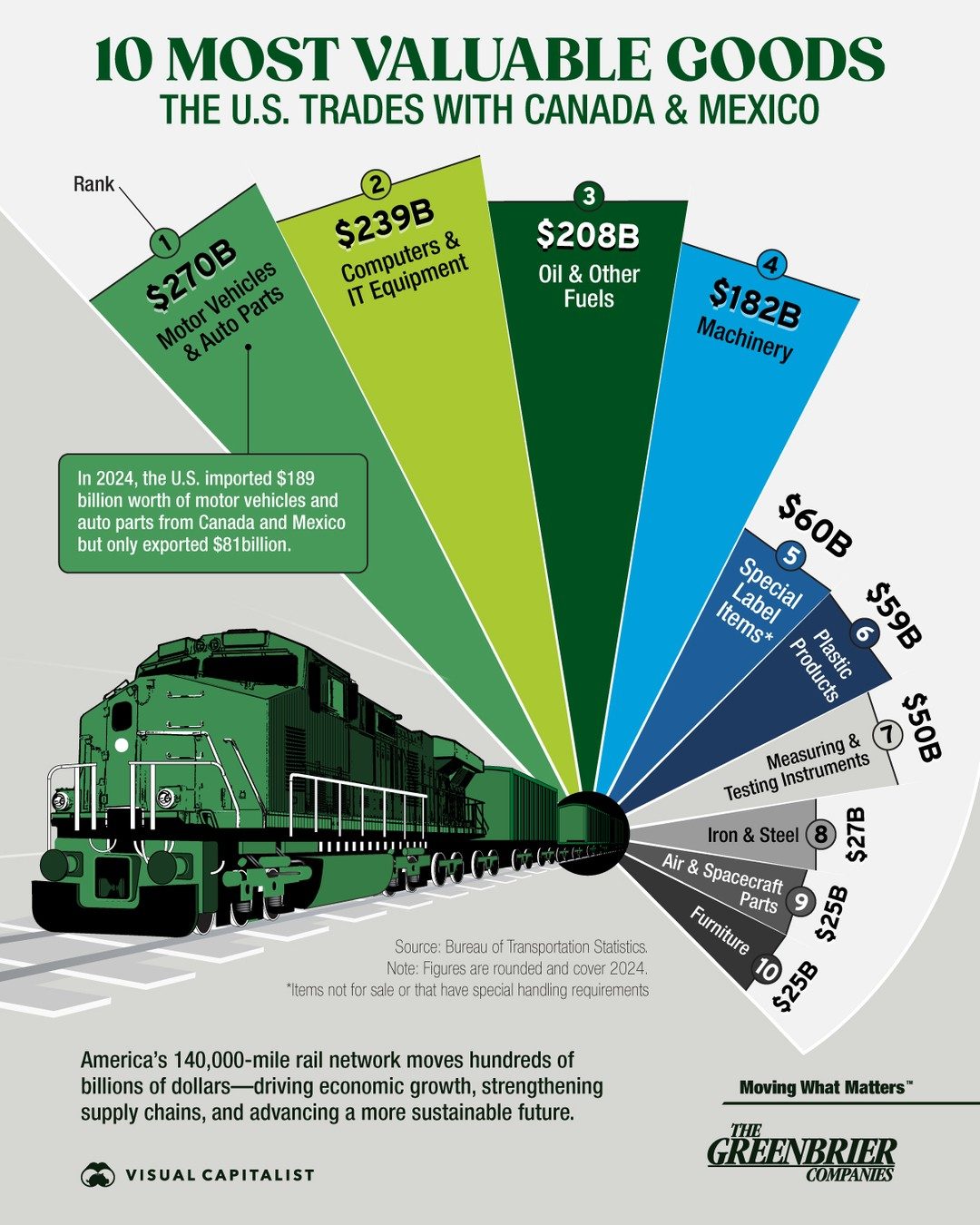
The U.S. traded $1.6 trillion in goods with Canada and Mexico in 2024, with the auto industry leading the way at $270 billion. This substantial trade volume highlights the interconnected economies of these neighboring countries. Understanding the key commodities driving this trade provides valuable insights into the economic landscape of North America.
Why This Matters
Trade between the U.S., Canada, and Mexico is crucial for economic growth and stability in North America. The region's integrated supply chains and shared resources make it a powerhouse in global trade. The data from 2024 underscores the importance of this relationship, particularly in sectors like automotive, technology, and energy. By examining the most valuable goods traded, we can better understand the economic strengths and dependencies of these countries.
The Top Commodities Driving Trade
Motor Vehicles and Auto Parts
Motor vehicles and auto parts topped the list, with $270 billion worth of trade. This sector includes a wide range of products, from passenger cars to commercial trucks and various auto parts. The high value of this trade reflects the robust automotive manufacturing and supply chains that span across the three countries. Canada and Mexico are key suppliers of automobiles and parts to the U.S. market, contributing significantly to the region's economic output.
Computers and IT Equipment
Computers and IT equipment followed closely, valued at $239 billion. This category encompasses everything from personal computers to servers, smartphones, and other electronic devices. The demand for technology products is continually growing, driven by advancements in digital infrastructure and consumer electronics. The trade in this sector highlights the interdependency of the U.S., Canada, and Mexico in the global tech industry.
Oil and Other Fuels
Oil and other fuels represented a substantial portion of trade, totaling $208 billion. Energy is a critical component of economic activity, and the trade in oil and fuels ensures that each country has access to the resources needed to power their industries and daily lives. The region benefits from a well-developed energy infrastructure that supports the movement of these essential commodities.
Machinery and Special Items
Machinery and special items, including measuring and testing instruments, contributed significantly to trade:
- Machinery: Valued at $50 billion, machinery includes industrial equipment, tools, and other mechanical devices essential for manufacturing and construction.
- Special Items: This category, valued at $60 billion, covers a range of unique and high-value goods that are crucial for various industries.
- Measuring Instruments: These are valued at $59 billion and include precision tools and devices used in manufacturing, research, and quality control.
- Testing Instruments: Valued at $50 billion, these are essential for ensuring the quality and safety of products across various sectors.
Other Notable Commodities
Several other commodities also played significant roles in trade:
- Air and Spacecraft Parts: Valued at $25 billion, this sector includes components for aircraft and spacecraft, reflecting the advanced aerospace industry in the region.
- Iron and Steel: Valued at $25 billion, iron and steel are fundamental materials for construction, manufacturing, and infrastructure development.
- Furniture: Valued at $25 billion, this category includes a wide range of furniture products, from residential to commercial and industrial use.
The Role of Rail Networks
The infographic also emphasized the importance of rail networks in strengthening supply chains. Rail transportation is crucial for moving large volumes of goods efficiently and cost-effectively. The robust rail infrastructure in the U.S., Canada, and Mexico facilitates the smooth flow of commodities, supporting economic growth and trade.
Practical Tips
For businesses and investors looking to capitalize on the trade dynamics between the U.S., Canada, and Mexico, here are some practical tips:
- Diversify Supply Chains: Given the interdependence of these economies, diversifying supply chains can mitigate risks associated with disruptions in any single country.
- Invest in Infrastructure: Investing in rail and other transportation infrastructure can enhance the efficiency and reliability of supply chains, making it easier to move goods across borders.
- Leverage Technology: Adopting advanced technologies in manufacturing, logistics, and supply chain management can improve operational efficiency and competitiveness.
Important Takeaways
The $1.6 trillion in trade between the U.S., Canada, and Mexico in 2024 underscores the region's economic significance. Key commodities such as motor vehicles, computers, and oil drive this trade, highlighting the interdependency of these economies. Rail networks play a vital role in supporting this trade, ensuring the efficient movement of goods. Understanding these dynamics can help businesses and investors make informed decisions and capitalize on the opportunities presented by this integrated market.
Conclusion
Trade between the U.S., Canada, and Mexico is a cornerstone of North American economic activity. The value of trade in 2024, particularly in sectors like automotive, technology, and energy, highlights the importance of these relationships. By focusing on the key commodities and the role of rail networks, stakeholders can better navigate the complexities of this interconnected market and contribute to its continued growth.
Watch the Reel
Questions readers ask
What are the top goods driving US-Mexico trade in 2024?
In 2024, the top goods driving US-Mexico trade include motor vehicles, computers, and oil. These commodities reflect the strong interdependence of the two countries' economies, particularly in the automotive, technology, and energy sectors. The integrated supply chains between the US and Mexico facilitate the smooth exchange of these valuable goods.
What are the most valuable goods traded between the US and Canada in 2024?
The most valuable goods traded between the US and Canada in 2024 are motor vehicles, computers, and oil. These commodities represent a significant portion of the total $1.6 trillion in goods exchanged between the two countries. The robust trade in these goods highlights the interconnected nature of the US and Canadian economies.
What is the significance of Mexico-Canada trade in 2024?
Mexico and Canada share a substantial trade network, with key commodities such as motor vehicles and computers driving their economic exchanges in 2024. The integrated supply chains between the two countries play a crucial role in facilitating the trade of these valuable goods, contributing significantly to their economic relationship.
How does the US-Canada-Mexico trade relationship benefit the automotive industry?
The US-Canada-Mexico trade relationship benefits the automotive industry through the seamless exchange of motor vehicle components and finished products. In 2024, motor vehicles accounted for $270 billion in trade, underscoring the significance of this sector to the economies of all three countries.
What role do integrated supply chains play in US-Canada-Mexico trade?
Integrated supply chains play a vital role in US-Canada-Mexico trade by enabling the efficient exchange of goods and components. These interconnected supply chains support the production and distribution of top commodities like motor vehicles, computers, and oil, making the North American region a powerhouse in global trade.
Why is the oil trade significant in the US-Canada-Mexico relationship?
The oil trade is significant in the US-Canada-Mexico relationship due to the high demand for energy resources across all three countries. In 2024, oil is one of the most valuable goods traded, reflecting the interconnected energy infrastructure between the US, Canada, and Mexico. This trade is crucial for maintaining economic stability and growth.
What insights can be gained from the top traded goods between the US, Canada, and Mexico in 2024?
The top traded goods between the US, Canada, and Mexico in 2024 provide valuable insights into the economic strengths and interdependencies of these countries. By examining the most traded commodities, such as motor vehicles, computers, and oil, we can understand the key sectors driving economic growth and the importance of integrated supply chains in North America.
Related deep dives
Similar reads based on topic and creator.


Recent articles
Fresh deep dives from the latest Reels we unpacked.




Comments
Be the first to comment.