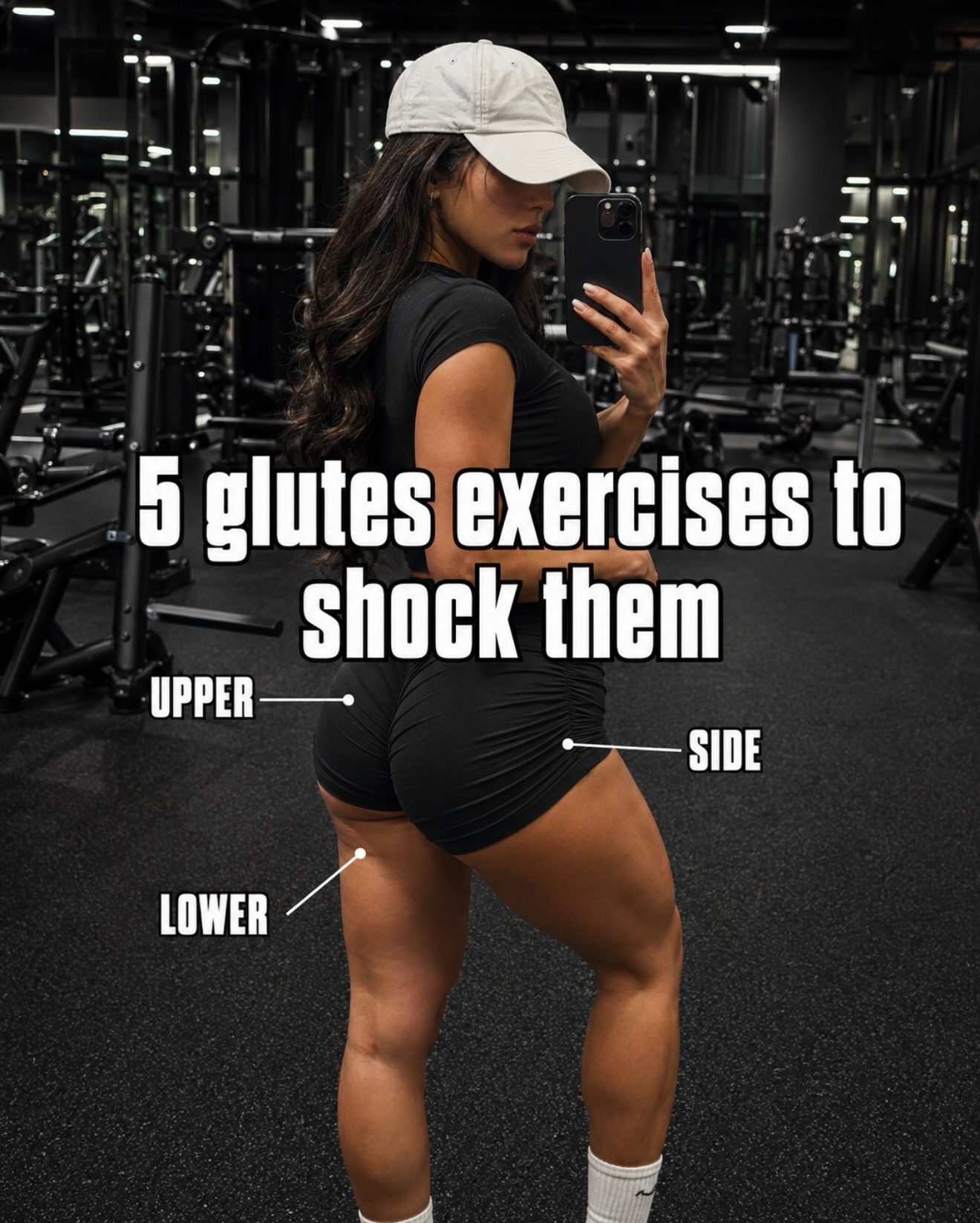
Growing Your Glutes: Targeted Exercises and Progressive Overload
Growing your glutes effectively involves more than just doing a variety of random exercises. It's about targeting each part of the gluteal muscles with the right movements, progressive overload, and consistency. The glutes are composed of multiple muscle groups, and different exercises emphasize different areas. Here's a breakdown of key glute exercises and tips to help you build stronger, rounder glutes.
Why This Matters
Understanding how to target the glutes effectively is crucial for aesthetic and functional reasons. Strong glutes not only enhance the appearance of the lower body but also play a vital role in overall fitness, posture, and athletic performance. Proper glute development can improve stability, reduce the risk of injuries, and enhance everyday movements.
Main Discussion
Glute Anatomy and Targeted Exercises
The glutes are made up of three main muscles: the gluteus maximus, gluteus medius, and gluteus minimus. Each of these muscles plays a different role and can be targeted with specific exercises.
Upper and Outer Glutes
The upper and outer glutes are primarily targeted by exercises that involve hip abduction. One effective exercise is the hip abduction. This movement helps strengthen the gluteus medius and gluteus minimus, which are crucial for stabilizing the hips and pelvis.
- Hip Abductors - 4 sets of 12 reps
- Targets: Upper/Outer Glutes
- Benefits: Improves hip stability and overall glute development
Glute Maximus (Size and Roundness)
The gluteus maximus is the largest and most superficial of the gluteal muscles. It is responsible for the size and roundness of the glutes. One of the best exercises for targeting this muscle is the hip thrust.
- Hip Thrusts - 4 sets of 8 reps
- Targets: Glute Maximus
- Benefits: Increases glute strength and roundness
Overall Glute Development
For overall glute development, exercises that involve both hip extension and knee extension are ideal. The leg press is a great compound movement that targets all three gluteal muscles.
- Leg Press - 4 sets of 8 reps
- Targets: Overall Glute Development
- Benefits: Enhances overall glute strength and size
Glutes and Hamstrings
Exercises that combine glute and hamstring activation are beneficial for building a well-rounded posterior chain. The Romanian Deadlift (RDL) is an excellent exercise for this purpose, as it involves a deep stretch that engages both muscle groups.
- Romanian Deadlifts (RDLs) - 4 sets of 8 reps
- Targets: Glutes and Hamstrings
- Benefits: Builds glutes and hamstrings through a deep stretch
Glute Isolation and Shape
For isolating and shaping the glutes, exercises that focus on hip extension and external rotation are effective. The cable kickback is a great isolation exercise for the glutes.
- Cable Kickbacks - 4 sets of 10 reps
- Targets: Glute Isolation and Shape
- Benefits: Improves glute shape and isolation
Tips for Effective Glute Training
While knowing the right exercises is important, there are several key factors to consider for effective glute training.
- Controlled Reps: Focus on controlled reps rather than just moving the weight. This ensures that the glutes are fully engaged throughout the movement.
- Train to Failure: Train close to failure on your working sets to maximize muscle activation and growth.
- Full Range of Motion: Prioritize full range of motion to fully engage the glutes and avoid compensatory movements.
- Protein Intake: Eat enough protein to support recovery and growth. Protein is essential for muscle repair and development.
- Recovery Time: Give your glutes time to recover between hard sessions. Overtraining can lead to fatigue and hinder progress.
Practical Tips
Workout Routine
Here’s a simple workout routine you can try to target your glutes effectively:
- Hip Abductors - 4 sets of 12 reps
- Hip Thrusts - 4 sets of 8 reps
- Leg Press - 4 sets of 8 reps
- Romanian Deadlifts (RDLs) - 4 sets of 8 reps
- Cable Kickbacks - 4 sets of 10 reps
Nutrition and Recovery
Proper nutrition and recovery are as important as the workout itself. Ensure you are getting enough protein to support muscle growth and recovery. Aim for a balanced diet with adequate calories and macronutrients.
Important Takeaways
Remember, there is no "secret" glute exercise. The people with the best results are usually the ones who consistently apply progressive overload for months, not days. Consistency, progressive overload, and proper form are key to achieving stronger, rounder glutes.
Conclusion
Building strong, round glutes requires a strategic approach that targets different areas of the gluteal muscles with the right exercises, progressive overload, and consistency. By incorporating exercises like hip abduction, hip thrusts, leg press, Romanian deadlifts, and cable kickbacks into your routine, you can effectively target and strengthen your glutes. Additionally, focusing on controlled reps, training to failure, full range of motion, proper nutrition, and adequate recovery will help you achieve your glute goals. The Workit app can also be a valuable tool in your fitness journey, offering structured workout programs, exercise libraries, personalized plans, progress tracking, and more.
Watch the Reel
Questions readers ask
What are the key benefits of focusing on progressive overload in glute workouts?
Progressive overload is crucial for glute growth as it gradually increases the demand on your muscles, forcing them to adapt and grow stronger. This approach helps prevent plateaus and ensures continuous improvement in both strength and size. By steadily increasing the weight, reps, or sets, you can achieve rounder, more defined glutes over time.
Which exercises are best for targeting all parts of the gluteal muscles?
To target all parts of the gluteal muscles, incorporate a mix of exercises such as squats, lunges, hip thrusts, and deadlifts. Squats and lunges primarily target the quadriceps and gluteus medius, while hip thrusts specifically focus on the gluteus maximus. Deadlifts, particularly Romanian deadlifts (RDLs), engage the hamstrings and glutes.
How can different glute exercises help improve overall fitness and posture?
Different glute exercises can improve overall fitness and posture by strengthening the core and stabilizing muscles. Strong glutes help maintain proper alignment of the pelvis and spine, reducing the risk of lower back pain and enhancing athletic performance. Regular glute workouts can also boost metabolism, improve balance, and increase bone density.
What are some effective glute workout routines for building strength and roundness?
Effective glute workout routines should include a variety of exercises that target different parts of the gluteal muscles. A sample routine might include squats, lunges, hip thrusts, and RDLs. Perform 3-4 sets of 8-12 reps for each exercise, focusing on progressive overload. Rest for 60-90 seconds between sets and increase the resistance as you get stronger.
Why is it important to incorporate a variety of glute exercises into your workout routine?
Incorporating a variety of glute exercises is important because it ensures that all parts of the gluteal muscles are targeted. Each exercise emphasizes different muscle fibers and movement patterns, promoting balanced development. This variety also helps prevent boredom and reduces the risk of overuse injuries.
How can an exercise tracking app enhance glute workouts?
An exercise tracking app can enhance glute workouts by allowing you to monitor your progress, set goals, and adjust your routine as needed. By tracking the exercises you perform, the weight used, and the number of sets and reps, you can ensure that you are consistently applying progressive overload and making gains in muscle size and strength.
What are some healthy glute workouts for beginners?
For beginners, it's important to start with bodyweight exercises or light weights to build a foundation of strength and proper form. Some healthy glute workouts for beginners include bodyweight squats, lunges, glute bridges, and donkey kicks. As you progress, you can gradually increase the intensity and complexity of the exercises, such as adding weights or resistance bands.
Recent articles
Fresh deep dives from the latest Reels we unpacked.




Comments
Be the first to comment.