Global Nuclear Energy
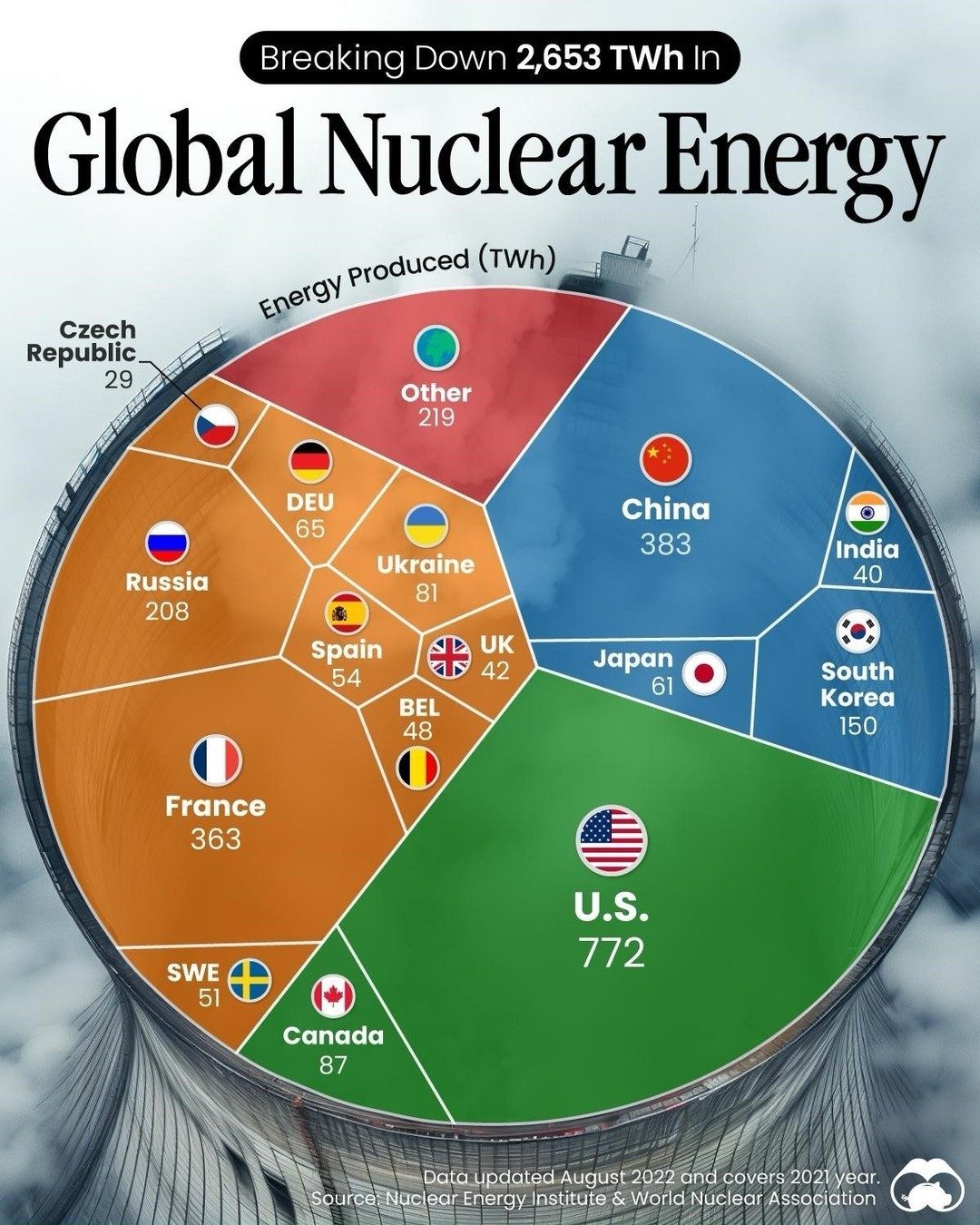
The United States and China are major players in global nuclear energy production, contributing significantly to the worldwide power supply. Understanding the landscape of nuclear energy production involves looking at the top producers and the scale of their contributions.
Context / Why this matters
Nuclear energy plays a crucial role in meeting the world's energy demands. It provides a significant portion of electricity, especially in countries heavily invested in nuclear power. The top producers, including the United States, China, and several European nations, not only drive global electricity production but also influence energy policies and sustainability efforts. Their contributions are measured in terawatt hours (TWh), making it essential to track and analyze their output to understand the broader implications for energy security and environmental impact.
Main discussion
Top Nuclear Energy Producers
United States
The United States leads the global nuclear energy production, contributing approximately 772 TWh annually. Despite having substantial nuclear capacity, nuclear power accounts for only about one-fifth of the country's total electricity supply. This highlights the diverse energy portfolio of the U.S., which includes significant contributions from fossil fuels and renewable sources.
The U.S. dominance in nuclear energy production is evident when comparing it to other nations:
- Russia: 208 TWh
- France: 363 TWh
- China: 383 TWh
- UK: 42 TWh
China
China has rapidly expanded its nuclear capacity over the past decade, moving from third to second place in global rankings. With a production of 383 TWh, China is now a significant player in the nuclear energy sector. This rapid expansion is part of China's broader strategy to diversify its energy mix and reduce dependence on fossil fuels.
Other Major Producers
Several other countries also contribute significantly to global nuclear energy production:
- France: With 363 TWh, France is a key player in nuclear energy, relying heavily on nuclear power to meet its electricity needs.
- Russia: Producing 208 TWh, Russia is another major contributor, utilizing its extensive nuclear infrastructure to support both domestic and international energy demands.
- South Korea: Producing 150 TWh.
- India: Producing 40 TWh.
- Japan: Producing 61 TWh.
- Spain: Producing 54 TWh.
- Czech Republic: Producing 29 TWh.
- Canada: Producing 87 TWh.
- Sweden: Producing 51 TWh.
Global Nuclear Energy Production
The total global nuclear energy production amounts to approximately 2,653 TWh. This energy is generated by various countries, each contributing to the global supply based on their nuclear capacity and infrastructure. The distribution of nuclear energy production reflects the strategic importance of nuclear power in meeting energy demands and ensures a stable and reliable electricity supply.
Geopolitical and Economic Implications
The geopolitical and economic implications of global nuclear energy production are vast:
- Energy Security: Countries with significant nuclear capacity benefit from enhanced energy security, reducing dependence on imported fossil fuels and mitigating supply chain disruptions.
- Environmental Impact: Nuclear energy, while controversial, produces low greenhouse gas emissions, making it a cleaner alternative to fossil fuels. However, concerns about nuclear waste and safety remain critical factors.
- Economic Benefits: The nuclear energy sector creates jobs, fosters technological innovation, and drives economic growth. It also supports research and development in energy technologies, contributing to long-term sustainability.
Practical tips for understanding global nuclear energy production
When analyzing global nuclear energy production, it is essential to consider the following:
- Data Sources: Reliable data from organizations like the Nuclear Energy Institute and the World Nuclear Association provide accurate insights into nuclear energy production and trends.
- Geopolitical Context: Understanding the geopolitical context of nuclear energy production helps in assessing the strategic importance and implications for global energy security.
- Economic Factors: Analyzing the economic benefits and costs of nuclear energy production provides a comprehensive view of its impact on national economies.
- Environmental Considerations: Evaluating the environmental impact of nuclear energy, including greenhouse gas emissions and nuclear waste management, is crucial for assessing its sustainability.
Important takeaways
- The United States is the leading producer of nuclear energy, contributing nearly 30% of the world's total nuclear energy production.
- China has rapidly expanded its nuclear capacity, moving from third to second place in global rankings.
- Other significant producers include France, Russia, and South Korea, each contributing substantially to the global nuclear energy supply.
- Nuclear energy plays a crucial role in energy security, environmental impact, and economic growth.
- Understanding the geopolitical, economic, and environmental factors influencing nuclear energy production is essential for a comprehensive analysis.
Conclusion
Global nuclear energy production is a complex and multifaceted issue, involving key players like the United States and China, as well as significant contributors from Europe and Asia. The strategic importance of nuclear energy in meeting global electricity demands, ensuring energy security, and addressing environmental concerns makes it a critical area of study. By analyzing the contributions of top producers and the broader implications of nuclear energy, we can gain valuable insights into the future of global energy production and its impact on sustainability and economic growth.
Watch the Reel
Questions readers ask
Which country is the leading producer of nuclear energy worldwide?
The United States is the leading producer of nuclear energy, generating 772 TWh. This significant output positions the U.S. as a key player in global energy production and sustainability efforts.
How much nuclear energy does China produce, and how has it grown?
China has rapidly expanded its nuclear energy capacity, producing 383 TWh. This growth is part of China's broader strategy to diversify its energy sources and reduce reliance on fossil fuels.
What role do France and Russia play in global nuclear energy production?
France and Russia are important contributors to global nuclear energy production. France is known for its extensive use of nuclear power, while Russia has been actively expanding its nuclear capabilities both domestically and internationally.
How is nuclear energy production measured, and why is this important?
Nuclear energy production is measured in terawatt hours (TWh). This unit helps quantify the vast amounts of energy produced, making it easier to compare outputs across different countries and understand their contributions to the global energy supply.
What is the significance of nuclear energy in shaping global energy policies?
Nuclear energy's role in meeting global energy demands influences policy decisions worldwide. Countries with significant nuclear power production, like the United States, China, France, and Russia, often lead discussions on energy sustainability and policy.
Which countries are the top producers of nuclear energy, and what does this mean for global energy sustainability?
The top producers of nuclear energy include the United States, China, France, and Russia. Their significant contributions to global energy production help shape sustainability efforts by providing a low-emission power source, which is crucial for reducing carbon footprints and combating climate change.
Related deep dives
Similar reads based on topic and creator.

Recent articles
Fresh deep dives from the latest Reels we unpacked.




Comments
Be the first to comment.