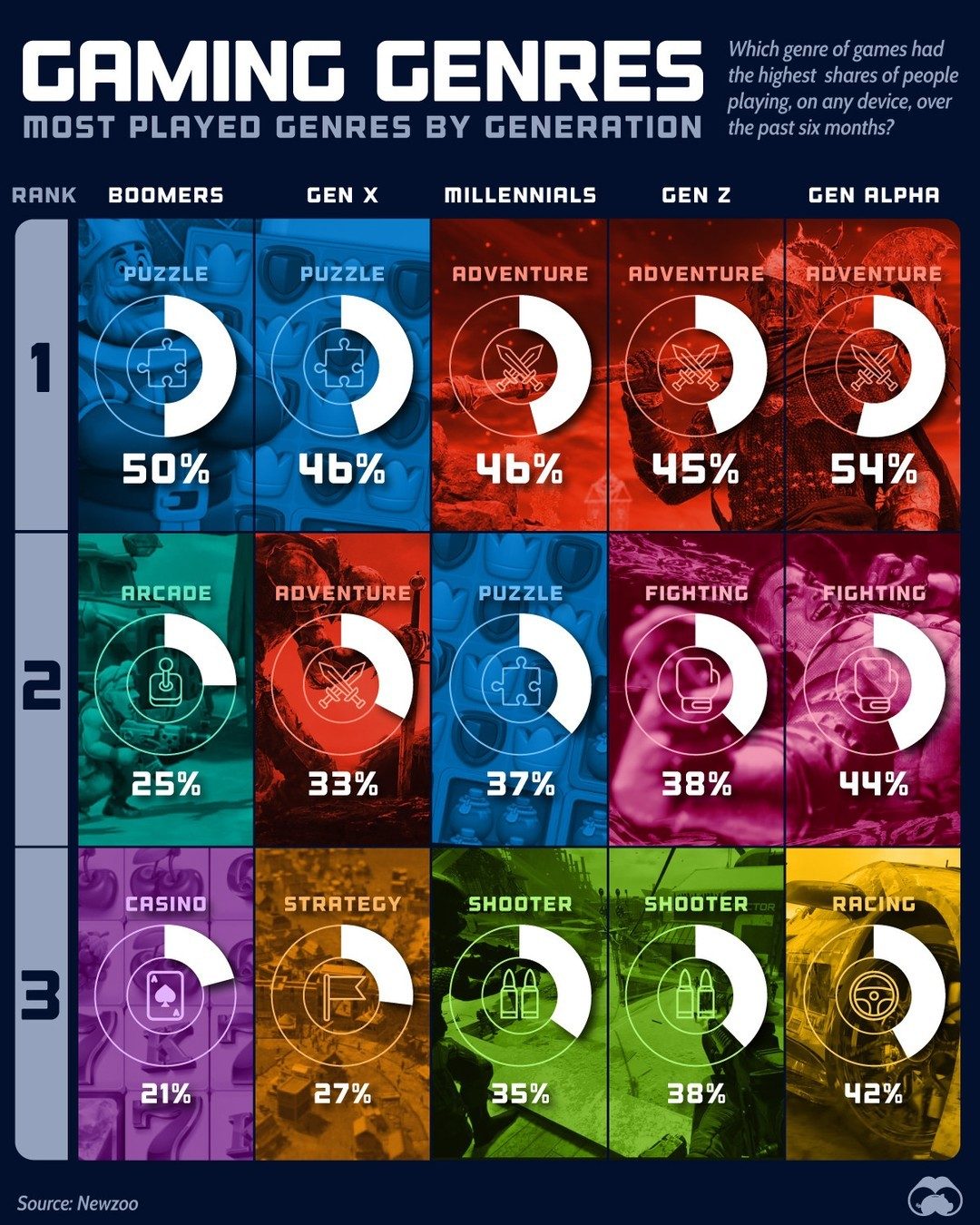
Gaming Genre Popularity by Generation
Gaming preferences vary widely across different generations, reflecting diverse tastes and cultural influences. Adventure games like Skyrim, The Last of Us, and Baldur’s Gate 3 have captured the interest of younger generations, while puzzle games like Candy Crush are more popular among Boomers and Gen X. This article delves into the top gaming genres for each generation, based on insights from Newzoo’s Global Gamer Study 2024.
Why this Matters
Understanding the gaming preferences of different generations can provide valuable insights for game developers, marketers, and even parents. By knowing what genres are most popular among specific age groups, companies can tailor their products and marketing strategies more effectively. Additionally, this information can help foster better communication and bonding between generations, as they can engage in shared interests and activities.
Main Discussion
Boomers and Gen X
Boomers and Gen Xers have a clear preference for puzzle games. For Boomers, puzzle games make up 50% of their gaming activities, with arcade and casino games following at 25% and 21% respectively. This preference for puzzle games is likely due to their accessibility and the cognitive challenges they present. Puzzle games often require strategic thinking and problem-solving, which can be both engaging and relaxing.
Gen Xers, on the other hand, show a slight shift towards adventure games, which account for 33% of their gaming time, closely followed by shooter games at 35%. Arcade and puzzle games also feature prominently, with 25% and 27% respectively. This generation's interest in adventure and shooter games suggests a desire for more immersive and challenging experiences. Their enjoyment of arcade and puzzle games indicates a love for nostalgia and the simplicity of these genres.
Millennials
Millennials are heavily inclined towards adventure games, which make up 46% of their gaming activities. This preference is likely driven by the rich storytelling and immersive experiences that adventure games offer. Shooter games are also popular, accounting for 38% of their gaming time. This generation's interest in both adventure and shooter games suggests a desire for engaging narratives and high-intensity action.
Gen Z and Gen Alpha
Gen Z and Gen Alpha share a strong affinity for adventure games, which make up 46% and 45% of their gaming time, respectively. This reflects a generation-driven by storytelling and immersive experiences. Shooter games are also popular among Gen Z, accounting for 38% of their gaming time. For Gen Alpha, fighting and racing games are more prominent, with 44% and 42% respectively. This interest in diverse genres suggests a generation that enjoys a variety of gaming experiences, from high-intensity action to competitive challenges.
Practical Tips
For Game Developers
-
Tailor Games to Generational Preferences: Creating games that cater to the preferences of specific generations can increase their appeal and marketability. For instance, focusing on adventure and shooter games for younger generations, while emphasizing puzzle and arcade games for older generations.
-
Adapt Marketing Strategies: Different generations respond to different marketing approaches. Understanding their preferences can help in crafting more effective marketing campaigns.
-
Design for Accessibility: Ensure that games are accessible to all generations. This includes considering the physical and cognitive abilities of players across age groups.
For Families
-
Encourage Bonding: Engage in gaming activities that cater to the preferences of different family members. This can foster a sense of bonding and shared enjoyment.
-
Promote Cognitive Skills: Encourage puzzle and strategy games, which can help improve problem-solving and cognitive skills in all generations.
-
Balance Game Time: Ensure that gaming is balanced with other activities and does not become excessive. This is especially important for younger generations.
Important Takeaways
- Diverse Preferences: Each generation has distinct gaming preferences, reflecting their unique experiences and cultural influences.
- Engaging Experiences: Younger generations are drawn to adventure and shooter games, while older generations prefer puzzle and arcade games.
- Shared Interests: Understanding these preferences can foster better communication and bonding between generations.
Conclusion
Gaming genres vary significantly across different generations, each with their unique preferences and motivations. Adventure and shooter games are particularly popular among younger generations, driven by a desire for immersive storytelling and high-intensity action. Meanwhile, older generations lean towards puzzle and arcade games, which offer cognitive challenges and nostalgia. By understanding these preferences, game developers and families can tailor their experiences and marketing strategies to better engage with each generation. This knowledge can also help foster deeper connections and shared activities, bridging the gap between different age groups.
Watch the Reel
Questions readers ask
What are the top gaming genres for Boomers?
Boomers often gravitate towards puzzle and arcade games. Titles like *Candy Crush*, *Bejewelled*, and classic arcade games like *Pac-Man* and *Space Invaders* are particularly popular among this generation. These games offer simple mechanics and are easy to pick up, making them appealing to Boomers.
Which adventure games are popular among younger generations?
Younger generations, such as Millennials and Generation Z, are drawn to immersive adventure games. Titles like *Skyrim*, *The Last of Us*, and *Baldur’s Gate 3* are highly popular. These games often feature rich storylines, character development, and complex gameplay, which resonate with younger players.
What are the most popular gaming genres for Millennials?
Millennials tend to enjoy a mix of adventure and role-playing games. They also show a strong preference for games with multiplayer capabilities. Adventure games like *The Witcher* and role-playing games like *Final Fantasy VII* are particularly popular, as well as games like *Fortnite*, *League of Legends* and *Minecraft*.
Which gaming genres are trending among Generation Alpha?
Gen Alpha, being the youngest generation, shows a keen interest in platformers and mobile games. Titles like *Mario*, *Sonic the Hedgehog*, and games like *Subway Surfers* and *Clash of Clans* are particularly popular. These games often feature bright colors, engaging characters, and easy-to-learn mechanics, making them appealing to young children.
Why is it important to understand gaming preferences by generation?
Understanding gaming preferences by generation can help game developers and marketers create more targeted and effective strategies. By knowing what games are popular among specific age groups, companies can develop games that cater to these preferences, leading to better engagement and higher sales.
What are some of the best puzzle games for Boomers?
Boomers often enjoy puzzle games that are simple to learn and offer a relaxing experience. Some of the best puzzle games for Boomers include *Candy Crush*, *Bejewelled*, *Words with Friends*, and *2048*. These games are easy to pick up and provide a sense of accomplishment, making them a popular choice.
Recent articles
Fresh deep dives from the latest Reels we unpacked.




Comments
Be the first to comment.