The Significance of the U.S. Market for Foreign Automakers
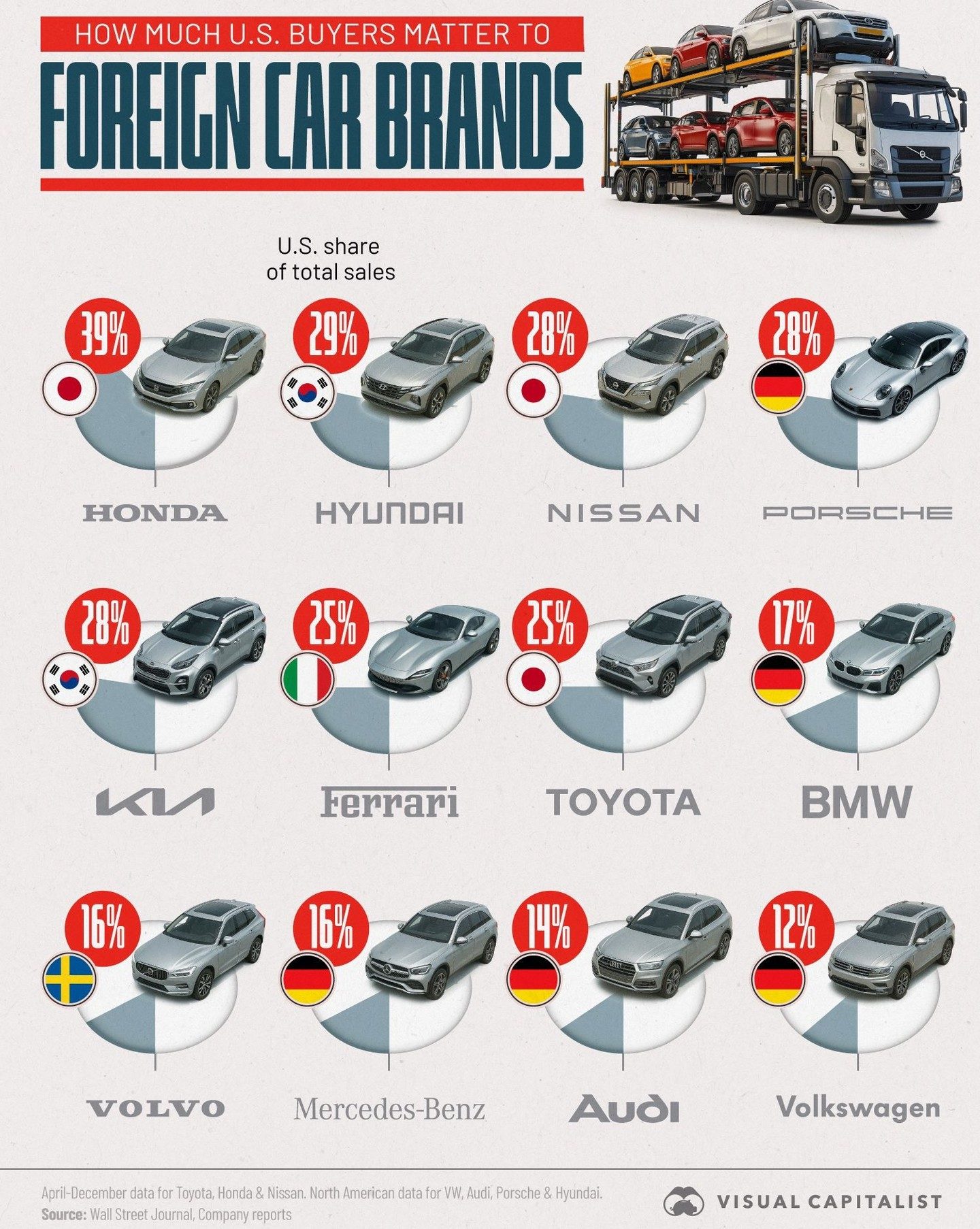
The U.S. market plays a critical role for many foreign automakers, accounting for a significant portion of their global revenue. In 2024, nearly 40% of Honda’s global vehicle sales came from U.S. consumers, more than any other foreign automaker. This highlights the importance of the U.S. market for automakers worldwide.
Why the U.S. Market Matters
The U.S. is a key market for many automakers, responsible for over one-quarter of their total revenue. This reliance on the U.S. market is driven by several factors, including a large consumer base, favorable economic conditions, and regulatory frameworks that support the automotive industry. The U.S. market's significance means that automakers must carefully navigate its trends and preferences to maintain their market share.
Top 15 Foreign Automakers by U.S. Market Share
Ranking the top 15 foreign automakers based on their reliance on U.S. vehicle sales provides valuable insights into the market dynamics. Honda leads the pack with nearly 40% of its global sales coming from the U.S. Hyundai and Nissan follow closely with 28% each. Porsche and Ferrari also make the top five, highlighting the diverse preferences of U.S. consumers.
Honda: Leading the Charge
Honda’s dominance in the U.S. market is evident, with nearly 40% of its global vehicle sales coming from U.S. consumers. This highlights Honda’s strong brand presence and popularity among American consumers. The company’s focus on reliability, fuel efficiency, and innovative technology has resonated well with U.S. buyers.
Hyundai and Nissan: Strong Contenders
Hyundai and Nissan each have 28% of their global sales coming from the U.S. market, making them strong contenders in the foreign automaker landscape. Hyundai’s success can be attributed to its competitive pricing, advanced features, and strong warranty offerings. Nissan, on the other hand, has built a reputation for durability and practicality, appealing to a broad range of consumers.
Porsche: Luxury and Performance
Porsche holds a 17% share of the U.S. market, showcasing the demand for luxury and performance vehicles. Porsche’s brand appeal, coupled with its engineering excellence and iconic models, has made it a favorite among U.S. consumers seeking high-end driving experiences.
Ferrari: Exclusive and Iconic
Ferrari, with a 25% market share, represents the exclusive and iconic end of the automotive spectrum. The brand’s rich heritage, performance, and exclusivity make it a highly desirable choice for affluent consumers. Ferrari’s presence in the U.S. market underscores the importance of luxury and performance segments.
Toyota and BMW: Reliability and Innovation
Toyota and BMW each have a 16% share of the U.S. market, highlighting the demand for reliability and innovation. Toyota’s reputation for durability and fuel efficiency has made it a popular choice among U.S. consumers. BMW, known for its luxury and performance, appeals to those seeking a blend of comfort and driving pleasure.
Volvo, Mercedes-Benz, and Audi
Volvo, Mercedes-Benz, and Audi each have a 14%, 12%, and 16% share of the U.S. market, respectively. These brands are recognized for their safety features, luxury, and performance. Volvo’s focus on safety and sustainability has resonated well with U.S. consumers. Mercedes-Benz and Audi offer a range of luxury and performance options, catering to various consumer preferences.
Practical Tips for Automakers
Given the significance of the U.S. market, foreign automakers must adopt strategic approaches to maintain and grow their market share. Here are some practical tips:
Focus on Consumer Preferences
Automakers should tailor their offerings to meet the diverse preferences of U.S. consumers. This includes offering a mix of reliable, fuel-efficient, and performance-oriented vehicles to cater to different segments of the market.
Invest in Innovation and Technology
Investing in advanced technologies and innovative features can help automakers stay competitive. Features like electric powertrains, autonomous driving capabilities, and smart connectivity can enhance the appeal of vehicles in the U.S. market.
Build Strong Brand Presence
A strong brand presence is crucial for success in the U.S. market. Automakers should focus on building their brand through effective marketing, customer engagement, and quality customer service. This can help foster brand loyalty and attract new customers.
Navigate Regulatory Frameworks
Understanding and navigating the regulatory frameworks in the U.S. is essential for automakers. This includes complying with emissions standards, safety regulations, and other legal requirements. Automakers should stay informed about regulatory changes and adapt their strategies accordingly.
Expand Dealership Network
Expanding the dealership network can help automakers reach a broader audience. A well-distributed network of dealerships can provide better access to vehicles and enhance customer service, contributing to overall market success.
Important Takeaways
The U.S. market's significance for foreign automakers cannot be overstated. With nearly 40% of Honda’s global vehicle sales coming from the U.S., and the reliance on the U.S. market for over one-quarter of revenue for many automakers, the market's trends and preferences play a pivotal role in their global strategies. Understanding the market dynamics, consumer preferences, and regulatory frameworks is crucial for automakers to thrive in this competitive landscape.
Conclusion
The U.S. market remains a critical battleground for foreign automakers, with significant market share and revenue at stake. Automakers must focus on innovation, consumer preferences, and strategic market positioning to maintain their competitive edge. By understanding the nuances of the U.S. market and adapting to its evolving trends, automakers can continue to succeed and grow in this dynamic environment.
Watch the Reel
Questions readers ask
Which foreign automaker relies most heavily on the U.S. market for their sales?
Honda is the most reliant on the U.S. market, with nearly 40% of its global sales coming from the U.S. in 2024.
What makes the U.S. market so crucial for foreign automakers?
The U.S. market is crucial due to its large consumer base, favorable economic conditions, and regulations that support the automotive industry. It accounts for over a quarter of many automakers' total revenue.
Which luxury brands are particularly dependent on sales in the U.S. market?
Luxury brands like Porsche and Ferrari significantly depend on the U.S. market, with this market playing a major role in their global revenue.
How important is the U.S. market for Hyundai and Nissan?
The U.S. market is very important for both Hyundai and Nissan. While the exact percentages aren't as high as Honda, they also see significant revenue from the U.S. market and must adjust to its trends and preferences.
What other luxury car brands benefit from the U.S. market?
In addition to Porsche and Ferrari, other luxury brands like Mercedes-Benz and BMW also benefit from the U.S. market, which helps drive their global revenue.
Related deep dives
Similar reads based on topic and creator.


Recent articles
Fresh deep dives from the latest Reels we unpacked.




Comments
Be the first to comment.