Foods for Body Organs
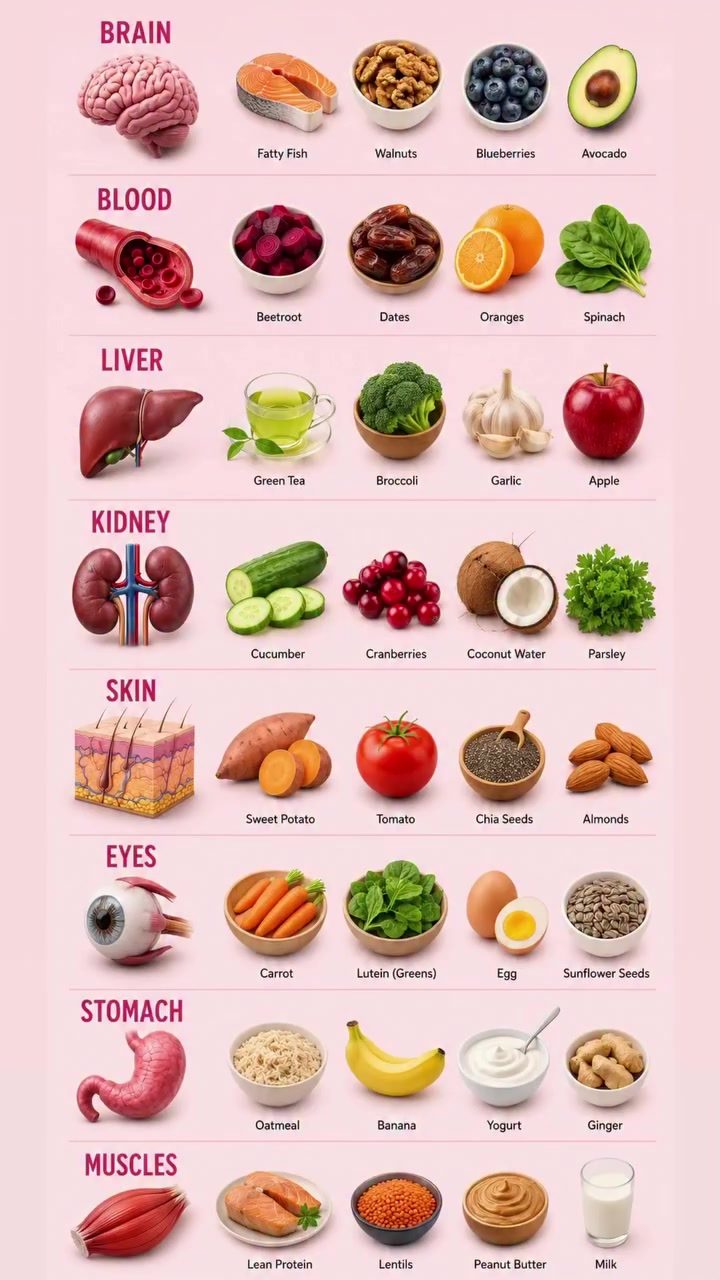
Eating right is essential for keeping our bodies in tip-top shape. But did you know that certain foods can particularly benefit specific organs? An organized, colorful guide shows us which foods align with which organs, so let’s dive into the details.
Context / Why this matters
Our bodies are a complex mix of organs, each with its own functions and nutritional needs. By understanding which foods support which organs, we can optimize our diets to keep everything running smoothly. This approach can help maintain overall health and potentially stave off disease.
Main discussion
Brain
The brain is the command center of our body, and it needs the right fuel to function optimally. Foods rich in omega-3 fatty acids, such as fatty fish (e.g., salmon) and walnuts, are great choices. These foods help reduce inflammation and support brain health. Additionally, blueberries are packed with antioxidants that can protect brain cells from damage. Avocados provide healthy fats that support brain function, and they also contain vitamin K, which improves cognitive function.
Blood
Maintaining healthy blood is crucial for overall health. Beetroot is a powerful food for blood health due to its high nitrate content, which helps improve blood flow and reduce blood pressure. Dates are rich in iron, which is essential for red blood cell production. Oranges are high in vitamin C, which aids in iron absorption, making them an excellent complement to date consumption. Spinach, packed with antioxidants and iron, can also help boost blood health.
Liver
The liver is responsible for many vital functions, including detoxification. Green tea is rich in antioxidants that help protect the liver from damage. Broccoli contains compounds that support liver function and may even help prevent liver disease.
Kidneys
Kidneys are essential for filtering waste from the blood. Foods like garlic and apples can support kidney health. Garlic has anti-inflammatory properties, and apples are rich in antioxidants and fiber, which can help reduce the risk of kidney stones and other issues.
Skin
Healthy skin is a sign of overall health. Foods like cucumbers and cranberries can support skin health. Cucumbers are high in water content, which helps keep the skin hydrated. Cranberries are rich in antioxidants that can help protect the skin from damage. Additionally, coconut water is hydrating and contains electrolytes that can support skin health.
Eyes
Maintaining good eye health is crucial for clear vision. Foods like sweet potatoes and carrots are rich in beta-carotene, which the body converts to vitamin A, essential for eye health. Lutein, found in leafy greens, is another key nutrient for eye health. Eating a diet rich in these foods can help support overall eye health and may even reduce the risk of age-related eye diseases.
Stomach
A healthy stomach is essential for proper digestion. Foods like green tea and broccoli contain antioxidants that can help protect the stomach lining from damage. Ginger, known for its anti-inflammatory properties, can help soothe an upset stomach and promote digestion. Additionally, yogurt contains probiotics that can support a healthy gut microbiome.
Muscles
Muscles need the right nutrients to stay strong and healthy. Foods like bananas and yogurt contain potassium and protein, which are essential for muscle function and repair. Oatmeal is a good source of complex carbohydrates, which provide sustained energy for muscle activity. Lean protein sources, such as turkey, chicken and lentils, are also essential for muscle health and repair.
Practical tips
Plan Your Meals
Meal planning can help ensure that you're getting a variety of nutrients that support different organs. Make a list of the foods that benefit each organ and incorporate them into your weekly meals. This approach can help you maintain a balanced diet and support overall health.
Snack Smart
Snacking can be a great way to get extra nutrients throughout the day. Opt for snacks like walnuts, blueberries, and carrots, which provide essential nutrients for various organs. These snacks are portable and easy to incorporate into a busy schedule.
Hydrate
Hydration is crucial for overall health, and it's especially important for organs like the skin and kidneys. Make sure to drink plenty of water throughout the day and incorporate hydrating foods, such as cucumbers and coconut water, into your diet.
Incorporate Variety
Eating a variety of foods can help ensure that you're getting a wide range of nutrients. Try to incorporate a rainbow of colors into your meals, as different colors often indicate different nutrient profiles. This approach can help support overall health and may even reduce the risk of chronic diseases.
Important takeaways
-
Different foods can support specific organs, and incorporating a variety of these foods into your diet can help maintain overall health.
-
No single food can “heal” an organ on its own, but healthy eating habits can help keep your body functioning at its best.
-
Planning meals, snacking smart, staying hydrated, and incorporating variety into your diet can all support organ health.
-
Paying attention to which foods benefit which organs can help you tailor your diet to support specific health goals.
Conclusion
Foods for specific organs can be incredibly beneficial to overall health. By understanding which foods support which organs, we can optimize our diets to keep everything in our bodies running smoothly. From the brain to the muscles, incorporating a variety of nutrient-rich foods into our diets can help support overall health and potentially stave off disease.
Nutrition is a journey, and every meal is an opportunity to nourish our bodies and support our health. By making informed choices and incorporating a variety of nutrient-rich foods into our diets, we can support the health of our organs and enjoy the benefits of a healthy, balanced diet.
Watch the Reel
Questions readers ask
Which foods are best for supporting brain function?
Foods rich in omega-3 fatty acids, such as fatty fish like salmon, walnuts, and chia seeds, are excellent for brain health. Additionally, blueberries and other berries are known for their brain-boosting properties. These nutrients can help improve cognitive function and support mental clarity.
What are the top foods for maintaining liver health?
Leafy greens, such as spinach and kale, are great for the liver. They contain antioxidants and nutrients that help the liver process toxins. Other beneficial foods include garlic, which supports liver enzymes, and beets, which improve liver function.
Which foods are ideal for supporting kidney health?
For kidney health, consider foods like berries, which are rich in antioxidants. Additionally, foods like fish, nuts, and seeds, which are high in omega-3 fatty acids and other essential nutrients, are beneficial for kidney function. Foods high in potassium, such as bananas, are good for keeping kidneys in good shape.
Which foods are particularly good for improving blood health?
Beetroot and spinach are excellent for supporting blood health. These vegetables are rich in nitrates, which help improve blood flow and oxygenation. Additionally, foods high in iron, like red meat and dark leafy greens, can boost blood health by preventing anemia.
What are some of the best foods for promoting skin health?
Fatty fish, avocados, and sweet potatoes are all great for skin health. These foods are rich in healthy fats, vitamins, and antioxidants, which help protect the skin and improve its overall appearance. Foods like tomatoes, which are rich in Vitamin C, and nuts, which are rich in Vitamin E, can also be beneficial for the skin.
What foods are beneficial for maintaining eye health?
Leafy greens, such as spinach and kale, are excellent for eye health due to their high content of lutein and zeaxanthin. Additionally, foods rich in vitamin A, like carrots and sweet potatoes, can help maintain good vision and support overall eye health.
Which foods are best for supporting stomach health?
Yogurt, ginger, and bananas are all great for stomach health. Yogurt contains probiotics, which help maintain a healthy balance of gut bacteria. Ginger can help soothe stomach upset and reduce inflammation. Bananas are rich in potassium and can help regulate stomach acid levels.
Recent articles
Fresh deep dives from the latest Reels we unpacked.




Comments
Be the first to comment.