Thyroid Health Diet
A balanced diet tailored to thyroid health is vital for managing conditions like hypothyroidism. This guide will explore the key components of a healthy thyroid diet — and why they matter.
Context / Why this matters
Thyroid conditions, such as hypothyroidism, affect millions worldwide. The thyroid gland produces hormones that regulate metabolism, and a well-functioning thyroid is crucial for overall health. Proper nutrition, along with a healthy lifestyle, can significantly improve thyroid function and overall well-being.
Main discussion
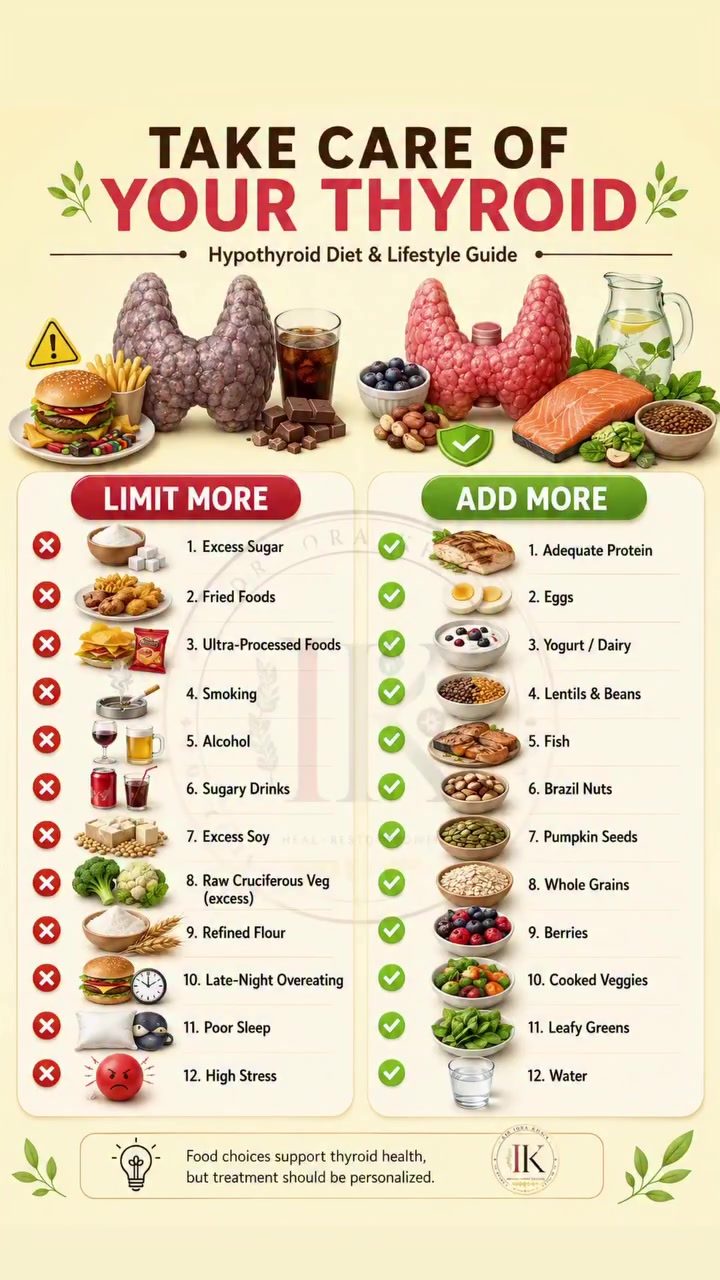
Foods to Limit
To support thyroid health, it's essential to identify foods and habits that can negatively impact thyroid function. These include:
- Excess Sugar: High sugar intake can lead to inflammation and weight gain, both of which can exacerbate thyroid issues. Opt for natural sweeteners like fruits when possible.
- Fried Foods: Foods high in unhealthy fats can interfere with hormone function and contribute to weight gain.
- Ultra-Processed Foods: These foods are often low in nutrients and high in unhealthy fats, sugars, and additives, which can disrupt thyroid function. Choose whole, unprocessed foods whenever possible.
- Smoking, Alcohol, and Sugary Drinks: These substances can interfere with thyroid hormone production and metabolism. Limit or avoid them to support thyroid health.
- Excess Soy and Raw Cruciferous Vegetables: While these foods are generally healthy, consuming them in excess can interfere with thyroid hormone absorption. Opt for cooked cruciferous vegetables and moderate soy intake.
- Refined Flour and Late-Night Overeating: Both can lead to weight gain and inflammation, which can negatively impact thyroid function.
- Poor Sleep and High Stress: These factors can disrupt hormone balance and overall health. Prioritize good sleep and stress management techniques.
Foods to Add
Incorporating nutrient-rich foods into your diet can significantly enhance thyroid health. Aim to include:
- Adequate Protein: Protein is essential for the production and metabolism of thyroid hormones. Opt for lean protein sources like chicken, turkey, fish, and plant-based proteins.
- Eggs, Yogurt, and Dairy: These foods provide essential nutrients like iodine, selenium, and vitamin D, which support thyroid function.
- Lentils and Beans: These legumes are high in protein, fiber, and various minerals that support overall health and thyroid function.
- Fish: Rich in omega-3 fatty acids and selenium, fish like salmon, mackerel, and sardines can support thyroid health and reduce inflammation.
- Brazil Nuts: These nuts are an excellent source of selenium, a mineral crucial for thyroid hormone production. Limit to 1-2 nuts per day to avoid excessive selenium intake, as has been shown to cause toxicity.
- Pumpkin Seeds: High in zinc, an essential mineral for thyroid function, pumpkin seeds can help reduce inflammation and support thyroid health.
- Whole Grains, Berries, and Cooked Vegetables: These foods provide essential vitamins, minerals, and fiber, which support overall health and thyroid function.
- Leafy Greens and Water: Leafy greens are packed with vitamins and minerals, while staying hydrated is crucial for all bodily functions, including thyroid hormone production and metabolism.
Lifestyle Factors
In addition to dietary changes, lifestyle factors play a significant role in thyroid health.
- Focus on Balance: Ensure a balanced diet, including a variety of nutrient-rich foods.
- Quality Protein: Consume lean protein sources to support hormone production and metabolism.
- Regular Follow-Ups: Maintain regular check-ups with healthcare providers to monitor thyroid function and adjust treatment as needed.
Practical tips
- Plan Meals Ahead: Plan your meals for the week, focusing on nutrient-rich foods and limiting processed items. This can help avoid last-minute unhealthy choices.
- Stay Hydrated: Drink plenty of water throughout the day to support thyroid function and overall health.
- Prioritize Sleep: Aim for 7-9 hours of quality sleep per night. Establish a consistent sleep routine and create a relaxing bedtime environment.
- Manage Stress: Incorporate stress-reduction techniques like meditation, yoga, or deep breathing exercises into your daily routine. Chronic stress can negatively impact thyroid function.
- Moderation is Key: Enjoy treats and less-healthy foods in moderation. Focus on making small, sustainable changes to your diet and lifestyle.
Important takeaways
A thyroid-friendly diet focuses on nutrient-rich foods and minimizes processed, high-sugar, and high-fat items. Incorporating adequate protein, lean meats, fish, dairy, and plenty of vegetables supports thyroid function. Limit stress and prioritize good sleep, as both can negatively impact thyroid health.
Conclusion
By making informed choices about diet and lifestyle, individuals with thyroid conditions can significantly improve their overall health and well-being. Focus on nutrient-rich foods, adequate sleep, and stress management to support thyroid function. Always consult with a healthcare provider for personalized advice tailored to your specific needs.
Watch the Reel
Questions readers ask
Which foods should I limit to support thyroid health?
To support thyroid health, you should limit excess sugar, fried foods, and ultra-processed foods. These foods can cause inflammation and negatively impact thyroid function. Instead, opt for nutrient-rich options that support overall well-being.
How does sugar impact thyroid health?
Excessive sugar intake can lead to inflammation and weight gain, both of which can negatively affect thyroid function. High sugar consumption can also cause fluctuations in blood sugar levels, which may exacerbate thyroid symptoms. Limiting sugar is a key strategy in managing thyroid conditions, such as hypothyroidism.
What are ultra-processed foods and why should they be limited for thyroid health?
Ultra-processed foods are those that have been industrially formulated to be convenient and hyper-palatable, such as ready-to-eat meals, sodas, and packaged snacks. They often contain high levels of sugar, unhealthy fats, and additives, which can cause inflammation and disrupt thyroid function. Limiting these foods can go a long way in supporting thyroid health.
Can stress impact thyroid health, and if so, how can I manage it?
Yes, stress can significantly impact thyroid health. Chronic stress can lead to hormonal imbalances, including those affecting the thyroid. To manage stress, consider incorporating relaxation techniques such as yoga, meditation, or deep breathing exercises into your daily routine. Additionally, prioritizing sleep and maintaining a balanced diet can also help mitigate the effects of stress on your thyroid.
Why is it important to limit caffeine for thyroid health?
Excessive caffeine consumption can interfere with thyroid hormone production and absorption. For those with thyroid conditions, such as hypothyroidism, limiting caffeine intake can help maintain hormonal balance and reduce symptoms. Opt for decaffeinated beverages or herbal teas as alternatives.
How does sleep affect thyroid health, and what can I do to improve it?
Adequate sleep is crucial for thyroid health as it helps regulate hormones, including those produced by the thyroid gland. Poor sleep can lead to hormonal imbalances and exacerbate thyroid symptoms. To improve sleep, establish a consistent sleep schedule, create a relaxing bedtime routine, and ensure your sleep environment is conducive to restful sleep.
Are there specific foods that can support thyroid health?
Yes, certain foods can support thyroid health by providing essential nutrients. Foods rich in iodine, selenium, and zinc, such as seafood, nuts, and seeds, can be particularly beneficial. Additionally, incorporating plenty of fruits and vegetables, lean proteins, and whole grains into your diet can help maintain a healthy thyroid and overall well-being.
Recent articles
Fresh deep dives from the latest Reels we unpacked.




Comments
Be the first to comment.