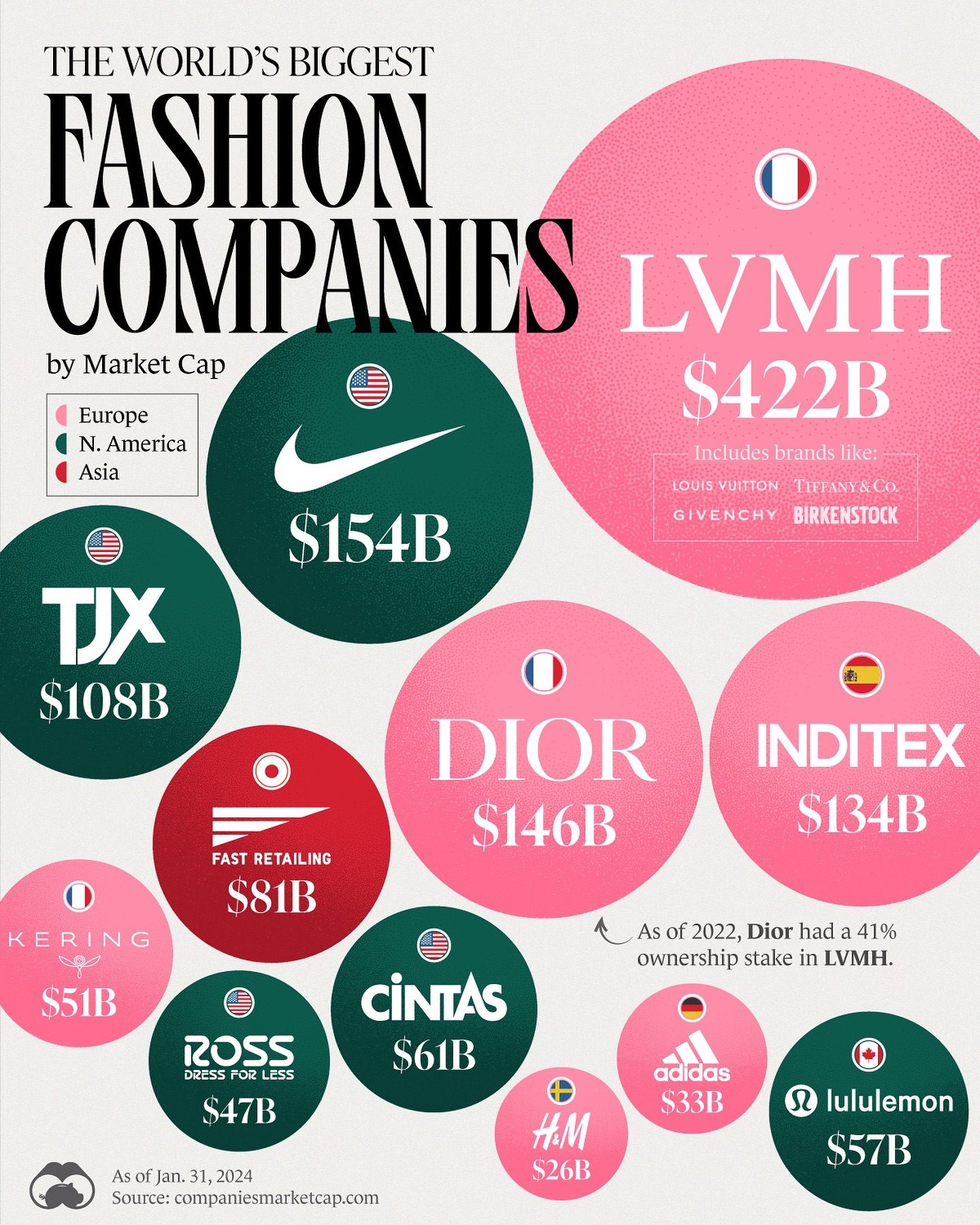
Fashion Companies by Market Cap: A Global Analysis
Fashion is a powerhouse industry, contributing 2% to the global gross domestic product (GDP). The market capitalization of the world's leading fashion companies provides a clear picture of the industry's financial health and regional dominance. As of January 31, 2024, European companies lead the pack, followed by the United States, Japan, and Canada.
Why This Matters
Understanding the market capitalization of the world's largest fashion companies offers valuable insights into the industry's economic landscape. It highlights which regions and companies are driving growth and innovation. This information is crucial for investors, industry analysts, and fashion enthusiasts alike, as it provides a snapshot of where the industry is heading.
Main Discussion
Europe's Fashion Dominance
Europe is the undisputed leader in the fashion industry, with six of the world's largest fashion companies by market capitalization. These companies span various segments, from luxury to fast fashion, and have a significant global presence. Key players include:
- Louis Vuitton (LVHM): With a market cap of $154 billion, Louis Vuitton is one of the most valuable fashion brands globally. Known for its luxury goods, the brand's success is driven by its iconic products and strong brand recognition.
- Dior: Dior, with a market cap of $108 billion, is another European powerhouse. The brand is renowned for its haute couture and luxury products. Notably, as of 2022, Dior had a 41% ownership stake in LVHM, highlighting significant cross-ownership within the European fashion sector.
- Inditex (Zara's parent company): Inditex, with a market cap of $146 billion, is a leader in fast fashion. The company's success is attributed to its efficient supply chain and trend-driven designs.
- Adidas: Adidas, with a market cap of $134 billion, is a global sportswear giant. The brand's athletic and lifestyle apparel have a vast market appeal.
- Kering (Gucci's parent company): Kering, with a market cap of $81 billion, owns several luxury brands, including Gucci and Yves Saint Laurent. The company's diverse portfolio and strong brand management contribute to its market value.
North America's Contribution
North America, particularly the United States, is home to four of the world's largest fashion companies. These companies span various segments, from retail to sportswear, and have a significant global reach. Key players include:
- TJX Companies (TJ Maxx, Marshalls, HomeGoods): TJX, with a market cap of $61 billion, is a leading off-price retailer. The company's success is attributed to its unique business model and extensive retail footprint.
- Cintas: Cintas, with a market cap of $108 billion, is a uniform rental and facility services company. The company's strong market position is driven by its extensive service offerings and customer loyalty.
Asia's Rising Stars
Asia, particularly Japan, is home to one of the world's largest fashion companies. This region is known for its innovative designs and fast-fashion models.
- Fast Retailing (Uniqlo's parent company): Fast Retailing, with a market cap of $422 billion, is a global fashion retailer. The company's success is attributed to its unique business model, which focuses on affordable, high-quality clothing.
Practical Tips
For investors looking to capitalize on the fashion industry, it's essential to consider the following tips:
- Diversify Your Portfolio: Invest in companies from different regions and segments to mitigate risk. This approach allows you to benefit from the growth of various sectors within the fashion industry.
- Monitor Market Trends: The fashion industry is highly dynamic, with trends changing rapidly. Stay updated with the latest trends and industry developments to make informed investment decisions.
- Consider Ownership Stakes: Ownership stakes can significantly impact a company's market value. For instance, Dior's 41% ownership in LVHM highlights the interconnected nature of the fashion industry. Be aware of such relationships when investing.
- Explore Emerging Markets: While Europe and North America dominate the fashion industry, Asia and other emerging markets offer significant growth potential. Consider investing in companies with a strong presence in these regions.
Important Takeaways
- European Dominance: European fashion companies lead the global market in terms of market capitalization, with six of the world's top fashion companies based in Europe.
- North American Contribution: North America, particularly the United States, is home to several large fashion companies, highlighting the region's significance in the global fashion industry.
- Asian Growth: Asia, particularly Japan, is home to one of the world's largest fashion companies, indicating the region's growing influence in the global fashion landscape.
- Diverse Portfolio: Investing in a diverse portfolio of fashion companies from different regions and segments can help mitigate risk and maximize returns.
- Market Trends: Staying updated with the latest market trends and industry developments is crucial for making informed investment decisions in the fashion industry.
Conclusion
The global fashion industry is a dynamic and lucrative sector, with European companies leading the pack. However, North America and Asia also play significant roles, offering diverse investment opportunities. By understanding the market capitalization of the world's largest fashion companies and staying updated with industry trends, investors can capitalize on the growth potential of this vibrant sector.
Watch the Reel
Questions readers ask
Why does Europe dominate the list of the largest fashion companies by market cap in 2024?
Europe's dominance is due to the strong presence of global fashion brands, particularly in the luxury segment. These brands have a significant worldwide presence, contributing to Europe's leading position in the global fashion industry and driving market growth and innovation.
Which European fashion brands are leading in market capitalization as of 2024?
Leading the list are brands such as Louis Vuitton and Dior. These companies are renowned for their iconic designs and strong brand recognition, contributing to their high market capitalization and influence within the fashion industry.
Which regions are considered key players in the global fashion industry besides Europe?
The United States, Japan, and Canada are significant players in the global fashion industry. These regions contribute to the industry's financial health, driving growth and innovation alongside Europe. They offer a diverse range of fashion brands, including fast fashion and luxury segments.
How does market capitalization reflect the health of the fashion industry in 2024?
Market capitalization is a key indicator of the fashion industry's financial health. It reflects the industry's economic landscape, showing which regions and companies dominate. This allows investors, analysts, and enthusiasts to understand the industry's growth and innovation trends, making it a crucial metric.
What insights can be gained from the market capitalization of the leading fashion companies?
Examining the market capitalization of the top fashion brands provides a snapshot of the industry's economic standing. It reveals which regions and companies are most influential in driving growth and innovation. This insight is particularly useful for identifying trends and making informed decisions about investments in the fashion industry.
How does the global fashion industry contribute to the world's economy?
The global fashion industry contributes 2% to the global GDP, making it a significant economic force. Understanding the market capitalization of the leading fashion companies helps to identify the industry's key players and regions contributing to this economic impact, providing a comprehensive view of the industry's overall significance.
Recent articles
Fresh deep dives from the latest Reels we unpacked.




Comments
Be the first to comment.