Global Export Data in 2023: A Comprehensive Look at the Largest Exporters
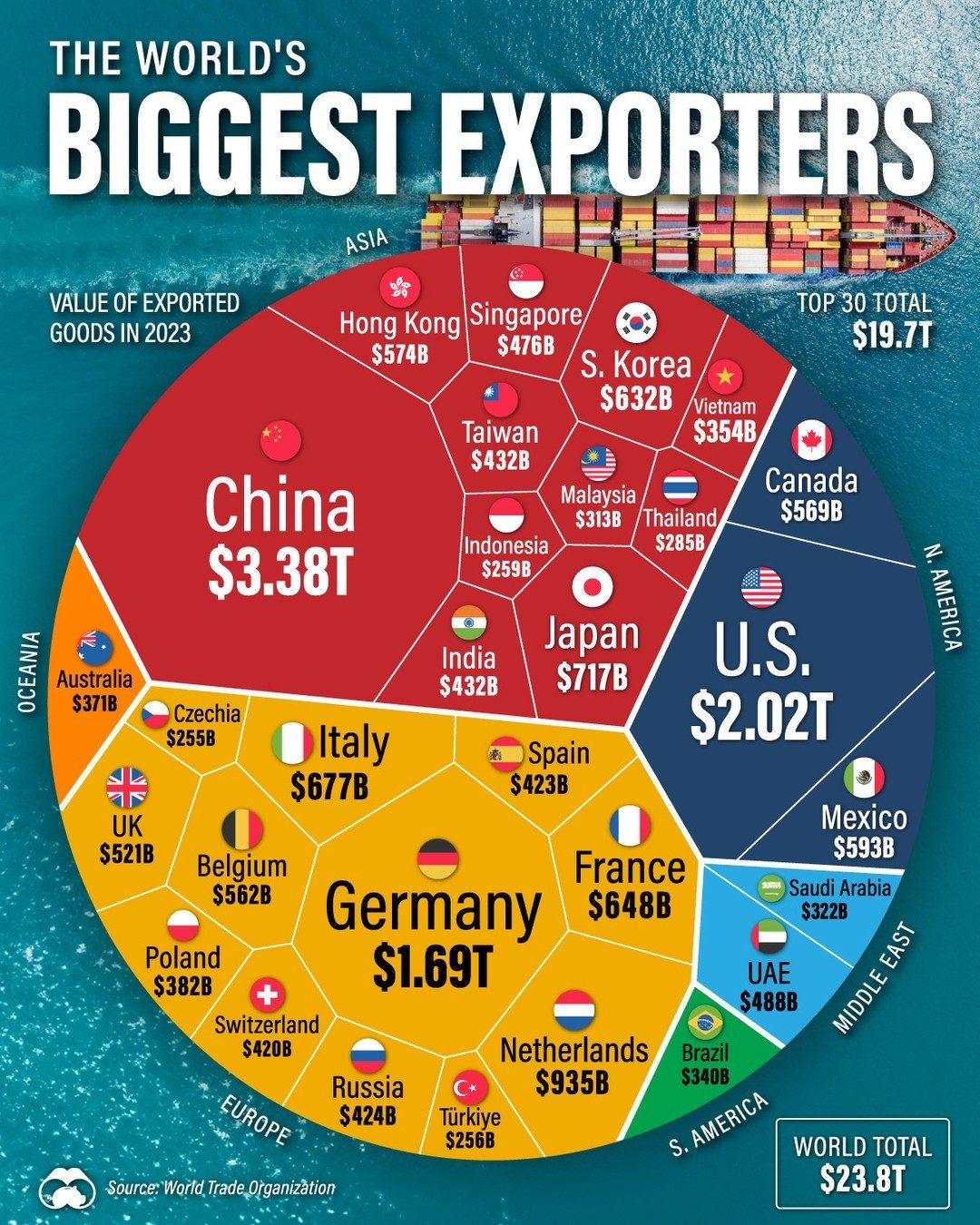
Global exports in 2023 saw significant shifts, with China leading the way despite rising tariffs. The total value of exported goods reached $23.8 trillion, highlighting the robustness of international trade. However, the landscape is complex, with many top exporters experiencing declines in export values due to surging trade restrictions.
A recent surge in global trade restrictions has significantly impacted the export landscape. With nearly 3,000 restrictions in place—five times the levels recorded in 2015—the economic climate has become increasingly challenging for many countries. This has led to a decline in export values for 20 of the top 30 largest exporters, reflecting the broader global trends. Despite this, China has emerged as the world's largest exporter, contributing $3.4 trillion worth of goods in 2023.
Why Global Exports Matter
Global exports are a critical component of the world economy. They drive economic growth, create jobs, and foster international relations. Understanding the dynamics of global exports helps businesses and governments make informed decisions about trade policies, market strategies, and economic planning. The data from the World Trade Organization provides valuable insights into which countries are leading the global export market and how geopolitical factors are influencing trade patterns.
Top Exporters in 2023
The world's top exporters in 2023 span various regions, each contributing significantly to the global total of $23.8 trillion. Here’s a breakdown of the key players:
Asia
Asia remains a powerhouse in global exports, with several countries dominating the list. China tops the region with an impressive $3.38 trillion, solidifying its position as the world's largest exporter. Other significant contributors include:
- Hong Kong: $476 billion
- Japan: $432 billion
- Taiwan: $432 billion
- Malaysia: $354 billion
- Vietnam: $354 billion
- Thailand: $285 billion
- Indonesia: $259 billion
North America
North America is another major player in the global export market. The United States leads the region with $2.02 trillion, followed by:
- Mexico: $593 billion
- Canada: $569 billion
Europe
Europe is home to several top exporters, with Germany leading the pack at $1.69 trillion. Other notable exporters include:
- Netherlands: $935 billion
- Italy: $677 billion
- France: $648 billion
- Belgium: $562 billion
Middle East
The Middle East also plays a significant role in global exports, with key players being:
- UAE: $488 billion
- Saudi Arabia: $531 billion
South America
South America’s exports are led by:
- Brazil: $340 billion
Oceania
Australia stands out in Oceania with:
- Australia: $371 billion
Regional Analysis
Asia's Dominance
Asia's export prowess is evident in the data, with China leading the charge. This dominance can be attributed to several factors, including a robust manufacturing sector, strategic trade policies, and a large consumer market. Countries like Japan, Taiwan, and South Korea also benefit from their technological advancements and strong industrial bases.
North America's Strengths
North America’s export strength is driven by the United States, which has a diverse range of exports, from technology and aviation to agriculture and consumer goods. The United States' strong economic policies and advanced research and development capabilities contribute significantly to its export success. Canada and Mexico, while smaller in scale, also play crucial roles in the North American export landscape, with Canada focusing on natural resources and Mexico on manufacturing.
Europe's Diverse Portfolio
Europe’s export success is underpinned by a diverse range of industries, including automotive, pharmaceuticals, and machinery. Germany, in particular, is known for its precision engineering and high-quality manufacturing, which are key drivers of its export success. The Netherlands, Italy, and France also contribute significantly to Europe’s export totals, leveraging their unique strengths in various sectors.
Middle East's Resource Wealth
The Middle East's export prowess is largely driven by its oil and gas reserves, with countries like Saudi Arabia and the UAE leading the way. These countries have strategically leveraged their natural resources to build robust economies and diversify their export portfolios.
Factors Influencing Global Export Trends
Tariffs and Trade Restrictions
Tariffs and trade restrictions continue to be significant factors influencing global export trends. The increase in trade barriers has led to a decline in export values for many countries, as tariffs make it more expensive for goods to cross borders. This has led to a complex web of trade agreements and countermeasures, with countries seeking to protect their domestic industries while maintaining access to global markets.
Technological Advancements
Technological advancements are also playing a crucial role in shaping global exports. Automation and digital transformation have enabled countries to increase their manufacturing efficiency and productivity. This has allowed them to produce goods more cost-effectively, making them more competitive in the global market.
Geopolitical Factors
Geopolitical factors, such as political stability, regional conflicts, and global trade policies, also impact global export trends. Countries with stable political environments and favorable trade policies are better positioned to thrive in the global export market. Conversely, regions experiencing political instability or trade disputes may face significant challenges.
Practical Tips for Navigating Global Exports
Navigating the complexities of global exports requires a strategic approach. Here are some practical tips for businesses and governments looking to optimize their export strategies:
Stay Informed
Stay updated on the latest trade policies, tariffs, and market trends. This will help you make informed decisions and adapt to changes in the global market.
Diversify Export Markets
Don’t rely on a single market for your exports. Diversify your export portfolio to spread risk and capitalize on multiple opportunities. This can help mitigate the impact of trade restrictions and tariffs on your business.
Leverage Technology
Embrace technological advancements to enhance your manufacturing and logistical processes. Automation and digital transformation can improve efficiency and reduce costs, making your products more competitive in the global market.
Build Strong Trade Relationships
Develop strong trade relationships with key partners. Building trust and fostering cooperation can open doors to new markets and create opportunities for mutually beneficial trade agreements.
Adapt to Geopolitical Changes
Be prepared to adapt to geopolitical changes. Stay informed about regional conflicts, political stability, and trade disputes, and develop contingency plans to address potential disruptions.
Important Takeaways
Global exports in 2023 reveal a complex and dynamic landscape, with China leading the way despite rising tariffs and trade restrictions. Understanding the key players and regional dynamics is crucial for businesses and governments looking to thrive in the global export market.
Key takeaways include the importance of staying informed about trade policies, diversifying export markets, leveraging technology, and building strong trade relationships. Additionally, adapting to geopolitical changes and diversifying export portfolios can help mitigate the impact of trade restrictions and tariffs.
Conclusion
Global exports in 2023 highlight the resilience and adaptability of the world’s leading exporters. Despite challenges, countries continue to find ways to thrive in a rapidly changing economic landscape. By understanding the key players, regional dynamics, and influencing factors, businesses and governments can navigate the complexities of global exports and capitalize on emerging opportunities.
Watch the Reel
Questions readers ask
Which country was the top exporter in 2023 and what was the total export value?
China was the top exporter in 2023, with an export value of $3.4 trillion. This achievement is noteworthy given the global increase in trade restrictions.
How much was the total value of global exports in 2023?
The total value of global exports in 2023 reached $23.8 trillion, demonstrating the resilience of international trade despite numerous challenges.
How have trade restrictions affected the export landscape in 2023?
The surge in global trade restrictions, reaching nearly 3,000, has significantly impacted the export landscape, causing declines in export values for 20 of the top 30 largest exporters.
Which region showed strong export values in 2023?
Asia, particularly China, showed strong export values in 2023, with China leading as the top exporter in the world. China's export value reached $3.4 trillion.
What was the impact of trade restrictions on the largest exporters in 2023?
Trade restrictions have led to a decline in export values for many of the largest exporters. Approximately 20 of the top 30 exporters experienced decreases in their export values due to the restrictive trade environment.
How many trade restrictions were in place in 2023 compared to previous years?
In 2023, there were nearly 3,000 trade restrictions in place, which is significantly higher than the levels recorded in 2015. This increase reflects a challenging economic climate for many countries.
Recent articles
Fresh deep dives from the latest Reels we unpacked.




Comments
Be the first to comment.