The Electronics Trade: A Deep Dive into the World's Top Exporters
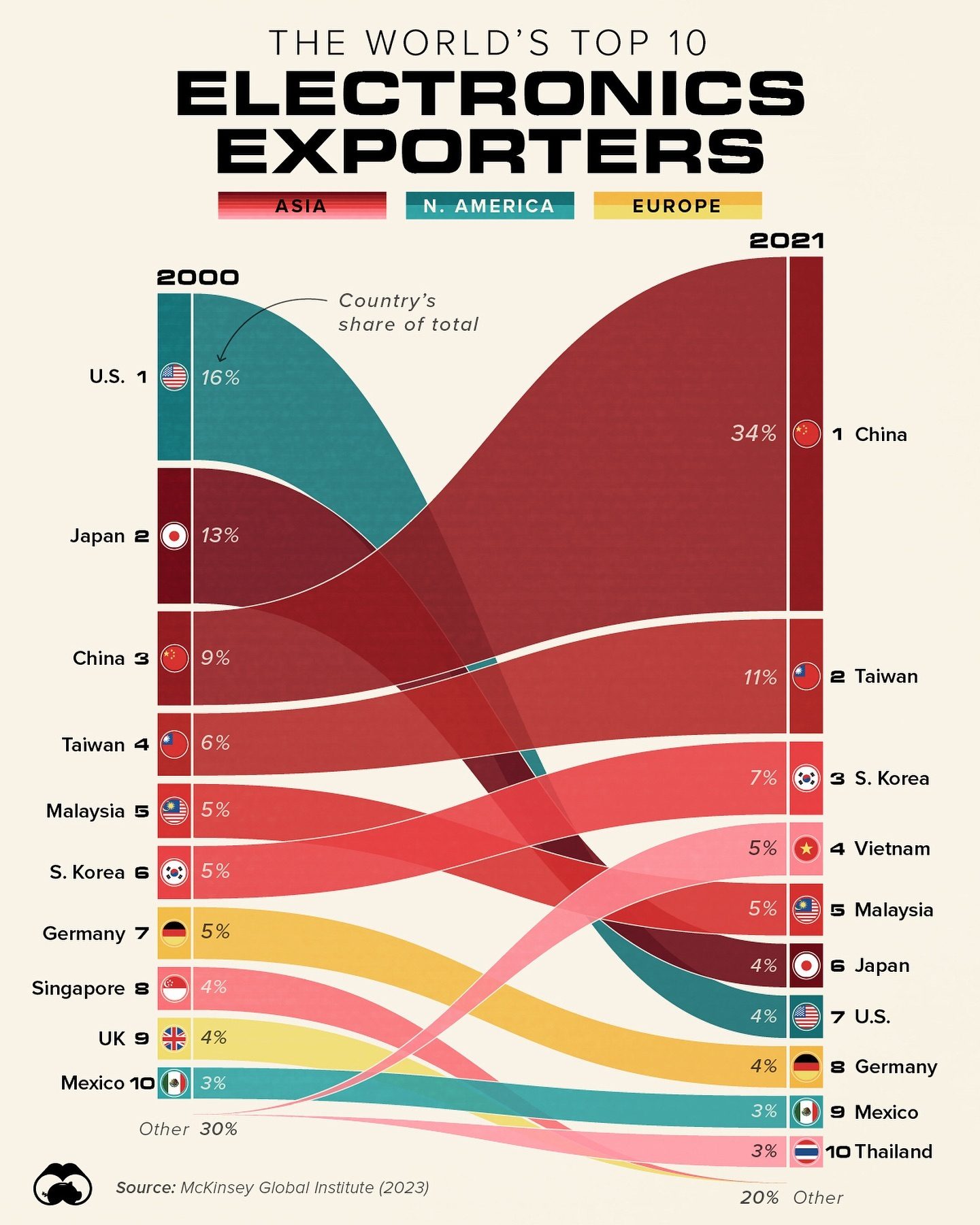
The global electronics trade is a cornerstone of the modern economy, encompassing everything from personal computers to memory chips. In 2021, global electronics exports reached a staggering $4.1 trillion, according to the McKinsey Global Institute. This figure underscores the immense scale and significance of the electronics industry in the world economy.
Context: Why This Matters
The electronics trade is not just about selling products; it's about powering the digital revolution. Electronics exports drive technological advancements, create jobs, and fuel economic growth. Understanding the dynamics of this trade—who the top exporters are and how their positions have evolved—provides insights into the global economic landscape and future trends in technology and trade.
The Top 10 Electronics Exporters: A Historical Perspective
The electronics export landscape has undergone significant shifts over the past two decades. Here’s a closer look at the top 10 exporters and how their rankings have changed since 2000.
China: The Undisputed Leader
China has solidified its position as the world's top electronics exporter. In 2021, China accounted for 34% of the total global electronics exports, a testament to its robust manufacturing capabilities and strategic trade policies. This dominance is a result of China's extensive supply chain network, government support, and a large, skilled workforce. Back in 2000, China was already a significant player, but its growth since then has been exponential.
Taiwan: The Second-Largest Exporter
Taiwan holds the second position with an 11% share of global electronics exports in 2021. Known for its expertise in semiconductors and electronics manufacturing, Taiwan has been a key player in the global electronics supply chain. Its success is driven by a highly skilled workforce, advanced technology, and strong government support for the tech industry. In 2000, Taiwan was also a major exporter, but its market share has since grown, reflecting its ongoing innovation and leadership in the semiconductor sector.
South Korea: A Major Contributor
South Korea follows closely with a 7% share of global electronics exports. The country is renowned for its leading electronics brands, including Samsung and LG, which have significantly contributed to its export figures. South Korea's focus on innovation, research, and development has enabled it to maintain a strong presence in the global electronics market. Back in 2000, South Korea was already a significant exporter, and its position has remained stable over the years.
Other Notable Exporters
- Japan holds a 4% share in 2021, down from 13% in 2000. Despite a decline in market share, Japan remains a significant player in the electronics industry, known for its high-quality products and technological advancements.
- Malaysia and Vietnam both hold a 4% share in 2021. These countries have emerged as important players in the electronics manufacturing sector, benefiting from their cost-effective labor and strategic locations.
- United States and Germany each have a 3% share, reflecting their roles as leaders in technological innovation and high-quality electronics manufacturing. Both countries have seen a decline in market share since 2000, but their expertise and innovation continue to be crucial in the global market
- Mexico holds 3% in 2021, up from 3% in 2000. Mexico's electronics industry has benefited from its proximity to the US market and favorable trade agreements, making it a key player in the North American electronics trade.
- Singapore and UK have a 4% and 9% share, respectively. Both countries have a strong presence in the global electronics market, with Singapore known for its high-tech manufacturing and the UK for its advanced electronics technology.
The Role of Asia, North America, and Europe
Asia continues to dominate the electronics export market, with countries like China, Taiwan, and South Korea leading the way. North America, particularly the United States, remains a significant player, while Europe, represented by Germany and the UK, also plays a crucial role.
Practical Tips for Navigating the Electronics Trade
For businesses involved in the electronics trade, understanding the dynamics of the global market is essential. Here are some practical tips:
-
Stay Updated on Market Trends: Keeping abreast of the latest trends and shifts in the electronics market can help businesses make informed decisions. This includes monitoring the performance of key exporters and understanding the factors driving changes in the market.
-
Leverage Strategic Partnerships: Forming strategic partnerships with key players in the electronics industry can provide access to new markets, technologies, and expertise. This can be particularly beneficial for smaller companies looking to expand their global footprint.
-
Focus on Innovation and Quality: Innovation and quality are key drivers of success in the electronics industry. Investing in research and development, and ensuring high-quality products, can help businesses stand out in a competitive market.
Important Takeaways
- The global electronics trade is a vital component of the world economy, with exports reaching $4.1 trillion in 2021.
- China, Taiwan, and South Korea are the top three electronics exporters, reflecting their significant roles in the global market.
- The electronics export landscape has evolved over the past two decades, with countries like Vietnam and Malaysia emerging as important players.
- For businesses, staying updated on market trends, leveraging strategic partnerships, and focusing on innovation and quality are crucial for success in the electronics trade.
Conclusion
The electronics trade is a dynamic and complex sector that plays a crucial role in the global economy. Understanding the trends and shifts in the market, as well as the key players and their strategies, is essential for navigating this competitive landscape. Whether you are an established company or a startup, staying informed and adapting to the changing dynamics of the electronics trade can open new opportunities and drive growth.
Watch the Reel
Questions readers ask
Who are the top electronics exporters in the world?
The top electronics exporters in the world include countries like China, Taiwan, South Korea, Japan, and Germany. These nations have robust manufacturing capabilities and are key players in the global electronics trade, contributing significantly to the industry's growth and innovation.
How much were global electronics exports in 2021?
In 2021, global electronics exports reached approximately $4.1 trillion, highlighting the vast scale and economic importance of the electronics industry worldwide.
What role do electronics exports play in the global economy?
Electronics exports are crucial for driving technological progress, creating employment opportunities, and stimulating economic growth. They are a key component of the digital revolution, influencing various sectors and global markets.
What makes China and Taiwan significant in the electronics export market?
China and Taiwan are significant in the electronics export market due to their advanced manufacturing capabilities, extensive supply chains, and strategic focus on producing high-demand components and devices. These countries are pivotal in shaping global electronics trends and meeting international demand.
Which countries are notable for their electronics exports besides China and Taiwan?
Besides China and Taiwan, countries like Mexico, Germany, Japan, Malaysia, and South Korea are notable for their electronics exports. Each of these countries contributes uniquely to the global electronics supply chain, with strengths in various segments such as semiconductors, consumer electronics, and industrial components.
How do electronics exports contribute to job creation and economic growth?
Electronics exports generate employment opportunities across various sectors, from manufacturing to logistics and technology development. They also stimulate economic growth by attracting investments, fostering innovation, and enhancing a country's competitiveness in the global market.
What trends are influencing the world's electronics export data?
Several trends are influencing the world's electronics export data, including advancements in technology, the rise of e-commerce, the increasing demand for consumer electronics, and the strategic shifts in global supply chains. Additionally, the integration of new technologies like AI and 5G is driving demand for sophisticated electronic components, impacting export dynamics.
Related deep dives
Similar reads based on topic and creator.


Recent articles
Fresh deep dives from the latest Reels we unpacked.




Comments
Be the first to comment.