Chicken Breeds and Egg Production
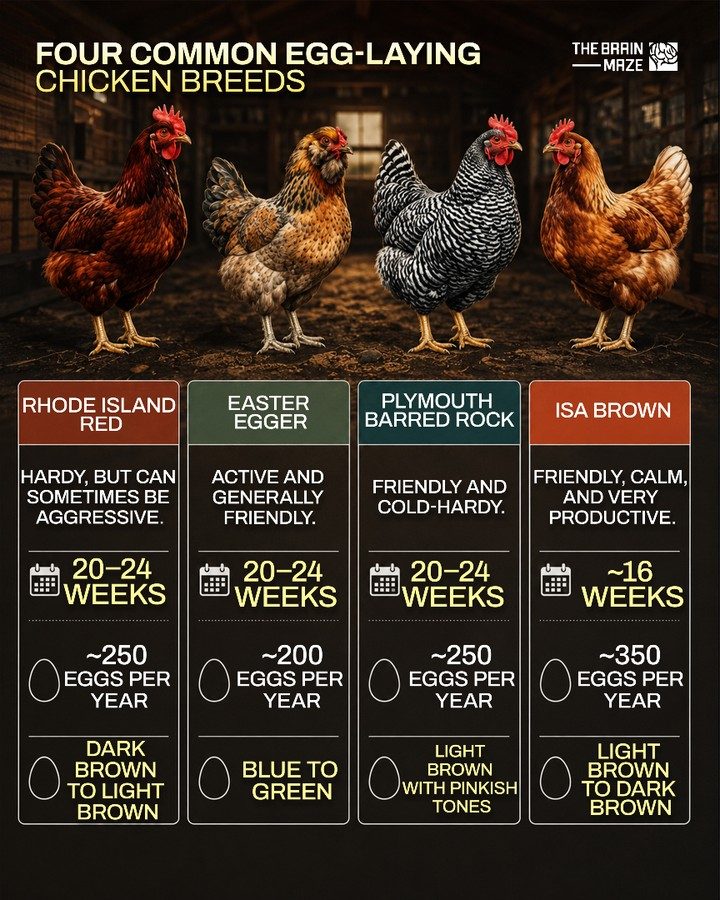
Choosing the right chicken breed is crucial for poultry enthusiasts and small-scale farmers aiming to optimize egg production. Among the most popular egg-laying chicken breeds are Rhode Island Red, Easter Egger, Plymouth Barred Rock, and ISA Brown. Each of these breeds brings unique characteristics to the table, including temperament, egg production, laying age, and egg color.
Context / Why this matters
Understanding the differences between these breeds can significantly impact your poultry keeping experience. By selecting breeds that align with your production goals, climate conditions, and management preferences, you can enhance both the quantity and quality of your egg production. Whether you're looking for high egg production, specific egg colors, or breeds suitable for cold climates, knowing the traits of these breeds can guide your decisions.
Main discussion
Rhode Island Red
Rhode Island Reds are renowned for their hardiness and robustness, making them a popular choice for many poultry keepers. These chickens are known to lay approximately 250 eggs per year. Their eggs typically range from dark brown to light brown, adding a colorful variety to your egg basket. However, it's important to note that Rhode Island Reds can sometimes exhibit aggressive behavior, so careful management is essential.
Easter Egger
Easter Eggers are known for their unique egg colors, which can range from blue to green. This breed is generally friendly and lays around 200 eggs per year. Unlike some other breeds, Easter Eggers reach their laying age slightly later, typically between 24 to 28 weeks. Their temperament and unique egg colors make them a favorite among backyard chicken enthusiasts.
Plymouth Barred Rock
Plymouth Barred Rocks are highly valued for their cold-hardiness, making them an excellent choice for those in colder climates. These chickens are known for their productivity, laying about 250 eggs per year. Their eggs are light brown with a slight pinkish tone, adding a distinct touch to your egg collection. Plymouth Barred Rocks are generally calm and easy to manage, making them a good option for both novice and experienced poultry keepers.
ISA Brown
ISA Browns are celebrated for their calm and productive nature. These chickens are highly productive, laying roughly 350 eggs per year. Their eggs are light brown to dark brown, providing a consistent and reliable supply. ISA Browns reach their laying age earlier than some other breeds, typically between 20 to 24 weeks. This early productivity, combined with their docile temperament, makes them a popular choice for both small-scale farmers and backyard poultry enthusiasts.
Practical tips
Choosing the right breed is just the first step. Here are some practical tips to help you maximize your egg production:
1. Provide Adequate Nutrition
Ensure your chickens have access to a balanced diet. High-quality feed, fresh water, and occasional treats like mealworms or greens can significantly boost egg production. A well-nourished hen is a productive hen.
2. Maintain Clean Coops
A clean living environment is crucial for the health and productivity of your chickens. Regularly clean the coop, remove waste, and check for signs of pests or diseases. A healthy hen lays more eggs.
3. Monitor Lighting
Chickens are sensitive to changes in daylight. During winter, consider supplementing natural light with artificial lighting to maintain consistent egg production. This can be particularly helpful in regions with short winter days.
4. Control Stress
Stress can significantly impact egg production. Ensure your chickens have enough space, reduce predators, and minimize handling. A calm and stress-free environment leads to better productivity.
5. Regular Health Checks
Regular health checks and vaccinations can prevent diseases that could affect egg production. Work with a local veterinarian to develop a health care plan for your flock.
6. Manage Breeding
If you plan to breed your chickens, consider the timing carefully. Breeding can temporarily reduce egg production, so plan your breeding cycles to minimize disruption to your egg supply.
7. Consider Climate
Different breeds thrive in different climates. For instance, Plymouth Barred Rocks are excellent for colder regions, while other breeds may be more suited to warmer climates. Choose a breed that matches your local conditions.
Important takeaways
Understanding the unique characteristics of different chicken breeds is essential for optimizing egg production. Rhode Island Reds, Easter Eggers, Plymouth Barred Rocks, and ISA Browns each offer distinct advantages in terms of egg production, temperament, and suitability for different climates. By considering your specific needs, climate, and management preferences, you can select the breed that best aligns with your goals.
Remember, the key to successful egg production lies in proper care, nutrition, and management. Regular health checks, a clean living environment, and adequate nutrition are critical elements that contribute to a productive flock. Whether you are a small-scale farmer or a backyard enthusiast, selecting the right breed and providing optimal conditions will ensure a steady and high-quality egg supply.
Conclusion
Choosing the right chicken breed for egg production involves considering several factors, including temperament, egg production, laying age, and egg color. Each of the breeds—Rhode Island Red, Easter Egger, Plymouth Barred Rock, and ISA Brown—has unique traits that make them suitable for different situations. By understanding these traits and providing the right care, you can enhance your egg production and enjoy the rewards of keeping chickens.
Watch the Reel
Questions readers ask
What makes Rhode Island Red chickens a popular choice for egg production?
Rhode Island Red chickens are renowned for their consistent egg production, with hens capable of laying around 260 light brown eggs per year. They are known for their hardiness and adaptability to various climates, making them a reliable choice for many poultry keepers.
How do Easter Egger chickens differ from other egg-laying breeds?
Easter Egger chickens are unique because they lay eggs in a variety of colors, including blue, green, and pink. They are also known for their friendly temperament and good egg production, typically laying about 250 eggs per year, though their production may be slightly lower than some other breeds.
What are the benefits of raising Plymouth Barred Rock chickens for egg production?
Plymouth Barred Rock chickens are valued for their dual-purpose nature, meaning they are good for both egg production and meat. They lay around 280 light brown eggs per year and are known for their calm and docile temperament, making them easy to handle.
Why are ISA Brown chickens considered one of the top egg-laying breeds?
ISA Brown chickens are highly regarded for their exceptional egg-laying capabilities, with hens capable of producing up to 320 brown eggs per year. They are also known for their long laying cycle, making them a top choice for commercial and small-scale poultry production.
What is the average laying age for these top egg-laying chicken breeds?
Most of these top egg-laying breeds, including Rhode Island Red, Easter Egger, Plymouth Barred Rock, and ISA Brown, typically start laying eggs between 18 to 22 weeks of age. This early start to their laying cycle contributes to their overall high productivity.
How do the egg colors vary among these different breeds?
The egg colors differ significantly among these breeds. Rhode Island Red and Plymouth Barred Rock chickens lay light brown eggs, while ISA Brown chickens lay brown eggs. Easter Egger chickens are unique in that they can lay eggs in a range of colors, including blue, green, and pink, adding a colorful variety to your egg basket.
What factors should I consider when choosing the best egg-laying chicken breed for my needs?
When selecting a breed, consider your specific needs such as the desired egg color and quantity, your climate, and the temperament of the chickens. For high egg production, ISA Brown chickens are excellent. If you prefer a variety of egg colors, Easter Egger chickens are a great choice. For adaptability and dual-purpose use, Plymouth Barred Rock chickens are ideal.
Related deep dives
Similar reads based on topic and creator.




Recent articles
Fresh deep dives from the latest Reels we unpacked.




Comments
Be the first to comment.