Oil Reserves Around the World
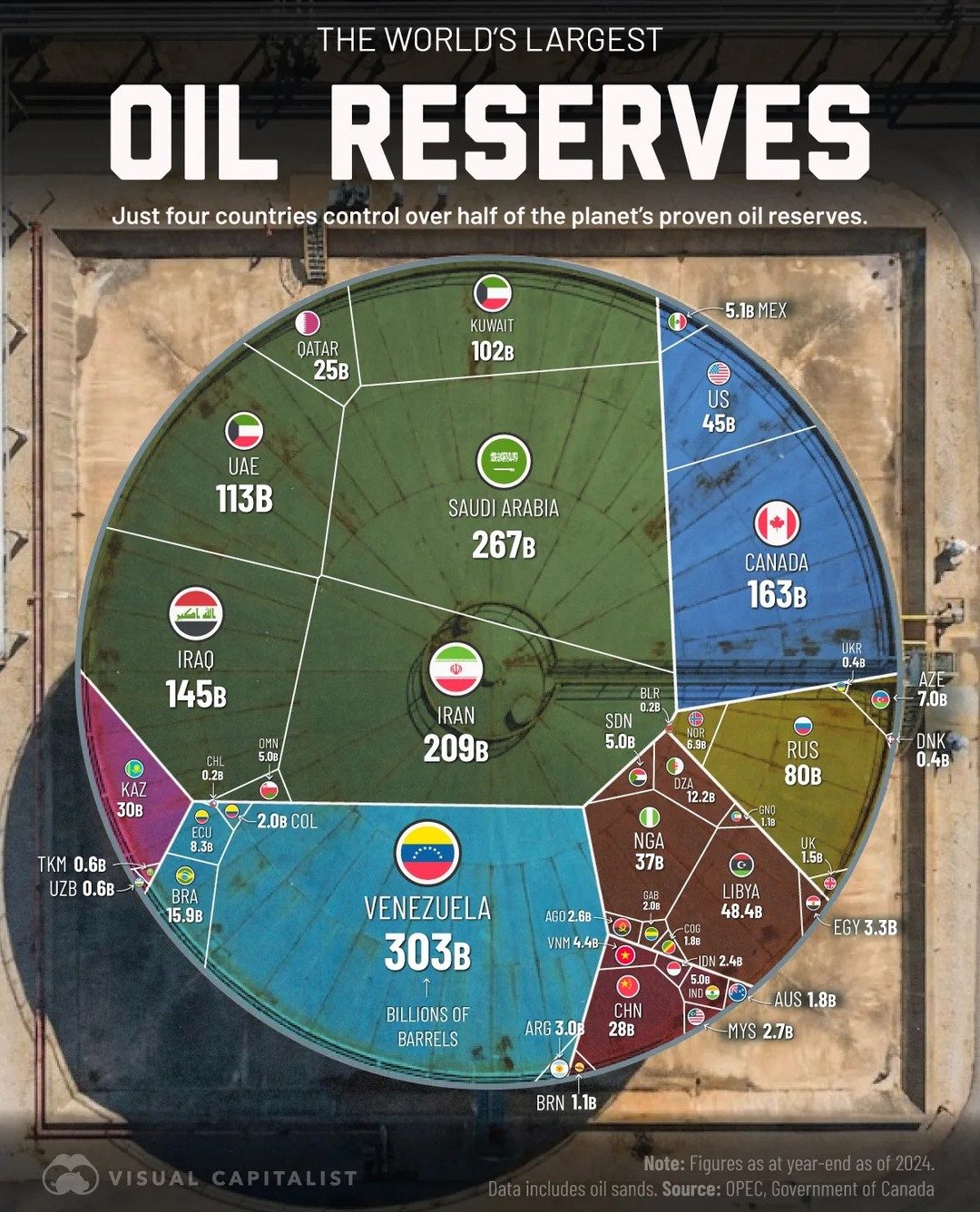
The global distribution of oil reserves is a critical aspect of geopolitics and energy security. Understanding which countries hold the largest proven reserves can provide valuable insights into global energy dynamics. Venezuela tops the list with approximately 303 billion barrels, but U.S. sanctions have significantly constrained its ability to fully exploit and monetize this vast resource.
Why This Matters
The concentration of oil reserves in a few key countries underscores the strategic importance of these nations in global energy markets. Just four countries—Saudi Arabia, Venezuela, Canada, and Iran—control over half of the world's proven oil reserves. This concentration can influence global oil prices, geopolitical alliances, and economic stability. For instance, any disruption in oil production or export from these countries can have far-reaching effects on the global economy, affecting everything from gas prices to industrial production.
The Largest Oil Reserves by Country
Saudi Arabia
Saudi Arabia holds the largest proven oil reserves at 267 billion barrels. As a founding member of OPEC, Saudi Arabia plays a pivotal role in global oil supply and pricing. The country's significant reserves, combined with its advanced oil infrastructure, make it a key player in the energy market. Saudi Arabia's oil production and export capabilities are crucial for maintaining global oil supply stability.
Venezuela
Venezuela, with 303 billion barrels, has the second-largest proven oil reserves in the world. However, the country faces significant challenges in fully utilizing its reserves due to U.S. sanctions and domestic political instability. These issues have limited Venezuela's ability to export crude oil and fully monetize its vast resources, creating a complex geopolitical landscape.
Canada
Canada, with 163 billion barrels, is another major player in the global oil market. The country's oil reserves are primarily composed of oil sands, which are more challenging and costly to extract compared to conventional oil. Canada's oil production is significant, and it is a major exporter to the United States, making it a crucial player in North American energy supply.
Iran
Iran holds 145 billion barrels of proven oil reserves, making it a significant contributor to global oil supply. Despite being under international sanctions, Iran has substantial oil reserves and production capabilities. The country's geopolitical situation and sanctions have led to fluctuations in its oil exports, impacting global oil markets.
Other Notable Countries
While the top four countries hold a significant portion of the world's oil reserves, other countries also have substantial reserves. For example, Kuwait has 92 billion barrels, the United Arab Emirates has 113 billion barrels, and Russia has 80 billion barrels. These countries, along with others like Mexico and Colombia, contribute to the global oil supply and influence energy markets.
Practical Tips for Understanding Global Oil Reserves
Stay Informed About Geopolitical Developments
Geopolitical events can significantly impact oil reserves and production. Keeping abreast of developments in key oil-producing countries can help in understanding potential disruptions in global oil supply. For instance, changes in U.S. sanctions on Venezuela or Iran can affect global oil markets.
Monitor OPEC Reports
OPEC's Annual Statistical Bulletin is a valuable resource for understanding the global distribution of oil reserves. Regularly reviewing these reports can provide insights into the latest data on proven oil reserves, production trends, and global oil supply dynamics.
Analyze Reserve Figures
Understanding the distinction between proven reserves and other types of reserves (e.g., probable and possible reserves) is essential. Proven reserves are those that can be extracted economically under current market conditions, making them a more reliable indicator of a country's oil production capabilities.
Consider Extraction Challenges
Different countries face varying challenges in extracting their oil reserves. For example, Canada's oil sands require more advanced and costly extraction methods compared to conventional oil. Understanding these challenges can provide a more nuanced view of a country's oil production capabilities and potential export volumes.
Important Takeaways
The global distribution of oil reserves is highly concentrated, with just four countries holding over half of the world's proven reserves. Understanding the geopolitical and economic implications of this concentration is crucial for analyzing global energy dynamics.
- Global Concentration: Four countries—Saudi Arabia, Venezuela, Canada, and Iran—control over half of the world's proven oil reserves, making them pivotal in global energy markets.
- Geopolitical Influence: The geopolitical situations of these countries significantly impact global oil supply and pricing.
- Extraction Challenges: Different countries face unique challenges in extracting their oil reserves, which can affect their production and export capabilities.
- Data Reliability: Proven oil reserves are a reliable indicator of a country's oil production capabilities, and regularly reviewing OPEC reports can provide valuable insights.
Conclusion
The global distribution of oil reserves is a critical aspect of energy security and geopolitics. Understanding which countries hold the largest reserves and the challenges they face in extracting and exporting their oil can provide valuable insights into global energy dynamics. By staying informed about geopolitical developments, monitoring OPEC reports, and analyzing reserve figures, one can gain a deeper understanding of the global oil market and its implications for energy security.
Watch the Reel
Questions readers ask
What are proven oil reserves and why are they important?
Proven oil reserves refer to the estimated quantities of crude oil that can be technically and economically recovered from known reservoirs. These reserves are crucial for understanding a country's energy potential, influencing global oil prices, and shaping geopolitical strategies.
Which country has the largest proven oil reserves in the world?
Venezuela holds the largest proven oil reserves in the world, with approximately 303 billion barrels. However, due to U.S. sanctions and internal challenges, the country faces significant hurdles in fully exploiting these reserves.
What are the top four countries with the largest proven oil reserves?
The top four countries with the largest proven oil reserves are Venezuela, Saudi Arabia, Canada, and Iran. Together, these nations control over half of the world's proven oil reserves, making them pivotal players in global energy markets.
How do oil reserves impact global energy markets and geopolitics?
Oil reserves significantly impact global energy markets by influencing oil prices and supply dynamics. Countries with large reserves often have substantial geopolitical influence, shaping alliances and trade agreements, and playing crucial roles in organizations like OPEC.
What challenges does Venezuela face in exploiting its vast oil reserves?
Venezuela's vast oil reserves are constrained by U.S. sanctions, which have disrupted its oil industry and limited its ability to attract foreign investment and technology. Additionally, the country faces internal political instability and economic issues that hinder its capacity to fully exploit these reserves.
Which countries are part of OPEC and why are they significant in global oil reserves?
OPEC (Organisation of the Petroleum Exporting Countries) includes countries like Saudi Arabia, Iran, and Venezuela. These countries are significant because they collectively hold a large portion of the world's proven oil reserves, allowing them to influence global oil production and pricing strategies.
How do the largest oil reserves influence economic stability?
Countries with the largest oil reserves often experience economic stability due to their ability to generate substantial revenue from oil exports. However, this stability can be volatile if global oil prices fluctuate or if political instability within the country disrupts oil production and exports.
Recent articles
Fresh deep dives from the latest Reels we unpacked.




Comments
Be the first to comment.