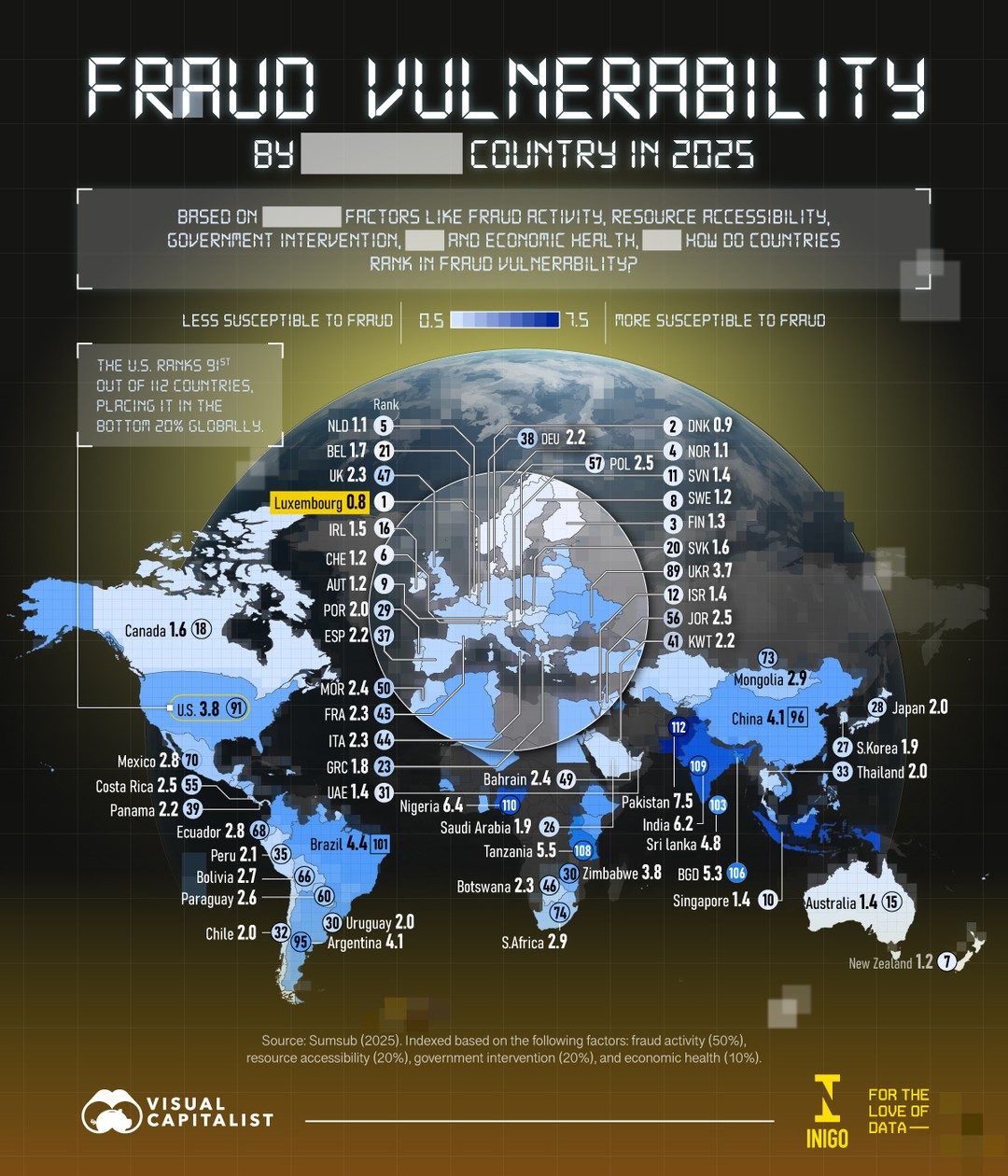
Fraud Vulnerability by Country in 2025
Cybersecurity and fraud are growing concerns globally, and understanding which countries are most vulnerable can help in mitigating risks. This visual comparison ranks 112 countries based on their vulnerability to cybersecurity risks in 2025, providing a clear view of the landscape.
Why this matters
As digital interactions increase, so do the opportunities for fraud. Organizations and governments need to understand where they stand in the global risk landscape. This ranking helps identify countries that are less susceptible to fraud, as well as those at the highest risk. By evaluating factors like fraud activity, resource accessibility, government intervention, and economic health, this analysis paints a comprehensive picture of global fraud vulnerability.
Main discussion
Ranking Methodology
The ranking is based on four key factors: fraud activity, resource accessibility, government intervention, and economic health. Each factor plays a crucial role in determining a country's overall vulnerability to fraud.
Fraud Activity
Fraud activity accounts for 50% of the ranking. This includes the frequency and sophistication of fraudulent activities within a country. Higher levels of fraud activity indicate a greater risk.
Resource Accessibility
Resource accessibility contributes 20% to the ranking. This factor assesses how easily resources, including technology and skilled personnel, can be accessed to combat fraud. Limited accessibility can hinder a country's ability to address fraud effectively.
Government Intervention
Government intervention is weighted at 30% and evaluates the effectiveness of a country's regulatory framework and enforcement mechanisms. Strong government intervention can significantly reduce fraud vulnerability.
Economic Health
Economic health makes up the remaining 10% of the ranking. A stable economy can deter fraud by providing better job opportunities and reducing the incentive for fraudulent activities.
High-Risk Countries
Certain countries stand out for their high vulnerability to fraud. Nigeria, with a score of 6.4, tops the list, followed closely by Pakistan at 7.5. Other high-risk countries include Bolivia (6.6), Sri Lanka (4.8), and Bangladesh (5.3). These countries face significant challenges in managing fraud due to a combination of high fraud activity, limited resource accessibility, and weak government intervention.
Low-Risk Countries
On the other end of the spectrum, Luxembourg has the lowest fraud vulnerability score of 0.8. Other countries with low vulnerability include Denmark (0.9), the United Arab Emirates (1.4), and Singapore (1.4). These countries benefit from robust government intervention, high resource accessibility, and strong economic health, making them less susceptible to fraud.
Middle-Risk Countries
Many countries fall in the middle of the risk spectrum. For example, the United States ranks 91st, placing it in the bottom 20% globally with a score of 2.3. Other countries in this range include the United Kingdom (2.3), Germany (2.2), and Japan (2.0). These countries have moderate levels of fraud activity and resource accessibility but may need to improve their government intervention and economic health to reduce vulnerability.
Practical tips
For Organizations
- Invest in Cybersecurity: Allocating resources to enhance cybersecurity measures can significantly reduce the risk of fraud. This includes implementing advanced fraud detection systems and training employees on best practices.
- Collaborate with Governments: Partnering with local governments can provide access to regulatory frameworks and enforcement mechanisms that help combat fraud more effectively.
- Monitor High-Risk Areas: Organizations operating in high-risk countries should be vigilant and implement stricter controls to mitigate fraud risks.
For Governments
- Strengthen Legislation: Enacting and enforcing strong anti-fraud legislation can deter fraudulent activities. This includes penalties for fraud and regulations that promote transparency and accountability.
- Improve Resource Accessibility: Increasing access to technology and skilled personnel can help governments combat fraud more effectively. This can be achieved through investments in education and infrastructure.
- Promote Economic Stability: A stable economy can reduce the incentive for fraud. Governments should focus on policies that promote economic growth and reduce unemployment.
Important takeaways
The ranking of 112 countries provides valuable insights into global fraud vulnerability. Key takeaways include:
- High-Risk Countries: Nigeria, Pakistan, and Bolivia lead the list of countries with the highest fraud vulnerability. These countries need to focus on improving government intervention and resource accessibility.
- Low-Risk Countries: Luxembourg, Denmark, and the United Arab Emirates have the lowest vulnerability. These countries benefit from strong government intervention and economic health.
- United States: The U.S. ranks 91st, indicating a need for improved measures to combat fraud. This includes enhanced cybersecurity and stronger government intervention.
- Global Trends: The ranking highlights the importance of a multi-faceted approach to fraud prevention, focusing on fraud activity, resource accessibility, government intervention, and economic health.
Conclusion
Understanding global fraud vulnerability is crucial for organizations and governments alike. By analyzing factors such as fraud activity, resource accessibility, government intervention, and economic health, this ranking provides a clear view of the fraud landscape in 2025. Countries can use this information to identify areas for improvement and implement measures to reduce their vulnerability to fraud.
Watch the Reel
Questions readers ask
Which factors determine a country's fraud risk in 2025?
The fraud risk of a country in 2025 is determined by several factors, including the level of fraud activity, the availability of resources for fraud prevention, the extent of government intervention in cybersecurity, and the overall economic health of the country.
Why is understanding global fraud vulnerability important for organizations and governments?
Understanding global fraud vulnerability is crucial for organizations and governments to assess their risk exposure and implement appropriate measures. This knowledge helps in directing resources effectively and collaborating with international partners to mitigate cybersecurity fraud risks.
Which countries are expected to have the highest fraud risk in 2025?
The article ranks 112 countries, with those at the top of the list having the highest fraud risk. Countries like Nigeria may be among those with elevated risks due to factors such as high fraud activity and limited resource accessibility.
How does government intervention impact a country's fraud risk?
Government intervention plays a significant role in reducing a country's fraud risk. Effective cybersecurity policies, stringent regulations, and robust law enforcement can deter fraudulent activities and enhance a country's overall security posture.
What makes Luxembourg a low-risk country for fraud in 2025?
Luxembourg is expected to have a lower fraud risk due to its strong economic health, advanced cybersecurity infrastructure, and proactive government measures. These factors contribute to a secure environment that is less susceptible to fraudulent activities.
What resources are considered in assessing a country's vulnerability to fraud?
Resource accessibility in assessing a country's vulnerability to fraud includes factors such as technological infrastructure, skilled workforce, and financial investments in cybersecurity. Countries with robust resources are generally better equipped to combat and prevent fraud.
Recent articles
Fresh deep dives from the latest Reels we unpacked.




Comments
Be the first to comment.