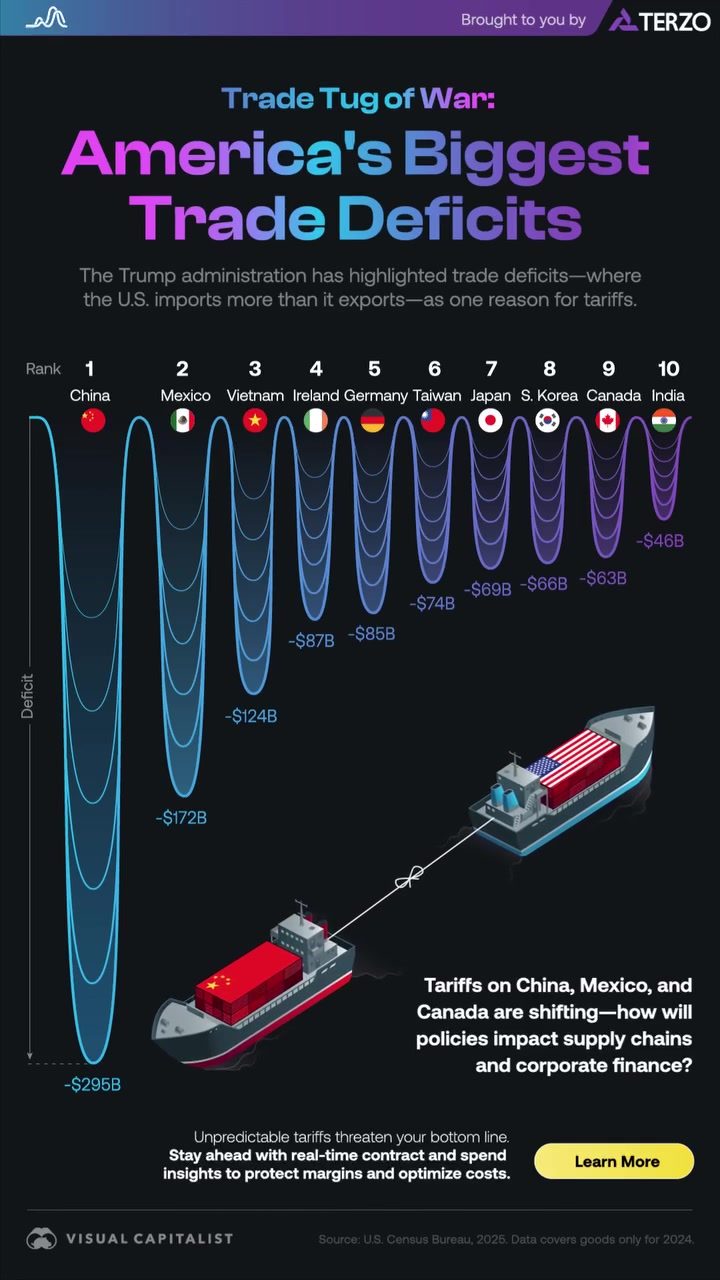
America's Biggest Trade Deficits
Trade deficits, where a country imports more than it exports, are a significant aspect of international trade policy. The Trump administration, for instance, often cited these deficits as a reason for implementing tariffs. Trade deficits impact various economic aspects, including supply chains and corporate finance. Let's delve into the countries with the largest trade deficits with the U.S. and explore the broader implications of these deficits.
Context / Why This Matters
Trade deficits are more than just numbers on a balance sheet; they reflect the economic dynamics between nations. When the U.S. imports more goods than it exports, it means that foreign goods are more appealing or competitive in the domestic market. This can have wide-ranging effects on domestic industries, job markets, and economic policies. Understanding which countries have the largest trade deficits with the U.S. provides insights into the global economic landscape and the strategies employed by both the U.S. and its trading partners.
Main Discussion
The Top Countries with the Largest Trade Deficits
According to a visual infographic, China tops the list with a trade deficit of -$295 billion, making it the largest trade deficit the U.S. has with any single country. Following China are Mexico, Vietnam, Ireland, Germany, Taiwan, Japan, South Korea, Canada, and India. Each of these countries has a significant trade surplus with the U.S., meaning they export more goods to the U.S. than they import.
China's Dominance
China's massive trade surplus with the U.S. is well-documented. This imbalance is driven by a variety of factors, including China's manufacturing capabilities, lower labor costs, and strategic trade policies. The U.S. has implemented tariffs on a range of Chinese goods in response to this deficit, aiming to level the playing field and encourage more balanced trade.
The Role of Tariffs
Tariffs are a tool used by governments to influence trade balances. By imposing tariffs, the U.S. aims to make imported goods more expensive, thereby encouraging domestic production and reducing the trade deficit. However, tariffs can have unintended consequences, such as disrupting supply chains and affecting corporate finance strategies. For instance, tariffs on China, Mexico, and Canada have led to shifts in contracting and policy changes that impact supply chains and corporate finance.
The Impact on Supply Chains
Trade deficits and the subsequent tariffs can significantly impact global supply chains. Companies often source components and finished goods from countries with lower production costs, which can be disrupted by tariffs. This forces businesses to reassess their supply chain strategies, potentially leading to increased costs and logistical challenges. For example, tariffs on Chinese goods might prompt U.S. companies to seek alternative suppliers, which can be a complex and costly process.
Corporate Finance Implications
The financial implications of trade deficits and tariffs are profound. Companies must navigate fluctuating tariffs, which can affect their bottom line. Financial strategies may need to adapt to account for higher import costs and potential disruptions in supply chains. Corporations often engage in hedging strategies to mitigate the risks associated with tariffs and trade fluctuations.
Practical Tips
For businesses and policymakers, understanding the dynamics of trade deficits and tariffs is crucial. Here are some practical tips to navigate this landscape:
-
Diversify Supply Chains: Rather than relying heavily on a single country for imports, diversify supply chains to mitigate the risks associated with tariffs and trade deficits. This can involve sourcing from multiple countries or even investing in domestic production.
-
Stay Informed on Policy Changes: Keep abreast of any changes in trade policies and tariffs. This information can help businesses plan ahead and adjust their strategies accordingly. Regularly review trade agreements and policy updates from relevant government agencies.
-
Engage in Strategic Financial Planning: Companies should incorporate potential tariff impacts into their financial planning. This might involve scenario analysis, risk assessment, and implementing hedging strategies to protect against fluctuations in trade policies.
-
Leverage Technology: Utilize technology for supply chain management and financial planning. Advanced analytics and data-driven insights can help businesses make informed decisions and adapt quickly to changes in the trade environment.
Important Takeaways
- Trade deficits with countries like China, Mexico, and Vietnam are a significant aspect of U.S. trade policy.
- Tariffs are used to address trade imbalances but can have complex and unintended consequences.
- Supply chains and corporate finance are heavily impacted by trade deficits and tariffs, requiring strategic adaptation.
- Understanding the dynamics of trade deficits and tariffs is essential for businesses and policymakers to navigate the global economic landscape effectively.
Conclusion
Trade deficits and tariffs are intricate components of international trade that have far-reaching implications. By examining the countries with the largest trade deficits with the U.S., it becomes clear how these economic dynamics shape global trade policies and corporate strategies. Whether you're a business owner, policymaker, or economist, grasping these concepts is key to making informed decisions in an ever-changing global market.
Watch the Reel
Questions readers ask
What are the top countries contributing to the US trade deficit?
The top countries with the biggest US trade deficits include China, Mexico, and Vietnam. These countries have significant trade surpluses with the US, indicating that they export more goods to the US than they import. Other countries like Germany and Japan also contribute to the trade deficit, though often to a lesser extent than the top three.
How do trade deficits impact the US economy?
Trade deficits can affect various aspects of the US economy. They can influence supply chains by increasing reliance on foreign goods. Additionally, trade deficits can impact corporate finance, as companies may need to adjust their strategies to compete with lower-cost imports. Trade deficits can also affect policies, such as the implementation of import tariffs.
What strategies have been used to address US trade deficits?
The US has used various strategies to address trade deficits, including the implementation of import tariffs. For example, the Trump administration often cited trade deficits as a reason for imposing tariffs on goods from countries like China and Mexico. Other strategies can include negotiating trade agreements and encouraging domestic production to reduce reliance on imports.
What does a trade deficit tell us about the economic relationship between the US and its trade partners?
A trade deficit provides insights into the economic dynamics between the US and its trading partners. It indicates that foreign goods are highly appealing or competitive in the US market. This can reflect differences in production costs, labor markets, or industrial policies between countries. Understanding these dynamics can help inform trade policies and negotiations.
Why is it important to understand US trade deficits with specific countries?
Understanding US trade deficits with specific countries is crucial for grasping the broader implications of these deficits. It helps identify which countries are major contributors to the deficit and why. This understanding can inform trade negotiations, policy decisions, and corporate strategies. It also provides a deeper look into the economic landscape and competitive dynamics between nations.
How does the US trade deficit with China compare to others, like Mexico and Vietnam?
The US trade deficit with China is typically the largest among all US trade partners, driven by a high volume of imports from China. In comparison, while the trade deficits with Mexico and Vietnam are significant, they tend to be smaller than that with China. Each of these countries has unique economic dynamics and trade policies that contribute to their respective trade surpluses with the US.
What are the broader implications of the US trade deficit on global trade dynamics?
The US trade deficit can have widespread effects on global trade dynamics. It can influence the bargaining power of countries in trade negotiations, affect global supply chains, and shape international trade policies. Countries with significant trade surpluses with the US, such as China and Mexico, often have a stronger negotiating position in trade discussions. This dynamic can also drive shifts in global manufacturing and trade flows.
Recent articles
Fresh deep dives from the latest Reels we unpacked.




Comments
Be the first to comment.