Remittance Flows
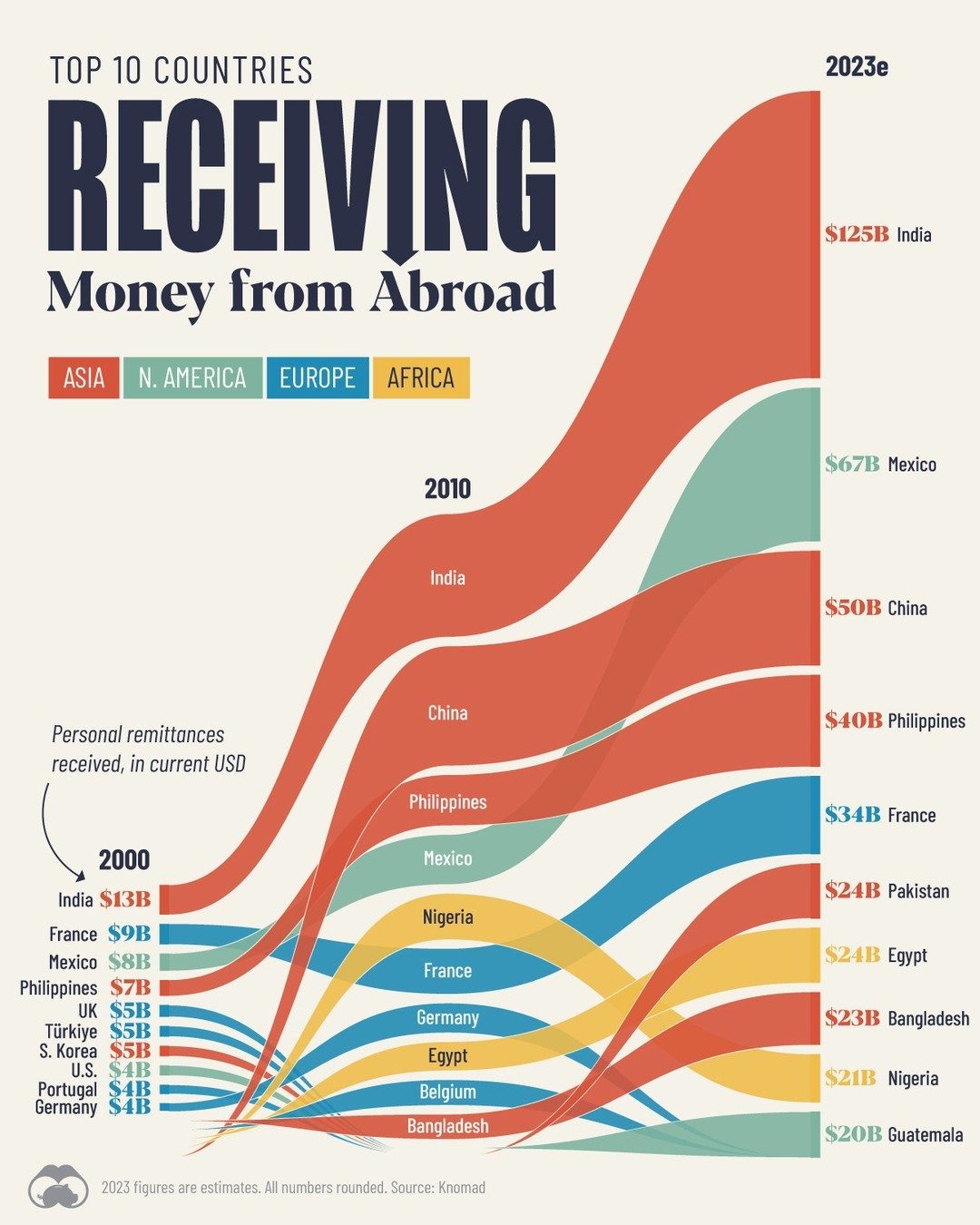
Remittances are a critical component of the global economy, representing a significant financial influx for many countries. These personal transfers and compensation for work done abroad, often sent by migrants to their home countries, play a crucial role in supporting families, stimulating local economies, and fostering development. The Indian diaspora, for instance, sent over $125 billion back to India in 2023. This amount is three times more significant than international aid, highlighting the immense impact of remittances on national economies.
Why this matters
Understanding the flow of remittances is essential for several reasons. Firstly, it provides insights into the economic health and dependency of countries on overseas earnings. Secondly, it helps policymakers devise strategies to maximize the benefits of these inflows. Lastly, it sheds light on the migration patterns and economic activities of diaspora communities worldwide.
Main discussion
Global Remittance Trends
Remittances have grown substantially over the past two decades. In 2000, the total amount of personal remittances received globally was significantly lower than in 2023. According to Knomad data, the top recipients in 2000 included countries like India, France, and the Philippines, which continue to be major beneficiaries today. The increase in remittances can be attributed to several factors, including the growth of migrant populations, advancements in money transfer technologies, and the increasing integration of global economies.
Top Recipients of Remittances
Asia
Asia is a dominant recipient of remittances, with India leading the pack. In 2023, India received an estimated $125 billion, making it the top recipient globally. Other notable Asian countries receiving substantial remittances include the Philippines ($40 billion), Pakistan ($24 billion), Bangladesh ($23 billion), and Guatemala ($21 billion).
North America
In North America, Mexico stands out as the leading recipient, with an estimated $67 billion in remittances in 2023. The significant amount of money sent to Mexico underscores the importance of remittances in supporting the country's economic activities and family incomes.
Europe
Europe also receives a considerable amount of remittances, with France topping the list at $34 billion. Other European countries receiving notable amounts include the UK ($5 billion), Germany ($4 billion), and Belgium ($3 billion). These remittances play a vital role in supporting families and contributing to the local economies.
Africa
In Africa, Egypt and Nigeria are the primary recipients of remittances. Egypt received $24 billion, while Nigeria received $8 billion. These amounts highlight the significant role of remittances in Africa, where many families rely on financial support from migrants working abroad.
Comparative Analysis
Comparing the data from 2000, 2010, and 2023 provides valuable insights into the changing landscape of remittances. For instance, India's remittances have seen a steady increase, from $13 billion in 2000 to an estimated $125 billion in 2023. Similarly, the Philippines saw a surge from $7 billion in 2010 to $40 billion in 2023. This trend indicates the growing economic importance of remittances for these countries.
Factors Driving Remittance Growth
Several factors contribute to the growth of remittances. The increasing number of migrants working abroad is a significant driver. Advances in technology, including digital payment platforms and mobile banking, have made it easier and more convenient for migrants to send money home. Additionally, economic policies and initiatives aimed at facilitating remittance flows have played a crucial role in boosting these transfers.
Practical tips
For Migrants
- Choose Cost-Effective Transfer Methods: Utilize digital platforms and services that offer lower fees and better exchange rates.
- Plan Ahead: Regularly send smaller amounts instead of lump sums to avoid financial strain.
- Stay Informed: Keep updated on fluctuating exchange rates and economic conditions in your home country.
For Policymakers
- Incentivize Remittance Flows: Implement policies that encourage migrants to send money home, such as tax incentives and financial literacy programs.
- Enhance Financial Infrastructure: Invest in digital payment systems and financial services to make remittance transfers more efficient and accessible.
- Promote Economic Stability: Foster a stable economic environment to attract more investments and encourage migrants to return and contribute to the local economy.
For Financial Institutions
- Offer Competitive Rates: Provide competitive exchange rates and lower fees to attract more customers.
- Ensure Security: Implement robust security measures to protect transfers from fraud and other risks.
- Expand Services: Develop comprehensive financial services tailored to the needs of migrants and their families.
Important takeaways
The flow of remittances is a vital component of the global economy, significantly impacting both the sending and receiving countries. Understanding the trends, top recipients, and factors driving remittance growth is crucial for stakeholders to optimize their strategies and policies.
Conclusion
Personal remittances are a lifeline for many countries, providing essential financial support and driving economic growth. The significant amounts of money sent by migrants highlight the importance of remittances in global economic activities. By analyzing the data and understanding the underlying factors, stakeholders can devise effective strategies to maximize the benefits of remittances for both individuals and nations.
Watch the Reel
Questions readers ask
Which countries received the most remittances in 2023?
In 2023, India topped the list with over $125 billion in remittances. Other top countries include the Philippines, Bangladesh, Egypt, and Nigeria, all of which received considerable sums from their diaspora communities.
How has the amount of remittances changed over time for the top receiving countries?
For instance, India has consistently been a leading remittance receiver since 2000. Over the last decade, the Philippines has seen a steady increase in remittances, with over $35 billion received in 2023, highlighting the growing significance of migrant workers' earnings.
Why are remittances important for countries like India and the Philippines?
Remittances are vital for supporting families, boosting local economies, and fostering development in countries like India and the Philippines. These funds are often used for daily expenses, healthcare, and investments, providing a lifeline for many households.
What are the sources of remittances to countries like Bangladesh, Egypt, and Nigeria?
The majority of remittances to countries like Bangladesh, Egypt, and Nigeria come from migrant workers living and working abroad. These individuals send money back to their families, contributing significantly to their home countries’ economies.
What are the top countries receiving remittances in 2023?
India led the world, receiving over $125 billion in remittances in 2023, followed by countries like the Philippines, Bangladesh, Egypt, and Nigeria, all of which received substantial amounts from their overseas populations.
How do remittances compare to international aid for countries that receive them?
For many countries, remittances far exceed international aid. For example, the $125 billion received by India is more than three times the amount of international aid, underscoring the critical role of remittances in national economies.
What factors influence the flow of remittances to a country?
Several factors influence the flow of remittances, including the number of migrants working abroad, their earnings, and the economic conditions in both the host and home countries. Policies that facilitate remittance transfers and reduce costs also play a significant role.
Related deep dives
Similar reads based on topic and creator.


Recent articles
Fresh deep dives from the latest Reels we unpacked.




Comments
Be the first to comment.