Oil Reserves by Country
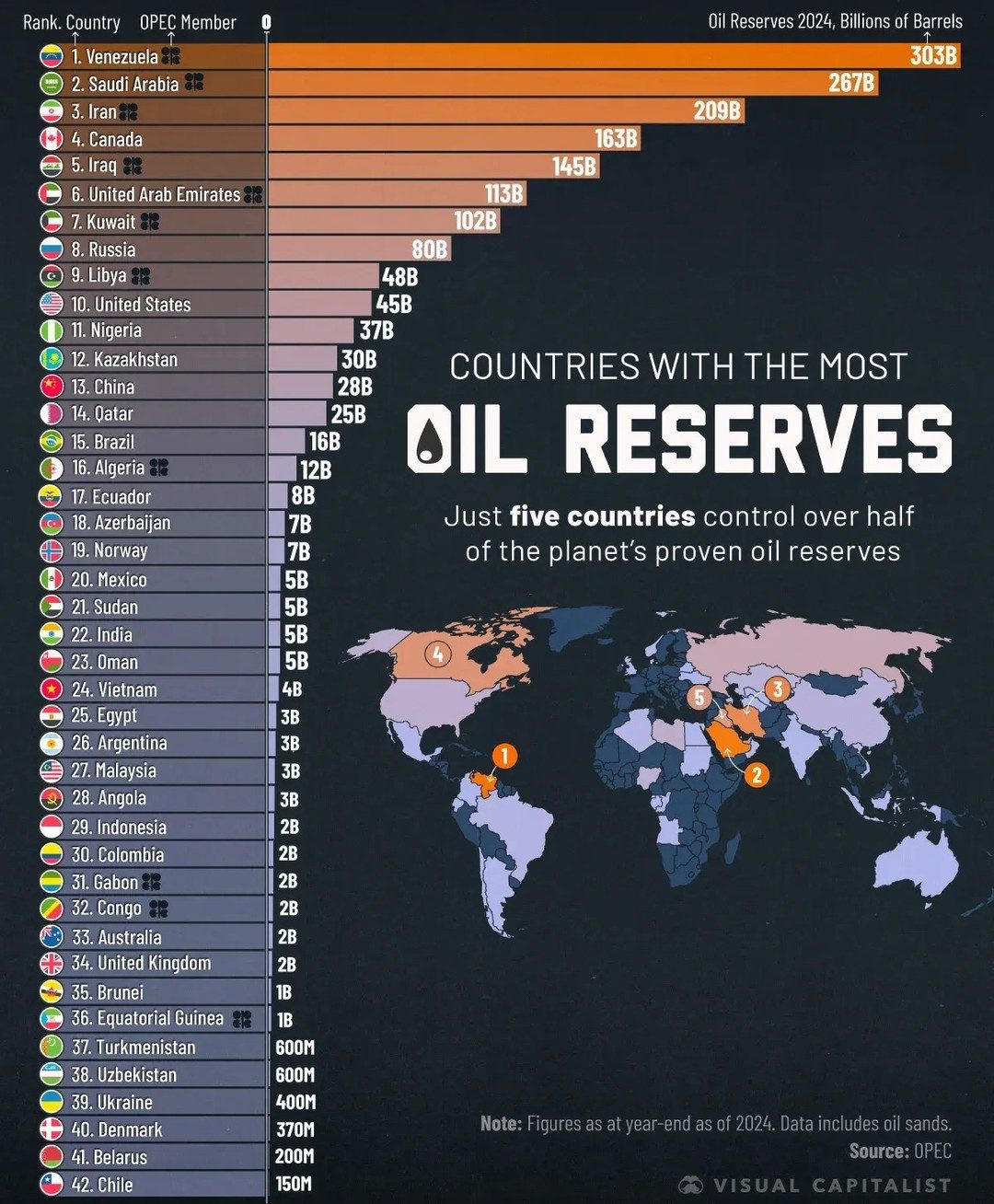
Venezuela boasts the world's largest proven oil reserves, with an estimated 303 billion barrels. This vast reserve accounts for about 17% of the global total. However, despite this substantial resource, Venezuela's oil production significantly lags behind its historical peak, playing a lesser role in daily global energy markets compared to major producers like the United States and Saudi Arabia.
Why This Matters
Understanding the distribution of global oil reserves is crucial for several reasons. It provides insights into geopolitical dynamics, economic strategies, and energy security. Oil remains a cornerstone of global energy production, and countries with substantial reserves often wield significant influence in international affairs. Analyzing which countries hold the most oil reserves helps to predict future energy trends and the potential impact of oil production and consumption on the global economy.
Country Rankings and Their Significance
Oil reserves are a critical measure of a country's energy potential. Let's dive into the top countries with the most proven oil reserves, as highlighted in the visual source from OPEC.
Venezuela
Venezuela leads the list with 303 billion barrels of proven oil reserves. This massive reserve positions Venezuela as a key player in the global oil market. However, political instability, economic sanctions, and infrastructure challenges have hindered Venezuela's ability to fully capitalize on its reserves. Despite its vast resources, Venezuela's oil production has plummeted in recent years, making it a less influential player in the global energy landscape.
Saudi Arabia
Following Venezuela is Saudi Arabia, with approximately 209 billion barrels of proven oil reserves. Saudi Arabia is a major player in the Organization of the Petroleum Exporting Countries (OPEC) and has a significant impact on global oil prices and supply. The country's well-developed oil infrastructure and strategic role in OPEC ensure its continued influence in the energy sector.
Iran
Iran comes in third with 163 billion barrels of proven oil reserves. Despite having substantial reserves, Iran faces significant challenges, including international sanctions and political tensions, which have limited its oil production and exports. The country's complex geopolitical situation means that its role in the global oil market is subject to ongoing fluctuations.
Canada
Canada holds an estimated 145 billion barrels of proven oil reserves. Unlike the Middle Eastern countries, Canada's oil reserves are primarily in the form of oil sands, which are more expensive and environmentally intensive to extract. This makes Canada's oil production a subject of ongoing debate regarding its economic and environmental impacts.
Iraq
Iraq ranks fifth with 113 billion barrels of proven oil reserves. The country has made significant strides in rebuilding its oil infrastructure after decades of conflict and sanctions. Iraq's ambitions to become a major oil exporter are fueled by its vast reserves and strategic efforts to attract foreign investment in its energy sector. However, ongoing political instability and regional conflicts pose challenges to achieving these goals.
The Role of OPEC
The Organization of the Petroleum Exporting Countries (OPEC) plays a crucial role in the global oil market. OPEC's Annual Statistical Bulletin 2025 provides valuable insights into the distribution of oil reserves and production trends. By coordinating among its member countries, OPEC exerts significant influence over global oil supply and prices, ensuring stability and addressing market fluctuations.
Global Energy Markets and Oil Production
While Venezuela, Saudi Arabia, Iran, Canada, and Iraq control over half of the world's proven oil reserves, their roles in the global energy market are shaped by various factors. These include economic policies, geopolitical dynamics, and technological advancements. Understanding these factors is essential for predicting future trends and navigating the complex landscape of global energy production and consumption.
Practical Tips
For those interested in the global oil market, here are some practical tips to stay informed and make informed decisions:
Consider the geopolitical dynamics: Geopolitical factors, including international relations and conflicts, significantly impact oil production and prices. Stay updated on political developments in oil-producing countries to anticipate potential disruptions.
Monitor market trends: Keep an eye on global oil market trends, including supply and demand dynamics, price fluctuations, and technological advancements. Understanding these trends can help you make informed decisions about energy investments and consumption.
Evaluate environmental impacts: Consider the environmental impacts of oil production and consumption. Factors such as carbon emissions and environmental regulations play a crucial role in shaping the future of the oil industry. Look for sustainable oil production practices and support initiatives that aim to reduce the environmental footprint of the energy sector.
Important Takeaways
Oil reserves are a critical indicator of a country's energy potential and global influence. While Venezuela leads with the largest proven oil reserves, the actual production and market impact of these reserves vary significantly. Understanding the distribution of oil reserves and the factors influencing oil production is essential for navigating the complex landscape of global energy markets.
Conclusion
The global distribution of oil reserves is a key factor in shaping the energy landscape. Venezuela's vast reserves, coupled with the strategic roles of Saudi Arabia, Iran, Canada, and Iraq, highlight the importance of understanding these resources and their implications. By staying informed about geopolitical dynamics, market trends, and environmental impacts, individuals and organizations can better navigate the complexities of the global oil market and make informed decisions about energy production and consumption.
Watch the Reel
Questions readers ask
Which country has the most proven oil reserves in 2023?
Venezuela has the most proven oil reserves in 2023, with an estimated 303 billion barrels. This amount accounts for approximately 17% of the world's total proven oil reserves, making it the leader in this category.
Why doesn't Venezuela produce more oil despite having the largest reserves?
Venezuela faces significant political and economic challenges that hinder its ability to fully capitalize on its vast oil reserves. These issues have led to a decline in oil production, preventing the country from playing a more dominant role in the global oil market.
How much oil does Saudi Arabia have in reserves?
Saudi Arabia has the second-largest proven oil reserves, with approximately 209 billion barrels. This substantial reserve gives the country considerable influence over global oil prices and markets.
What are the top five countries with the most proven oil reserves?
The top five countries with the most proven oil reserves are: Venezuela, Saudi Arabia, Canada, Iran, and Iraq. These countries collectively hold a significant portion of the world's total proven oil reserves.
How do proven oil reserves impact global politics?
Countries with substantial proven oil reserves often hold considerable sway in international affairs. These reserves can influence geopolitical dynamics, economic strategies, and energy security, making them a critical factor in global politics.
What is the significance of understanding global oil reserves?
Understanding the distribution of global oil reserves is important for several reasons. It provides insights into the influence of major oil-producing countries, helps in making informed decisions about energy security, and can shed light on potential geopolitical shifts in the future.
How does Venezuela's oil production compare to other major producers?
Venezuela's oil production significantly lags behind its historical peak. As a result, Venezuela plays a lesser role in the daily global energy markets compared to other major producers like the United States and Saudi Arabia. Despite having the most proven oil reserves, Venezuela's current production levels are not commensurate with its resource potential.
Recent articles
Fresh deep dives from the latest Reels we unpacked.




Comments
Be the first to comment.