Gold Reserves by Country
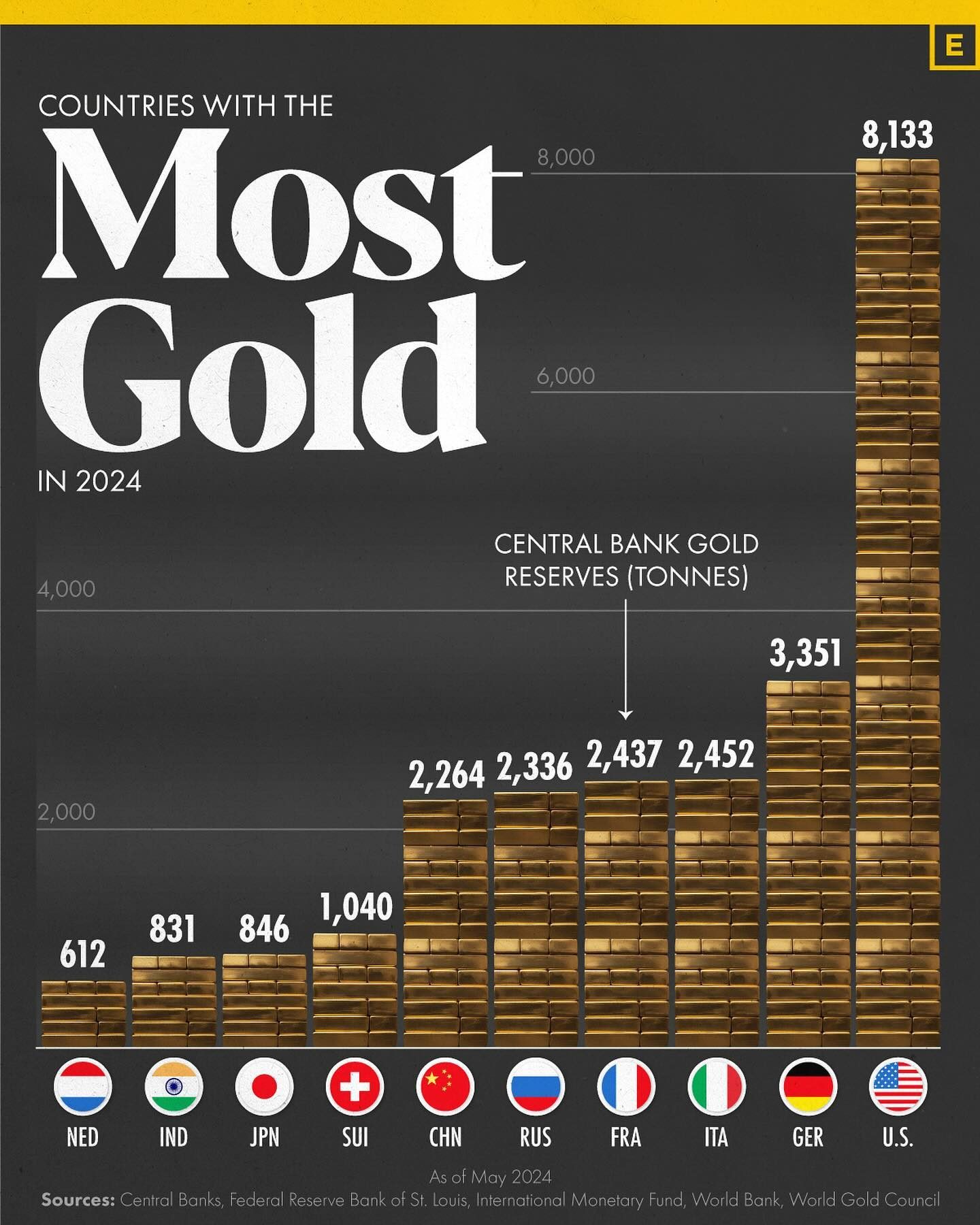
Gold has long been a symbol of wealth and stability, and central banks around the world hold significant reserves of this precious metal. In the first half of 2024, central banks collectively purchased a record-breaking 483 tonnes of gold, highlighting its enduring appeal. Today, central banks hold approximately one-fifth of all the gold ever mined, attracted by its safety, liquidity, and potential for returns. Let's delve into the top 10 countries by total gold reserves as of May 2024, based on data from the World Gold Council.
Why This Matters
Understanding global gold reserves is crucial for several reasons. Gold serves as a hedge against inflation and economic uncertainty, making it a vital component of central bank strategies. Additionally, the distribution of gold reserves among countries can influence geopolitical dynamics and economic policies. By examining the top gold-holding nations, we gain insight into their financial strategies and global economic influence.
Top Gold-Holding Countries
United States
Leading the list is the United States, with a substantial gold reserve of approximately 8,133 tonnes. This massive holding underscores the U.S.'s economic dominance and its role as a global financial leader. The U.S. Federal Reserve likely maintains these reserves to ensure financial stability and to support the value of the U.S. dollar.
Germany
Germany follows closely with around 8,000 tonnes of gold reserves. As one of the world's largest economies, Germany's significant gold holdings reflect its commitment to economic stability and its role in the European Union. The country's gold reserves are a critical component of its monetary policy and financial security.
Italy
Italy holds approximately 6,000 tonnes of gold, making it the third-largest holder globally. Italy's gold reserves are essential for maintaining the country's economic stability, especially within the context of the Eurozone. These reserves provide a safeguard against economic fluctuations and support the value of the euro.
France
France's gold reserves stand at around 6,000 tonnes, making it one of the top gold-holding nations. France's gold reserves are a key part of its central bank's strategy to ensure financial stability and to support the euro. These reserves also serve as a buffer against economic uncertainty and inflation.
Russia
Russia holds approximately 4,000 tonnes of gold, reflecting its growing economic influence and strategic financial planning. Russia's gold reserves are crucial for maintaining its economic stability and for supporting the value of the ruble. The country's significant gold holdings also play a role in its geopolitical strategies.
China
China's gold reserves, currently around 4,000 tonnes, highlight the country's rapid economic growth and its strategic focus on financial security. China's gold holdings are part of a broader effort to diversify its foreign exchange reserves and to support the renminbi's internationalization. China’s increasing gold reserves also reflect its long-term economic aspirations and strategic interests.
Switzerland
With approximately 4,000 tonnes of gold, Switzerland maintains one of the highest gold reserves per capita in the world. Switzerland's gold reserves are a cornerstone of its financial stability and its role as a global hub for gold trading. The country's gold holdings support the Swiss franc and contribute to its reputation as a safe haven for investments.
Japan
Japan holds around 4,000 tonnes of gold, ensuring financial stability and economic security. As one of the world's largest economies, Japan relies on its gold reserves to support the yen and to safeguard against economic volatility. Japan’s gold holdings also reflect its strategic economic planning and commitment to stability.
India
India's gold reserves stand at approximately 800 tonnes. While this may seem modest compared to other nations, it is significant when considering India's cultural and economic context. Gold is deeply ingrained in Indian culture and traditions, and the country's reserves are crucial for maintaining economic stability and financial security.
Netherlands
The Netherlands holds around 600 tonnes of gold, reflecting its role as a global financial center. The country's gold reserves are part of its broader strategy to ensure financial stability and to support the value of the euro. The Netherlands' gold holdings also contribute to its reputation as a safe and secure place for investments.
Practical Tips for Gold Investors
Diversify Your Portfolio
Gold is an excellent addition to any investment portfolio, but it should not be the sole focus. Diversify your assets to include stocks, bonds, and other commodities to mitigate risks and optimize returns.
Consider Gold ETFs
Gold Exchange-Traded Funds (ETFs) offer a convenient and cost-effective way to invest in gold without the hassle of physical storage. ETFs provide liquidity and flexibility, making them a popular choice for investors looking to gain exposure to gold.
Invest in Physical Gold
For those who prefer tangible assets, investing in physical gold bars or coins can be a rewarding strategy. Ensure that you purchase from reputable dealers and store your gold securely to protect your investment.
Monitor Global Economic Trends
Gold prices are influenced by various factors, including global economic trends, geopolitical events, and market sentiment. Stay informed about these developments to make informed investment decisions and capitalize on opportunities.
Understand the Tax Implications
Investing in gold can have tax implications, so it’s essential to understand the rules and regulations in your country. Consult with a financial advisor to optimize your investment strategy and minimize tax liabilities.
Important Takeaways
Gold remains a vital asset for central banks and individual investors alike. Central banks hold gold for its stability, liquidity, and potential returns, while investors seek gold to diversify their portfolios and protect against economic uncertainties.
The distribution of gold reserves among countries reflects their economic strategies and global influence. The United States, Germany, and Italy lead the rankings, with significant holdings that support their economic stability and financial security. Russia, China, and Switzerland also hold substantial reserves, highlighting their strategic financial planning and global economic influence.
For investors, gold offers a reliable hedge against inflation and economic volatility. Diversifying your portfolio with gold, either through physical assets or ETFs, can enhance its stability and potential returns. Keep an eye on global economic trends and consult with financial advisors to make informed investment decisions.
Conclusion
Gold reserves are a critical component of global economic stability and financial security. The top 10 gold-holding countries, led by the United States, Germany, and Italy, illustrate the importance of gold in maintaining economic stability and supporting currency values. For investors, gold remains a valuable asset for diversifying portfolios and protecting against economic uncertainties. By understanding the dynamics of global gold reserves and making strategic investment decisions, individuals and institutions can navigate the ever-changing economic landscape with confidence.
Watch the Reel
Questions readers ask
Which country has the largest gold reserves in 2024?
The United States holds the largest gold reserves in 2024. As of the first half of 2024, the country's gold reserves stand at approximately 8,133.5 tonnes, making it the top holder of gold reserves worldwide. The U.S. central bank maintains these significant reserves to stabilize and support the economy.
How much gold did central banks purchase in the first half of 2024?
In the first half of 2024, central banks collectively purchased a record-breaking 483 tonnes of gold. This substantial purchase underscores the enduring appeal and importance of gold in global financial strategies.
Why do central banks hold gold reserves?
Central banks hold gold reserves due to several key benefits. Gold is highly prized for its stability, liquidity, and potential for returns. Country's central banks utilize gold to hedge against inflation, economic uncertainty, and to manage risks associated with foreign exchange rates.
What are the benefits of gold reserves for a country's economy?
Gold reserves provide multiple benefits to a country's economy. They act as a safeguard against inflation and currency depreciation. Additionally, gold reserves enhance a country's financial credibility and can influence global financial dynamics.
Which countries are among the top holders of gold reserves in 2024?
As of 2024, the top countries holding the most gold reserves are the United States, Germany, and Italy. Other nations in the top 10 include France, Russia, China, Switzerland, Japan, and the Netherlands. These countries maintain substantial gold reserves to bolster their economic stability and financial strategies.
How does the amount of gold reserves influence a country's financial strategy?
The amount of gold reserves a country holds can significantly influence its financial strategy. Gold reserves provide a safety net during economic downturns and periods of high inflation. They also play a role in managing foreign exchange reserves and maintaining financial stability.
Recent articles
Fresh deep dives from the latest Reels we unpacked.




Comments
Be the first to comment.