Military Tank Rankings: A Global Overview
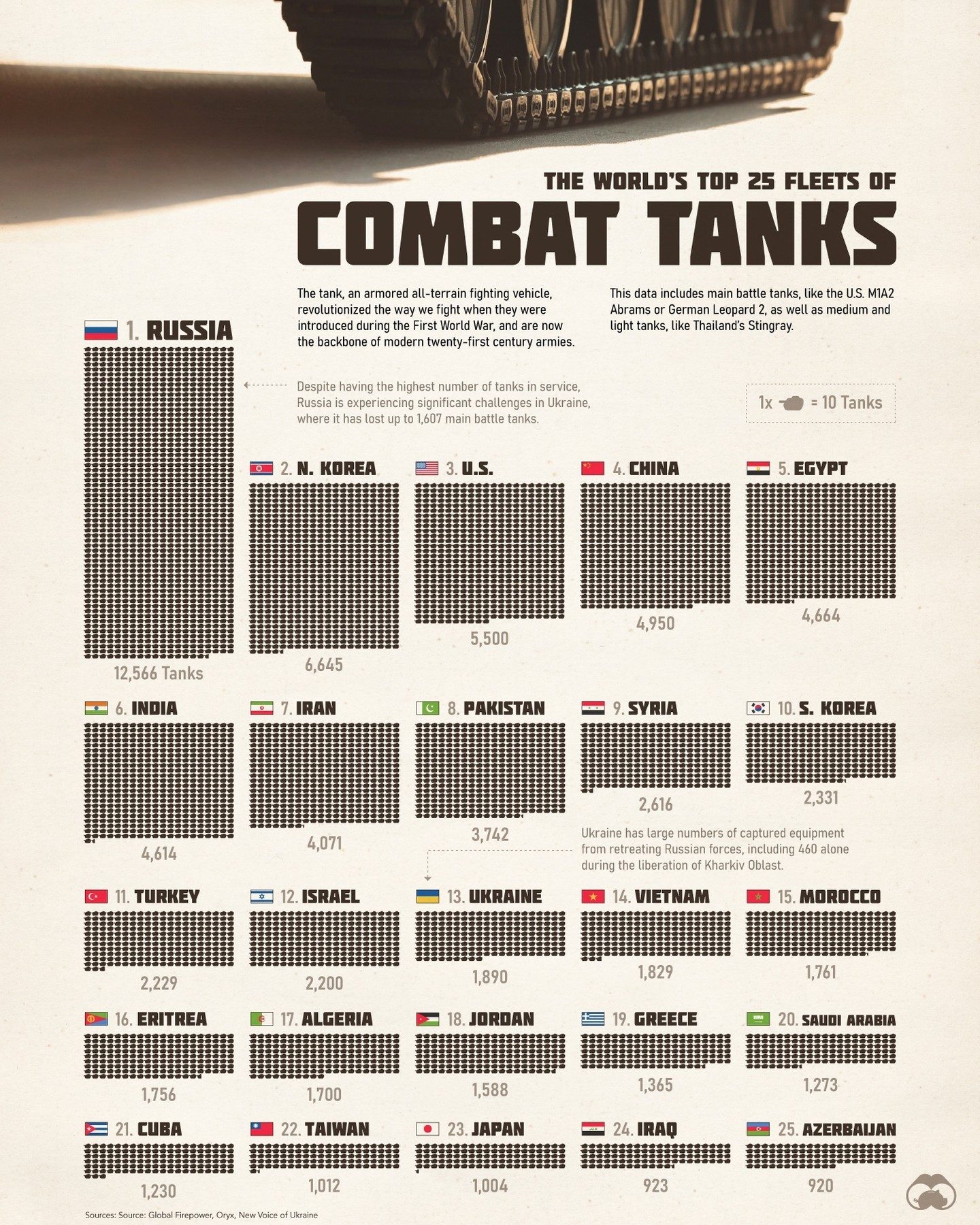
Combat tanks, introduced during World War I, revolutionized warfare with their armored, all-terrain capabilities. Despite predictions of their decline, tanks remain pivotal in 21st-century military strategies. The global landscape of tank fleets is diverse, with some countries boasting extensive arsenals while others maintain smaller, strategic forces. Let's delve into the top 25 countries with the largest tank fleets, exploring the strategic and geopolitical implications of these rankings.
Why This Matters
Understanding the distribution of tank fleets across the globe provides insights into global military power dynamics, defense spending, and regional security concerns. Tanks, while not the sole determinant of military strength, are indicative of a country's readiness for conventional warfare and its ability to project power on the battlefield.
The Top 25 Tank Fleets
Russia: The Leader in Tank Armaments
Russia tops the list with a staggering 12,566 tanks. This substantial fleet underscores Russia's commitment to maintaining a powerful ground force, capable of engaging in large-scale conflicts. The sheer number of tanks reflects Russia's historical and strategic emphasis on armored warfare.
North Korea and the United States: Regional Powerhouses
North Korea and the United States follow Russia with 6,645 and 5,500 tanks, respectively. These countries represent different military philosophies. North Korea's large tank fleet is part of a broader strategy to deter external threats and maintain internal control. The U.S., on the other hand, relies on a combination of advanced technology, diverse weaponry, and strategic alliances to maintain global influence.
China and India: Rising Powers
China and India, with 4,950 and 4,664 tanks, respectively, are significant players in the global tank landscape. Their large fleets reflect their growing military capabilities and regional ambitions. Both countries are investing heavily in modernizing their armed forces, including their tank fleets, to address evolving security challenges.
Middle Eastern and Asian Countries
The Middle East and Asia are home to several countries with substantial tank fleets. Egypt, Iran, Pakistan, Syria, and several other nations in these regions have between 2,000 and 5,000 tanks. These countries' investments in tanks are driven by regional security concerns, territorial disputes, and the need to project power within their respective areas.
The Strategic Role of Tanks
Tanks play a multifaceted role in modern military operations. They are crucial for:
- Offensive Operations: Tanks can break through enemy lines, secure strategic points, and support infantry units in combat.
- Defensive Maneuvers: They provide a mobile defense, capable of rapid redeployment to counter threats.
- Deterrence: A strong tank fleet can act as a deterrent, discouraging potential adversaries from initiating hostilities.
- Multi-Domain Warfare: Alongside air, sea, and cyber capabilities, tanks contribute to a comprehensive military strategy.
Practical Tips for Understanding Tank Fleets
When analyzing a country's tank fleet, consider the following practical tips:
- Technology and Modernization: The age and technological sophistication of a tank fleet are crucial. Modern tanks, equipped with advanced armor, weaponry, and communications systems, offer superior battlefield capabilities.
- Maintenance and Readiness: The operational readiness of a tank fleet is as important as its size. Regular maintenance, training, and logistical support ensure that tanks are deployable and effective in combat.
- Geopolitical Context: Understand the regional security threats and strategic interests that influence a country's investment in tanks. For example, a country bordering a hostile nation may prioritize a larger tank fleet for defense.
- Economic Factors: The economic cost of maintaining a large tank fleet is significant. Countries must balance defense spending with other national priorities.
Important Takeaways
- Tanks remain a cornerstone of modern military strategies.
- The top 25 countries with the largest tank fleets reflect a diverse range of military philosophies and regional security concerns.
- Understanding the size, technology, and readiness of a country's tank fleet provides valuable insights into its military capabilities and strategic interests.
Conclusion
The global ranking of tank fleets offers a snapshot of military preparedness and strategic priorities. Russia's dominance, followed by North Korea and the United States, highlights the enduring importance of armored warfare. Countries like China, India, and those in the Middle East and Asia are also significant players, driven by regional security dynamics and the need for military modernization. By examining these rankings, we gain a deeper understanding of the complex interplay between military strategy, geopolitics, and economic considerations in the 21st century.
Watch the Reel
Questions readers ask
Which country has the largest tank fleet in the world?
Russia currently holds the largest tank fleet in the world, with a significant number of tanks in its arsenal. This substantial fleet reflects Russia's historical and ongoing emphasis on ground forces and its geopolitical strategies.
Why do tanks remain important in modern military strategies?
Tanks are crucial for their armored protection and firepower in modern warfare. They can traverse various terrains, making them versatile in different combat scenarios, from urban warfare to open battlefield engagements.
What is the significance of tank fleets in geopolitics?
The size and capability of a country's tank fleet can influence its regional and global power dynamics. Nations with large tank fleets often have greater influence in military alliances and can exert more control over strategic regions.
How does the distribution of tanks reflect defense spending and military priorities?
Countries with extensive tank fleets typically invest heavily in their military, prioritizing ground forces. This reflects their strategic focus on conventional warfare and land defense, often tied to regional security concerns or historical conflicts.
Which countries in the Middle East have notable tank fleets?
Egypt is among the countries in the Middle East with a significant number of combat tanks. This underscores the strategic importance of tanks in regional conflicts and defense strategies, where armored vehicles play a crucial role in maintaining military balance.
What role do tanks play in the Korean Peninsula's military dynamics?
Tanks are a critical component in the military strategies of both North and South Korea. With the heavily fortified Demilitarized Zone (DMZ), tanks are essential for deterrence and potential conflict scenarios, highlighting their enduring significance in the region's geopolitical tension.
Related deep dives
Similar reads based on topic and creator.


Recent articles
Fresh deep dives from the latest Reels we unpacked.




Comments
Be the first to comment.