Military Spending: A Global Perspective
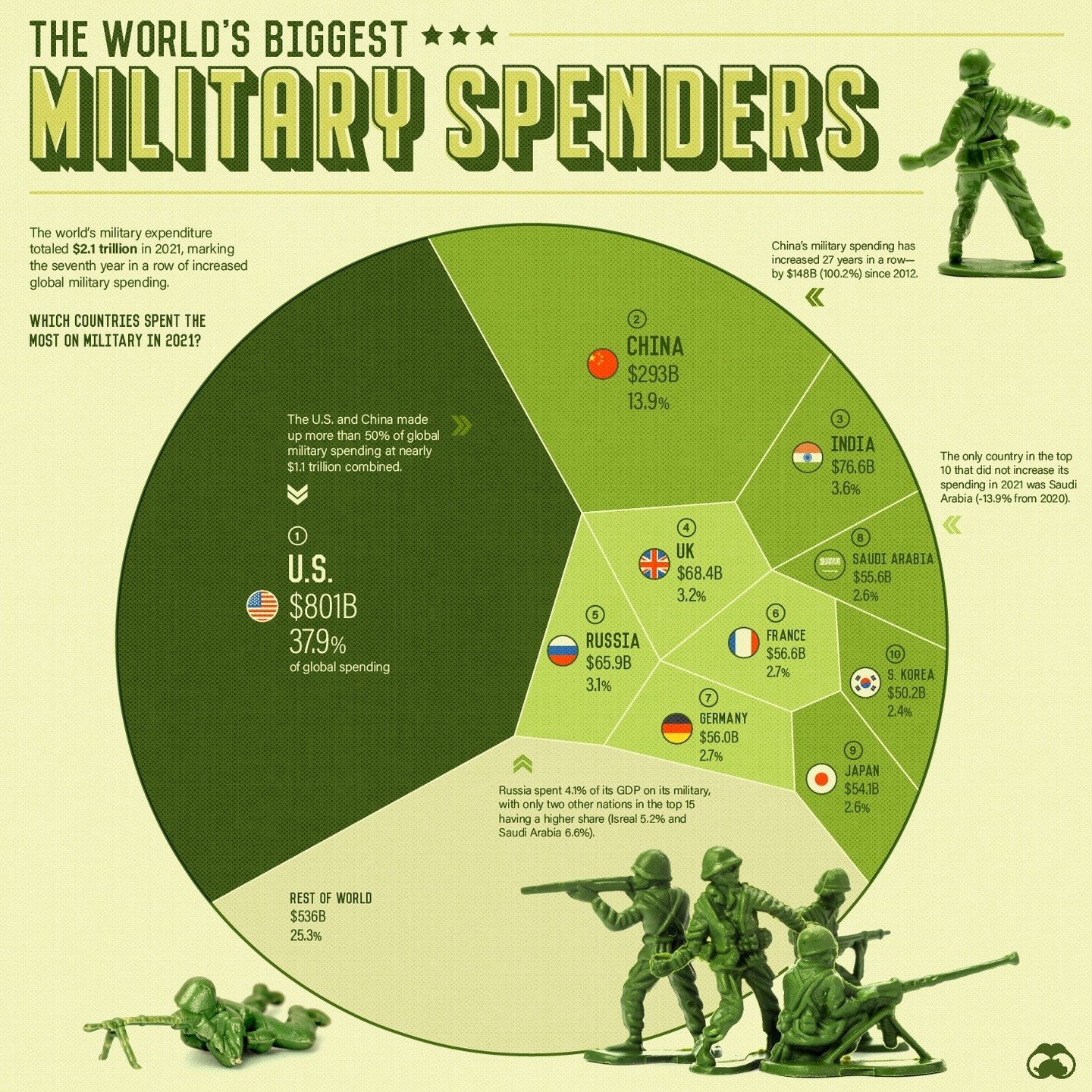
Military spending has been a focal point of global attention, especially with the ongoing conflict in Ukraine. The world has closely monitored the flow of Western weaponry, including HIMAR rocket launchers, and their impact on the battlefield. Developing, exporting, and deploying military personnel and weaponry is an expensive endeavor, costing nations hundreds of billions of dollars annually. In 2021, global military spending reached a staggering $2.1 trillion, marking the seventh consecutive year of increase.
Context / Why This Matters
The escalation in military expenditures is driven by various geopolitical factors, including regional conflicts, technological advancements, and the need to modernize defense capabilities. Understanding the distribution of military spending among countries provides insights into global power dynamics and the priorities of nations in maintaining their security and influence. This data, sourced from the Stockholm International Peace Research Institute (SIPRI), highlights the significant financial commitments made by nations to their defense sectors.
Main Discussion
The Major Players
The United States and China stand out as the world's largest military spenders. In 2021, the U.S. allocated $801 billion to its military, representing 37.9% of the global military expenditure. China followed with $293 billion, accounting for 13.9% of the total. Together, these two nations contributed more than half of the global military spending, underscoring their dominant roles in global defense.
Regional Contributions
Beyond the U.S. and China, several other countries made substantial investments in their military capabilities. Russia, Saudi Arabia, and France each spent over $56 billion, reflecting their strategic interests and regional influence. Germany, Japan, and South Korea also featured prominently, each spending over $50 billion. These countries, along with others, collectively contributed a significant portion of the global military budget, demonstrating the widespread commitment to defense spending.
The Rest of the World
The combined spending of the rest of the world accounted for 25.3% of the global military expenditure, totaling approximately $527 billion. This figure includes countries that, while not among the top spenders, still allocate significant resources to their defense sectors. These nations collectively play a crucial role in maintaining global security and stability.
Global Trends
The data underscores a growing trend of increased military spending. The continuous rise in expenditures reflects the evolving nature of global conflicts and the need for advanced military technology. Nations are investing in cutting-edge weaponry, cyber defense, and other strategic assets to stay ahead in an increasingly complex geopolitical landscape.
Practical Tips
For those interested in tracking military spending and its implications, several practical steps can be taken:
- Follow Reliable Sources: Keep an eye on reports from organizations like SIPRI, which provide comprehensive data on global military expenditures.
- Stay Informed on Geopolitical Developments: Understanding the geopolitical dynamics that drive military spending can offer context for why certain nations are increasing their defense budgets.
- Engage with Policy Discussions: Participate in discussions on defense policies and their impact on global security. This can provide a deeper understanding of the rationale behind military spending.
Important Takeaways
The data on military spending highlights several key points:
- Dominance of the U.S. and China: The U.S. and China are the primary drivers of global military expenditures, reflecting their global influence and strategic priorities.
- Regional Influence: Countries like Russia, Saudi Arabia, and France play significant roles in their respective regions, investing heavily in defense to maintain their influence.
- Global Commitment: The widespread allocation of resources to defense underscores the global commitment to maintaining military readiness and security.
Conclusion
Military spending is a critical aspect of global security and geopolitical dynamics. The data from 2021 highlights the significant financial commitments made by nations to their defense sectors, with the U.S. and China leading the way. Understanding these trends and the underlying factors driving military expenditures is essential for navigating the complexities of the global defense landscape. As geopolitical tensions continue to evolve, military spending will remain a focal point, shaping the future of global security.
Watch the Reel
Questions readers ask
Which countries had the highest military spending in 2021?
The United States and China led the world in military spending in 2021. The U.S. spent the most, followed by China, which has significantly increased its military budget in recent years. Other top spenders included India, Russia, and Saudi Arabia.
What was the total global military expenditure in 2021?
In 2021, global military expenditure reached $2.1 trillion, marking the seventh consecutive year of increase. This substantial amount reflects the growing investments nations are making in defense and security.
Why has military spending been increasing in recent years?
The rise in military spending is attributed to several factors, including regional conflicts, such as the ongoing dispute in Ukraine, technological advancements in military technology, and the need for nations to modernize their defense capabilities. These investments often reflect a country's geopolitical priorities and security concerns.
How does the U.S. military budget compare to other countries?
The U.S. military budget in 2021 was the highest in the world, significantly outpacing other nations. This substantial investment underscores the U.S.'s role as a global superpower and its commitment to maintaining a strong military presence worldwide.
What impact has the Ukraine invasion had on global military spending?
The Ukraine invasion has heightened global interest in military spending, with many nations closely monitoring the conflict and the flow of Western weaponry. This has led to increased defense expenditures as countries seek to bolster their military capabilities in response to the evolving geopolitical landscape.
How does China's military spending compare to the rest of the world?
China is the second-largest military spender globally, with a significant portion of its budget directed towards modernizing its military capabilities. China's military spending has been steadily increasing, reflecting its growing influence and strategic ambitions on the global stage.
Which country had significant military expenditure growth in 2021?
India significantly increased its military expenditure in 2021, driven by regional tensions and the need to modernize its defense capabilities. This increase reflects India's strategic priorities and its efforts to maintain a strong military presence in response to geopolitical challenges.
Recent articles
Fresh deep dives from the latest Reels we unpacked.




Comments
Be the first to comment.