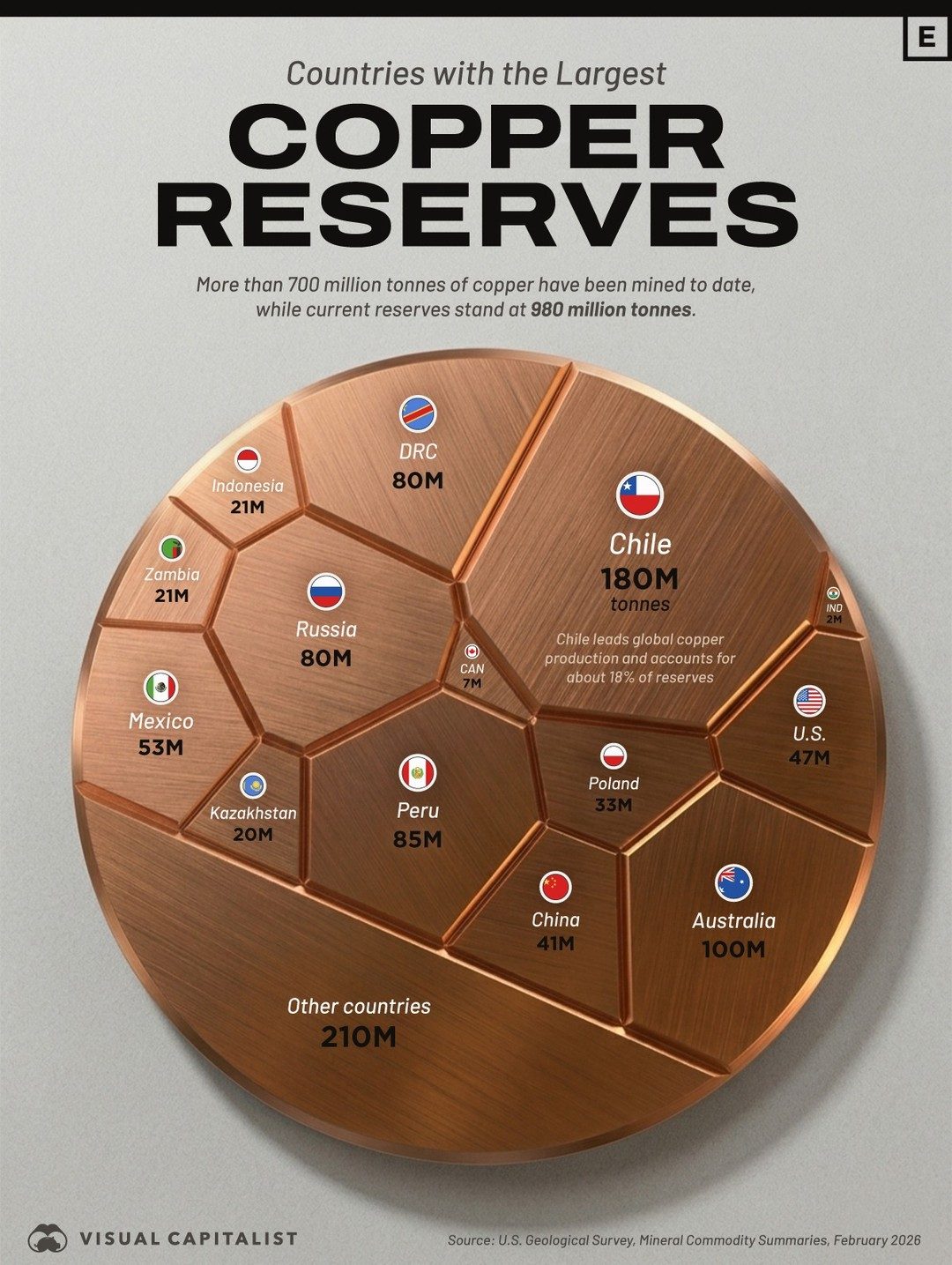
Copper Reserves by Country
Copper is a cornerstone of modern industry, crucial for construction, electrification, and the transition to clean energy. As global demand surges, understanding the distribution of copper reserves becomes increasingly important. Here, we explore the countries with the largest copper reserves, using data from the U.S. Geological Survey.
Why This Matters
Copper's significance in the global economy cannot be overstated. It is essential for electrical wiring, plumbing, and various industrial applications. With the rise of electric vehicles and renewable energy technologies, the demand for copper is expected to continue growing. Knowing where the world's copper reserves are concentrated helps in strategic planning for mining, supply chain management, and ensuring a stable supply for future technological advancements.
Global Copper Reserves
Chile: The Leader in Copper Production
Chile stands out as the global leader in copper production, holding approximately 18% of the world's copper reserves. This significant share makes Chile a pivotal player in the global copper market. The country's vast reserves are a result of its rich mineral deposits and advanced mining technologies. Chile's copper industry is not only a backbone of its economy but also a critical contributor to the global supply of this essential metal.
Other Major Copper Reserve Holders
While Chile leads the pack, several other countries also hold substantial copper reserves:
- Australia: Australia holds the largest copper reserves by volume, with approximately 100 million tonnes. The country's rich mineral deposits and robust mining infrastructure make it a key player in the global copper market.
- Peru: Peru is another significant copper producer, with reserves estimated at around 85 million tonnes. The country's mining industry is a major contributor to its economy, providing employment and export revenues.
- DRC (Democratic Republic of Congo): The DRC has substantial copper reserves, estimated at about 47 million tonnes. The country's mining sector is critical for its economic development, though it faces challenges related to infrastructure and governance.
- Indonesia: Indonesia holds approximately 21 million tonnes of copper reserves. The country's mining industry is a significant contributor to its economy, with copper being one of its key exports.
- China: China has 41 million tonnes of copper reserves, which is crucial for its industrial development and technological advancements. The country's growing demand for copper is driven by its expanding infrastructure and electronics industries.
- Mexico: Mexico's copper reserves are estimated at around 53 million tonnes. The country's mining sector is a significant contributor to its economy, providing employment and export revenues.
The Importance of Copper Reserves
Copper reserves are not just about the quantity of metal available; they also represent potential economic growth and technological advancement. Countries with significant copper reserves have the opportunity to develop their mining sectors, create jobs, and generate export revenues. Moreover, copper is essential for various industries, including construction, electronics, and renewable energy. As the world transitions to cleaner energy sources, the demand for copper is expected to rise, making these reserves even more valuable.
Practical Tips for Understanding Copper Reserves
Assessing Investment Opportunities
For investors, understanding the distribution of copper reserves can provide valuable insights into potential investment opportunities. Countries with large reserves often have robust mining sectors, offering opportunities for investment in mining companies, infrastructure projects, and related industries. Additionally, investing in copper itself can be a smart move, given its essential role in various industries and the growing demand for clean energy technologies.
Sustainable Mining Practices
As the demand for copper continues to rise, it is crucial to promote sustainable mining practices. This includes implementing environmentally friendly extraction methods, ensuring fair labor practices, and minimizing the environmental impact of mining operations. Sustainable mining practices not only help preserve natural resources but also ensure that the benefits of copper reserves are shared equitably and responsibly.
Important Takeaways
- Copper is Essential: Copper’s role in construction, electrification, and clean energy technologies makes it a critical resource for modern industry.
- Chile Leads the Way: Chile holds about 18% of the world’s copper reserves, making it the global leader in copper production.
- Major Reserve Holders: Countries like Australia, Peru, DRC, Indonesia, China, and Mexico also have substantial copper reserves, contributing significantly to the global supply.
- Investment and Sustainability: Understanding copper reserves can provide valuable investment opportunities and underscores the importance of sustainable mining practices.
Conclusion
Copper reserves are a critical component of the global economy, essential for a wide range of industries and technologies. With Chile leading the way and other countries holding substantial reserves, the future of copper production looks promising. As the world continues to demand more copper for construction, electrification, and clean energy, understanding the distribution of these reserves becomes increasingly important. By promoting sustainable mining practices and investing in the development of copper reserves, countries can ensure a stable and environmentally responsible supply of this essential resource.
Watch the Reel
Questions readers ask
Which country has the most copper reserves in the world?
Chile holds the largest copper reserves globally. The country's copper resources are estimated to be the highest in the world, making it a pivotal player in the global copper market.
How do global copper reserves impact the construction industry?
Copper is a fundamental material in construction due to its excellent conductivity and durability. With the world's largest copper reserves, countries like Chile, Australia, and Peru play a crucial role in supplying copper for construction projects globally.
What drives the increasing demand for copper worldwide?
The surge in demand for copper is primarily driven by the growth of clean energy technologies and electric vehicles. Copper is essential for electrical wiring, batteries and renewable energy infrastructure, making it a critical resource for the future.
Which countries are the top producers of copper?
The top copper-producing countries include Chile, Australia, and Peru. These countries not only have significant copper reserves but also advanced mining infrastructure, contributing to a substantial portion of the global copper supply.
What is the significance of the U.S. Geological Survey's data on copper reserves?
The U.S. Geological Survey provides comprehensive data on global copper reserves, helping industries, governments, and investors understand the distribution of copper resources. This data is essential for strategic planning in mining, supply chain management, and economic development.
How do copper reserves influence the transition to clean energy?
Copper is vital for the transition to clean energy due to its use in renewable energy technologies, such as solar panels and wind turbines. Countries with large copper reserves, like Chile and Peru, are well-positioned to support this transition by supplying the necessary copper resources.
What are some of the largest copper deposits in the world?
Some of the largest copper deposits can be found in countries like Chile, which boasts notable mines such as Escondida and Chuquicamata. Other significant deposits are located in Australia and Peru, contributing to the global supply of copper.
Recent articles
Fresh deep dives from the latest Reels we unpacked.




Comments
Be the first to comment.