Gold Reserve Changes: A Decade of Global Shifts
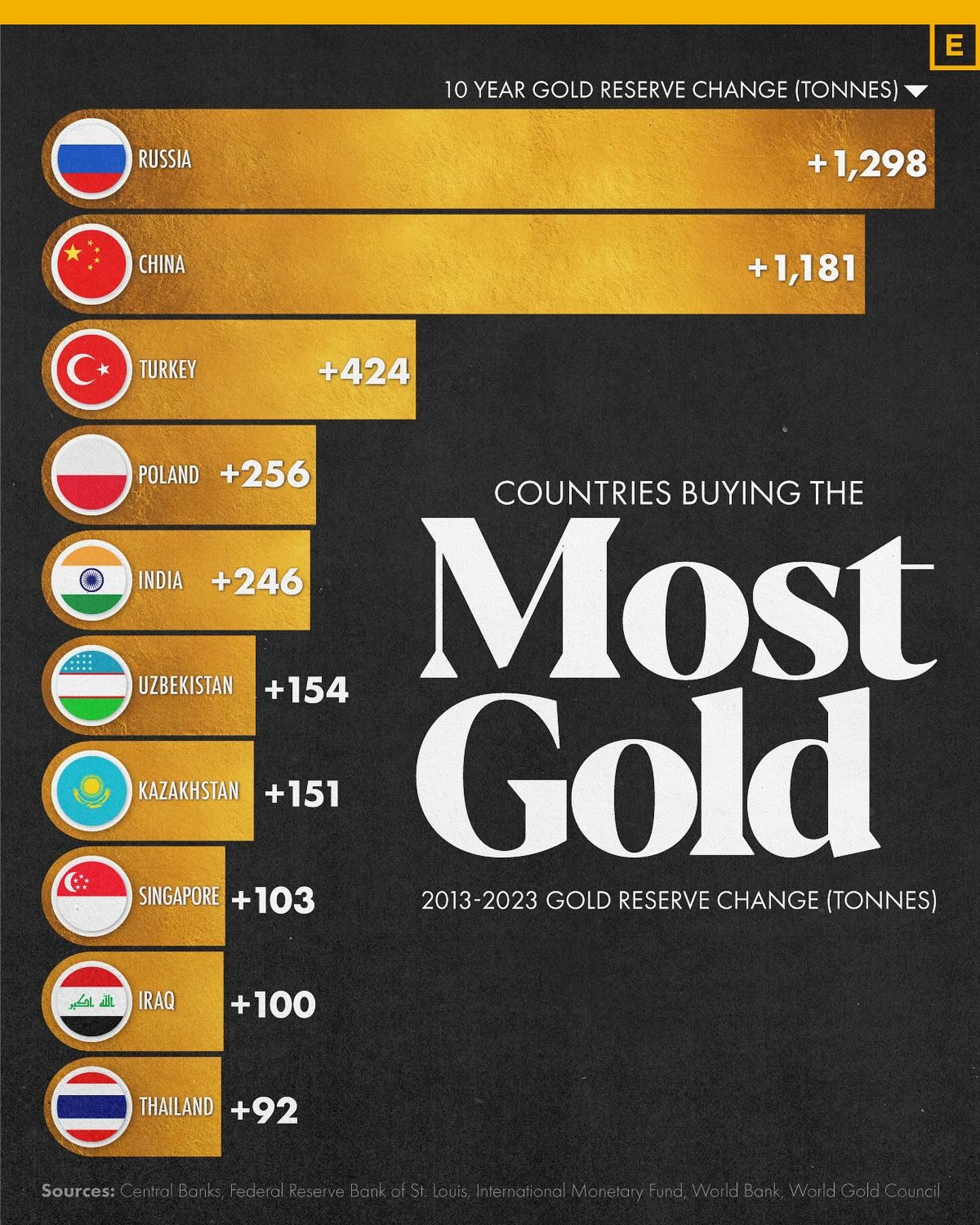
Central banks around the world have been significantly increasing their gold reserves over the past decade, with notable surges from major economies like Russia and China. These shifts are driven by various geopolitical factors, including rising tensions, sanctions, and discussions around de-dollarization. Let’s dive into the countries that have seen the most significant changes in their gold reserves from 2013 to 2023.
Context / Why this matters
Rising geopolitical tensions, increased sanctions, and the push for de-dollarization have led many nations to rethink their economic strategies. Gold, a traditional safe haven asset, has become an attractive option for central banks looking to diversify their reserves and mitigate risks associated with currency volatility and international sanctions.
Main discussion
Russia and China lead the pack
Russia and China have emerged as the leading countries in terms of gold reserve increases. Over the past decade, Russia's gold reserves have surged by 1,298 tonnes, while China has increased its reserves by 1,181 tonnes. These substantial additions reflect a strategic move to reduce dependence on the US dollar and other foreign currencies, providing a hedge against economic uncertainties and geopolitical risks.
Middle Eastern and Asian countries follow suit
Turkey, Poland, India, and other Asian countries have also made significant strides in boosting their gold reserves. Turkey saw an increase of 424 tonnes, Poland added 256 tonnes, and India increased its reserves by 246 tonnes. These countries are following a similar strategy to diversify their reserve holdings and enhance financial stability.
Central Asian and Southeast Asian nations
Uzbekistan, Kazakhstan, Singapore, and Thailand have also been actively accumulating gold. Uzbekistan's reserves increased by 154 tonnes, Kazakhstan added 151 tonnes, Singapore boosted its reserves by 103 tonnes, and Thailand increased by 92 tonnes. These countries are positioning themselves to weather economic storms and take advantage of the stabilizing effects of gold.
Iraq and other notable increases
Iraq and Thailand, along with other nations, have also shown significant interest in increasing their gold holdings. Iraq added 100 tonnes, and Thailand increased its reserves by 92 tonnes. These additions reflect a broader trend of countries seeking to bolster their economic security through gold reserves.
Practical tips
For central banks
Central banks looking to increase their gold reserves should consider the following practical tips:
- Strategic Planning: Develop a long-term strategy that aligns with the country's economic goals and geopolitical risks.
- Market Timing: Take advantage of market conditions to acquire gold at favorable prices.
- Diversification: Ensure that the addition of gold does not compromise the overall diversification of the reserve portfolio.
- Transparency: Maintain transparency in reserve management to build trust with international stakeholders.
For investors
Individual investors can also benefit from the trends in gold reserves. Here are some tips:
- Diversification: Include gold in your investment portfolio to diversify risk.
- Long-term View: Consider gold as a long-term investment, as it tends to perform well during economic uncertainties.
- Stay Informed: Keep an eye on geopolitical developments and central bank policies that could impact gold prices.
Important takeaways
The significant increases in gold reserves by various countries underscore the importance of gold as a safe haven asset. Central banks are strategically accumulating gold to mitigate risks and enhance financial stability.
- Geopolitical Factors: Rising geopolitical tensions and sanctions are driving countries to boost their gold reserves.
- Dollar Dependence: There is a growing trend of de-dollarization, with countries seeking to reduce their dependence on the US dollar.
- Economic Stability: Gold reserves provide a stabilizing effect, helping countries weather economic storms and currency fluctuations.
Conclusion
The decade-long trend of increasing gold reserves by central banks highlights the enduring value of gold as a strategic asset. Countries like Russia, China, Turkey, and others are leading the way in this trend, driven by geopolitical considerations and the pursuit of economic stability. For central banks and individual investors alike, gold remains a crucial component of a well-diversified portfolio, offering protection against economic uncertainties and geopolitical risks.
Watch the Reel
Questions readers ask
Which countries have seen the most significant increases in gold reserves over the past decade?
Russia and China are at the top of the list, having significantly boosted their gold reserves. Other countries that have made notable increases include Turkey, India, and several other Asian nations. These countries have been actively diversifying their reserves to manage economic risks.
What are the primary drivers behind the global increase in gold reserves?
The primary drivers include geopolitical tensions, increased use of sanctions, and the push for de-dollarization. Central banks are turning to gold as a stable and reliable asset to diversify their holdings and protect against economic uncertainties.
How has the trend of increasing gold reserves affected global economics?
The trend has led to a shift in global economic strategies, with countries seeking to reduce their reliance on the US dollar. This has implications for international trade, financial markets, and global economic stability. It also reflects a broader move towards diversifying reserve holdings.
What role does gold play in the economic strategies of countries like Russia and China?
For countries like Russia and China, gold serves as a strategic asset to counter economic sanctions and geopolitical pressures. By increasing their gold reserves, these nations aim to insulate their economies from external pressures and enhance their financial independence.
Why are countries like Turkey and India also increasing their gold reserves?
Countries like Turkey and India are increasing their gold reserves to hedge against economic volatility and currency fluctuations. Gold provides a stable and reliable asset that can protect their economies from shocks and uncertainties, making it a valuable addition to their reserve holdings.
What are the implications of de-dollarization on global gold reserves?
De-dollarization encourages countries to reduce their reliance on the US dollar and diversify their reserves with assets like gold. This shift can lead to increased demand for gold, affecting global gold prices and market dynamics.
How do central banks decide on the optimal level of gold reserves?
Central banks consider various factors, including geopolitical risks, economic stability, and diversification needs. They aim to hold a mix of assets that balances liquidity, safety, and return. Gold, with its stability and historical value, is a key component of this strategy.
Recent articles
Fresh deep dives from the latest Reels we unpacked.




Comments
Be the first to comment.