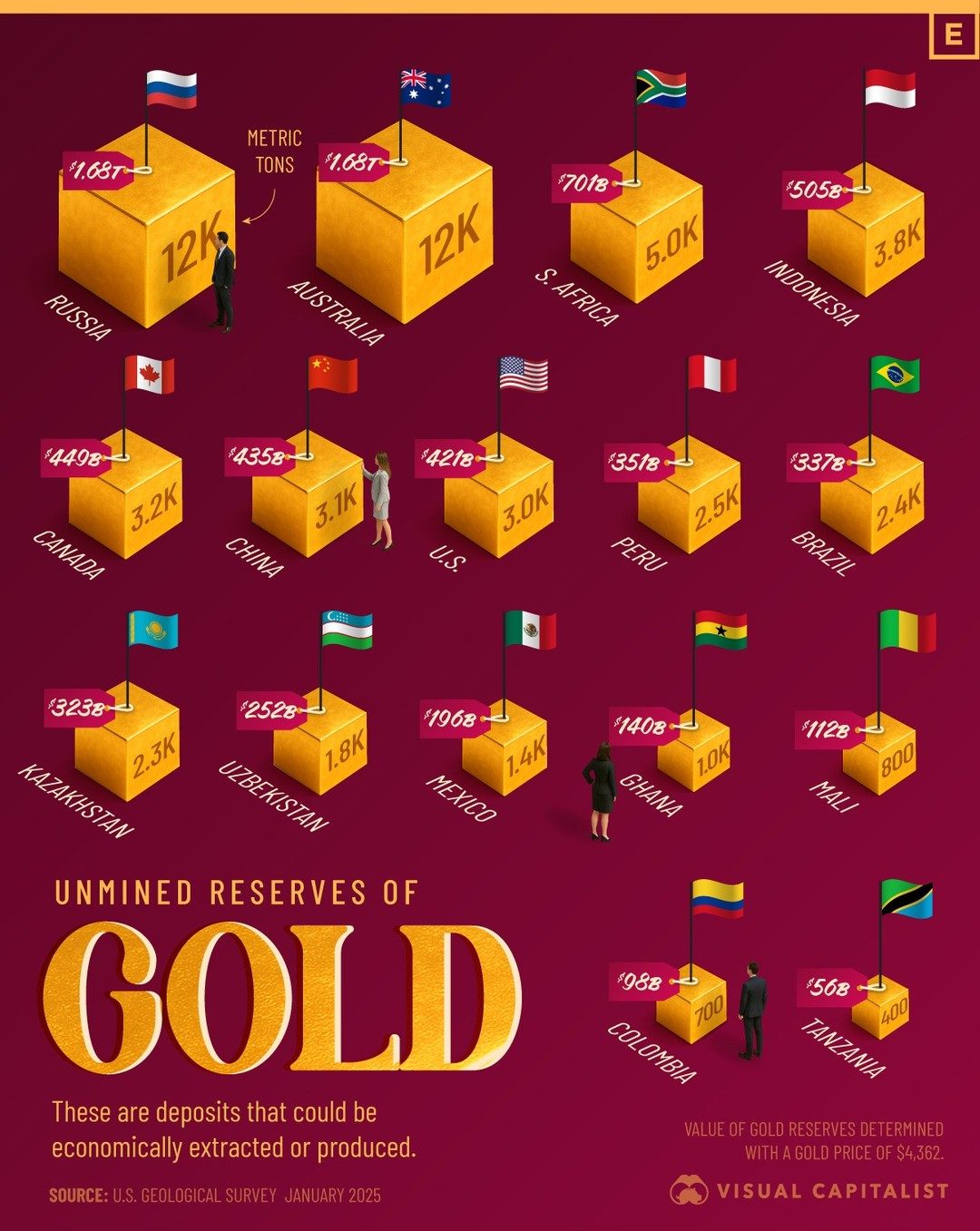
Gold Reserves by Country
The global distribution of unmined gold reserves is a fascinating subject, with a handful of countries holding a vast majority of the world's gold deposits. Russia and Australia stand out as the top contenders, each holding an estimated 12,000 tonnes of unmined gold, which together accounts for nearly 40% of the global reserves. These reserves are valued at over $7 trillion at current prices, highlighting the massive economic potential locked beneath the earth's surface. The U.S. Geological Survey's data from January 2025 provides a comprehensive overview of these reserves.
Why This Matters
The distribution of gold reserves across nations is significant for several reasons. Gold is a critical commodity in global finance and industry. It is used in jewelry, electronics, and as a store of value. Countries with substantial gold reserves have a strategic economic advantage. The reserves not only contribute to national wealth but also stabilize currencies and influence global commodity markets.
Countries with the Largest Gold Reserves
Top Contenders: Russia and Australia
Russia and Australia lead the pack with 12,000 tonnes of unmined gold each. These two countries collectively hold nearly 40% of the world's gold reserves, making them key players in the global gold market.
South Africa and Indonesia
South Africa and Indonesia also boast significant gold reserves. South Africa holds 1,657 tonnes, and Indonesia has 508 tonnes. These reserves are crucial for the economic stability and development of these nations.
North America: Canada and the U.S.
North America is well-represented in the list of top gold reserve holders. Canada has 3,200 tonnes, while the U.S. holds 3,000 tonnes. These reserves are essential for the economic stability and industrial development of both countries.
Asia: China and Peru
China and Peru are significant gold reserve holders in Asia. China has 3,100 tonnes, and Peru has 3,800 tonnes. These reserves contribute to the economic strength and industrial development of both nations.
Other Significant Holders
Brazil, Kazakhstan, Uzbekistan, Mexico, Ghana, Colombia, Tanzania, and Mali also hold substantial gold reserves. Brazil has 2,400 tonnes, Kazakhstan has 449 tonnes, Uzbekistan has 323 tonnes, Mexico has 196 tonnes, Ghana has 140 tonnes, Colombia has 98 tonnes, Tanzania has 800 tonnes, and Mali has 400 tonnes. These reserves are crucial for the economic stability and industrial development of these nations.
Factors Influencing Gold Reserve Distribution
Geological Composition
The geological composition of a region plays a crucial role in determining its gold reserves. Regions with specific geological features, such as ancient volcanic activity or specific types of rock formations, are more likely to have significant gold deposits.
Mining Technology
Advancements in mining technology have made it possible to extract gold from previously inaccessible or unprofitable deposits. Modern mining techniques, including open-pit mining and underground mining, have significantly increased the amount of gold that can be economically extracted.
Economic Factors
The economic viability of mining gold depends on various factors, including the cost of extraction, the price of gold, and the regulatory environment. Countries with favorable economic conditions and supportive government policies are more likely to have higher gold reserves.
Environmental Considerations
Environmental considerations also play a crucial role in determining gold reserves. Mining activities can have significant environmental impacts, including deforestation, soil erosion, and water pollution. Countries that prioritize sustainable mining practices are more likely to have higher gold reserves in the long run.
Practical Tips for Investing in Gold
Diversify Your Portfolio
Gold is a valuable addition to any investment portfolio. Diversifying your portfolio with gold can help mitigate risks and provide a safe haven during economic uncertainty. Consider allocating a portion of your investment portfolio to gold as a hedge against inflation and market volatility.
Choose the Right Financial Instruments
There are several ways to invest in gold, including physical gold, gold ETFs, gold mining stocks, and gold futures. Each of these financial instruments has its own advantages and disadvantages, so it's important to choose the one that best fits your investment goals and risk tolerance.
Stay Informed
Staying informed about global gold markets and economic trends is crucial for making informed investment decisions. Keep an eye on gold prices, global economic indicators, and geopolitical events that could affect gold markets. This will help you make informed decisions about when to buy or sell gold.
Monitor Environmental and Regulatory Changes
Environmental and regulatory changes can have a significant impact on gold mining operations and, consequently, gold reserves. Stay informed about changes in mining regulations, environmental policies, and government initiatives that could affect gold mining activities in your preferred regions.
Important Takeaways
The distribution of unmined gold reserves worldwide is a critical factor in global economics and commodity markets. Russia and Australia lead the pack, holding nearly 40% of the world's gold reserves, while South Africa, Indonesia, Canada, the U.S., China, and Peru are also significant players. The geological composition, mining technology, economic factors, and environmental considerations all play crucial roles in determining gold reserves.
Conclusion
Understanding the distribution of global gold reserves provides valuable insights into the economic landscape and the strategic importance of gold for various countries. From Russia and Australia to South Africa and Indonesia, the nations with substantial gold reserves play a pivotal role in global finance and industry. As mining technology advances and economic conditions evolve, the significance of these reserves will continue to grow. Investing in gold, whether through physical gold, ETFs, or mining stocks, can be a sound strategy for diversifying your portfolio and mitigating risks. Staying informed about global gold markets and environmental considerations will help you make informed investment decisions.
Watch the Reel
Recent articles
Fresh deep dives from the latest Reels we unpacked.




Comments
Be the first to comment.