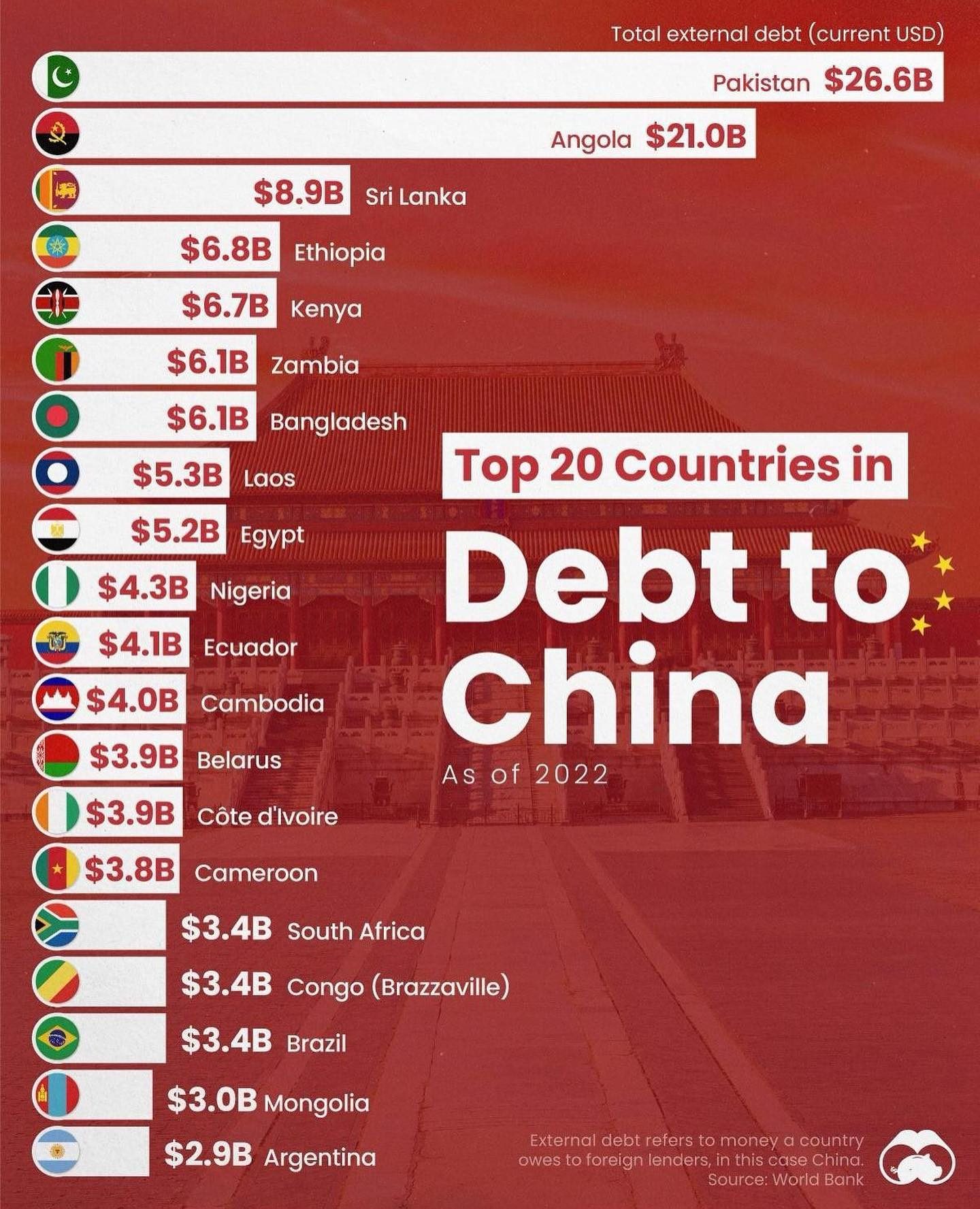
International Debt to China
In 2022, China committed over $1 trillion in funding to developing countries, a significant portion of which was directed through the Belt and Road Initiative (BRI). This initiative, which aims to enhance connectivity and infrastructure across Asia, Africa, and Europe, has raised concerns about the financial sustainability of recipient countries. Specifically, 80% of the loans from the BRI go to countries in financial distress, potentially exacerbating their debt burdens.
Context / Why this matters
The distribution of China's debt commitments reveals critical geopolitical and economic dynamics. Understanding which countries hold the highest levels of debt to China provides insights into global economic dependencies and the potential risks associated with these financial arrangements.
Main discussion
Understanding the Belt and Road Initiative
The Belt and Road Initiative (BRI) is a global infrastructure development strategy adopted by the Chinese government in 2013. It involves more than 150 countries and international organizations, focusing on infrastructure development, investment, and trade. The BRI comprises two main components: the 'Silk Road Economic Belt' and the '21st Century Maritime Silk Road'. The initiative has been criticized for creating debt traps, where countries become dependent on Chinese loans, potentially compromising their economic sovereignty.
The Top 20 Countries with the Highest Debt to China
The data from the World Bank, as of 2022, reveals the top 20 countries with the highest external debt to China. These countries span across Asia, Africa, and South America, reflecting China's extensive influence in global infrastructure investments. Here is a detailed breakdown of the top 20:
Asia
-
Pakistan ($26.6B): Pakistan is the highest debtor to China among the top 20 countries. The Pakistan-China Economic Corridor (CPEC) is a flagship project of the BRI, involving extensive infrastructure development, energy projects, and transportation networks.
-
Sri Lanka ($8.9B) Sri Lanka's debt to China has drawn global attention, particularly the Hambantota Port project, which was later leased to China for 99 years due to Sri Lanka's inability to repay the debt.
-
Cambodia ($4.0B): Cambodia has seen significant infrastructure development funded by China, including hydroelectric dams and transportation networks.
-
Bangladesh ($6.1B)
-
Bangladesh: Bangladesh is another major recipient of Chinese investments, particularly in energy and infrastructure projects.
-
Belarus ($3.9B): Belarus has benefited from Chinese investments in industrial and energy projects.
-
Mongolia ($3.0B): Mongolia's debt to China includes investments in mining, energy, and infrastructure.
-
Côte d'Ivoire ($3.9B): Côte d'Ivoire's debt to China has been used for infrastructure projects, including roads and railways.
Africa
-
Angola ($21.0B): Angola tops the list, with substantial investments in infrastructure and energy projects, especially through the BRI.
-
Ethiopia ($6.8B): Ethiopia has received significant funding for infrastructure, particularly in the development of the Addis Ababa–Djibouti Railway.
-
Kenya ($6.7B): Kenya's debt includes investments in the Standard Gauge Railway, a key component of the BRI.
-
Zambia ($6.1B) Zambia’s debt to China is primarily for infrastructure projects, including roads, bridges, and railways.
-
Nigeria ($5.2B): Nigeria's debt to China includes investments in power generation and infrastructure.
-
**Egypt ($5.3B) ** Egypt's debt to China includes investments in infrastructure and industrial projects, such as the East-West Railway.
-
**South Africa ($3.4B): ** South Africa has received funding for infrastructure and energy projects, including the Medupi Power Station.
-
Congo (Brazzaville) ($3.4B): Congo (Brazzaville) has benefited from Chinese investments in infrastructure, including roads and energy projects.
-
Cameroon ($3.8B): Cameroon's debt to China includes investments in the development of the Kribi Power Plant and other infrastructure projects.
South America
-
Brazil ($3.4B): Brazil's debt to China includes investments in energy and infrastructure projects, such as hydroelectric dams.
-
Ecuador ($4.3B): Ecuador has received substantial funding for infrastructure projects, including the Quito–Mina–Santo Domingo Railroad.
Other Regions
- Argentina ($2.9B): Argentina's debt to China includes investments in infrastructure, including the construction of hydropower plants.
Practical tips
Analyzing the top 20 countries with the highest debt to China offers several practical insights:
-
Regular Monitoring of Debt Levels: Governments and financial institutions should regularly monitor debt levels to developing countries to identify potential risks and implement timely interventions.
-
Risk Assessment: Conduct comprehensive risk assessments to evaluate the financial stability of countries receiving substantial loans from China. This includes analyzing debt repayment capabilities and the potential impact on economic sovereignty.
-
Policy Recommendations: Policy makers should consider the potential risks of debt traps and develop strategies to mitigate these risks. This may involve diversifying loan sources, negotiating favorable terms, and promoting sustainable economic development.
Important takeaways
Over the years, China has emerged as a significant lender to developing countries, particularly through the Belt and Road Initiative. The distribution of debt across various countries highlights the extensive reach and impact of Chinese investments. However, it also raises concerns about the financial sustainability and debt repayment capabilities of these countries.
Conclusion
The top 20 countries with the highest external debt to China, as of 2022, provide valuable insights into the economic and geopolitical implications of China's extensive lending. Understanding these dynamics can help policymakers, financial institutions, and other stakeholders develop sustainable strategies to manage debt and foster economic growth.
Watch the Reel
Questions readers ask
Which country has the highest debt to China in 2022?
Pakistan tops the list with the highest debt to China in 2022, amounting to $26.6 billion. This significant debt is largely due to extensive infrastructure investments under China's Belt and Road Initiative (BRI).
How much did China commit in funding to developing countries in 2022?
In 2022, China committed over $1 trillion in funding to developing countries. A substantial portion of this funding was channeled through the Belt and Road Initiative, which aims to improve infrastructure and connectivity across multiple continents.
What is the Belt and Road Initiative (BRI) and why is it significant in the context of debt?
The Belt and Road Initiative is a global infrastructure development project led by China. It is significant in the context of debt because it has led to increased debt burdens for many countries, particularly those in Asia, Africa, and South America, due to extensive Chinese investments in infrastructure projects.
Which regions are most affected by Chinese debt commitments?
Regions most affected by Chinese debt commitments are Asia, Africa, and South America. These areas have seen significant infrastructure investments under the BRI, which has led to increased debt levels for many countries in these regions.
What percentage of BRI loans go to countries in financial distress?
Approximately 80% of the loans from the Belt and Road Initiative are directed to countries already in financial distress. This high percentage raises concerns about the potential for these countries to further exacerbate their debt burdens.
Recent articles
Fresh deep dives from the latest Reels we unpacked.




Comments
Be the first to comment.