Energy Consumption Comparison
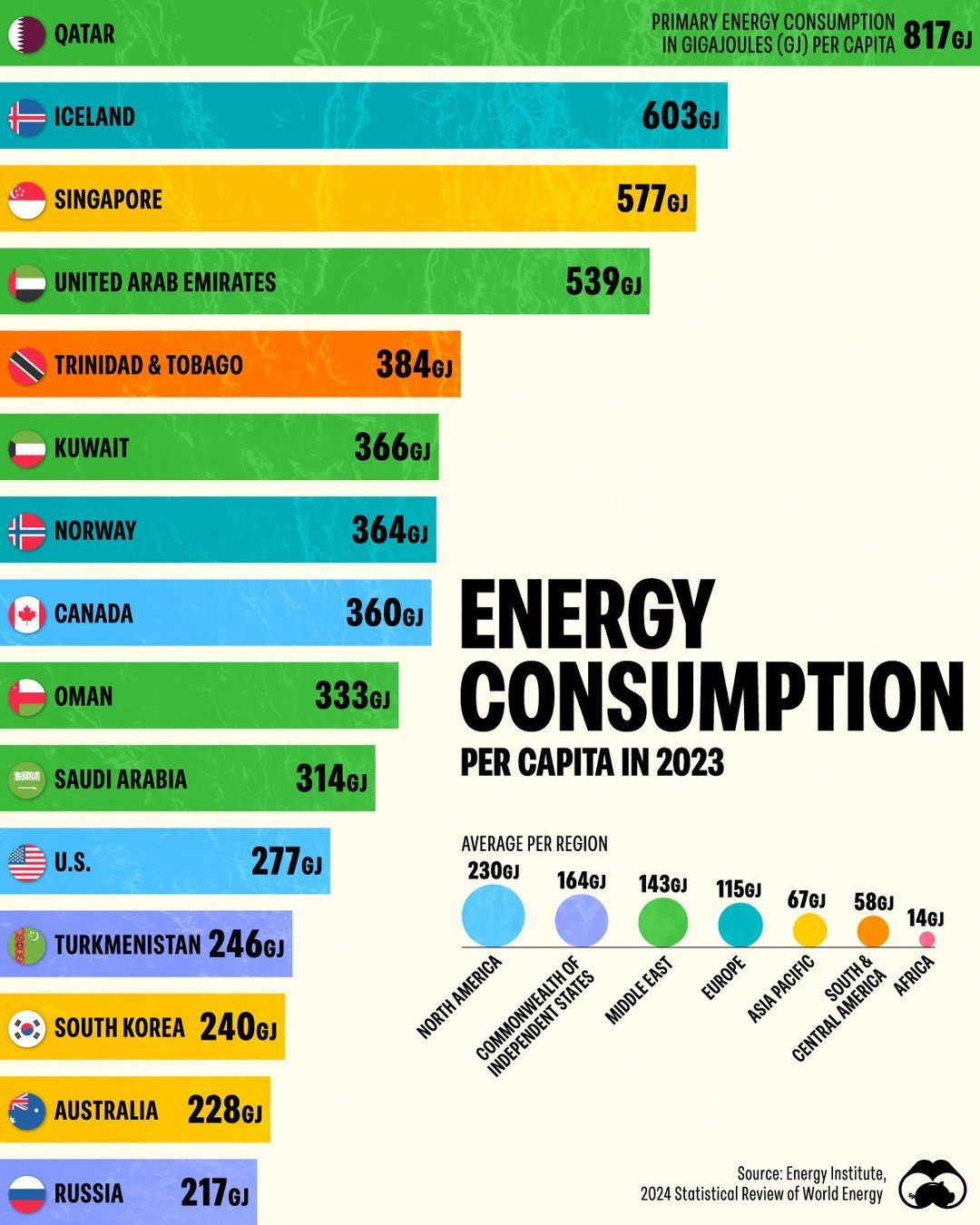
The global energy landscape is fascinating, with distinct patterns emerging in how different countries use energy. In 2023, Qatar topped the list with the highest per capita energy consumption, reaching 817 gigajoules (GJ) per person. Countries with extreme climates and abundant energy resources, such as Qatar (natural gas) and Iceland (geothermal), lead in energy consumption. Here, we rank the top 15 countries by GJ per capita in 2023, based on the Energy Institute’s Statistical Review of World Energy 2024 report.
Why This Matters
Understanding energy consumption patterns is crucial for identifying trends and making informed decisions about energy policy and sustainability. The data from the Energy Institute’s Statistical Review of World Energy 2024 provides valuable insights into regional and national energy use, highlighting the disparities and commonalities across different parts of the world.
Top Energy Consumers
Qatar
Qatar leads the global rankings with an impressive 817 GJ per capita. This high consumption can be attributed to its abundant natural gas reserves and the extreme climate, which requires significant energy use for cooling and other needs. Qatar's per capita energy consumption is a stark reminder of the country's energy-intensive lifestyle and its reliance on natural gas.
Singapore
Close behind Qatar is Singapore, with 577 GJ per capita, Singapore’s high energy consumption is driven by its status as a global financial hub and its densely populated urban environment. The city-state’s reliance on imported energy and its high standard of living contribute to its high energy usage.
United Arab Emirates
The United Arab Emirates follows with 539 GJ per capita. The UAE's high energy consumption is primarily due to its oil and gas reserves, which fuel both domestic use and exporting operations. The country's hot desert climate also necessitates significant energy for cooling and other essential services.
Trinidad and Tobago
Trinidad and Tobago, with 384 GJ per capita, is another significant energy consumer. The twin island nation benefits from substantial natural gas and oil reserves, which drive its economy and energy consumption. The energy-intensive nature of its industries and the need for cooling in its tropical climate contribute to its high energy use.
Kuwait
Kuwait, with 366 GJ per capita, is another top consumer. Kuwait's energy wealth, largely derived from oil, and its extreme desert climate are significant factors in its high energy consumption. The country’s reliance on energy for everything from industrial processes to air conditioning drives its per capita use.
Norway
Norway, with 364 GJ per capita, stands out due to its advanced industrial sector and abundant energy resources, particularly hydropower. The country’s high standard of living and energy-intensive manufacturing contribute to its significant energy consumption.
Canada
Canada, with 360 GJ per capita, rounds out the top seven. Canada's vast geography and diverse climate necessitate significant energy use for heating and cooling. Its abundant natural resources, including oil and gas, also contribute to its high energy consumption.
Energy Consumption by Region
Middle East
The Middle East, dominated by countries with extreme climates and abundant natural resources, leads in energy consumption. Qatar, the United Arab Emirates, and Saudi Arabia are among the top consumers, with their energy use driven by a combination of industrial activities, urbanization, and the need for cooling in hot climates.
North America
North America, with the United States and Canada as top consumers, shows a balanced energy consumption pattern. The U.S., with 277 GJ per capita, and Canada, with 360 GJ per capita, contribute to the region's high energy use. Industrial activities, transportation, and residential energy needs are significant drivers.
Asia Pacific
The Asia Pacific region, with diverse climates and varying levels of development, shows a mixed energy consumption pattern. South Korea, with 240 GJ per capita, and Australia, with 228 GJ per capita, are notable consumers. The region's industrial growth and urbanization are key factors in its energy use.
Commonwealth of Independent States
The Commonwealth of Independent States (CIS) includes countries with significant energy reserves and varying levels of industrialization. Russia, with 217 GJ per capita, is a significant energy consumer due to its vast territory, cold climate, and industrial activities.
Practical Tips for Understanding Energy Consumption
Analyze Regional Patterns
Understanding regional patterns in energy consumption helps in identifying common factors and potential areas for improvement. For example, the Middle East’s high energy use can be attributed to extreme climates, while North America’s consumption is driven by a mix of industrial, residential, and transportation needs.
Examine Economic Factors
Economic activities, particularly industrial and manufacturing sectors, significantly influence energy consumption. Countries with robust industrial bases, like Norway and the UAE, tend to have higher energy use.
Consider Climate and Geographical Factors
Climate and geography play a crucial role in energy consumption. Countries with extreme climates, such as Qatar and Iceland, require more energy for cooling and heating, respectively. Understanding these factors helps in planning energy policies and infrastructure.
Important Takeaways
- Qatar tops the list with 817 GJ per capita, driven by natural gas reserves and extreme climate.
- Singapore and the United Arab Emirates follow closely, with 577 GJ and 539 GJ per capita, respectively, due to their industrial and urban energy needs.
- Regional differences show diverse energy consumption patterns, influenced by climate, geography, and economic activities.
- Extreme climates and abundant natural resources significantly impact energy use in countries like Qatar and Iceland.
Conclusion
The comparison of energy consumption per capita across various countries provides valuable insights into global energy trends. Factors such as climate, geography, and economic activities play a crucial role in energy use. Understanding these patterns is essential for developing effective energy policies and sustainability strategies. Whether it's the high consumption of Qatar or the diverse patterns in North America, each country's energy profile tells a story of its unique needs and resources.
Watch the Reel
Questions readers ask
What factors contribute to a country's high energy consumption per capita?
Several factors can influence a country's high energy consumption per capita. These include extreme climates, such as very hot or very cold weather, which require more energy for cooling or heating. Additionally, countries with abundant energy resources, like natural gas, tend to consume more energy. Population density and land area is also a factor, as countries with high population density may have more efficient energy systems, while those with large land areas may consume more due to transportation needs.
Which country had the highest energy consumption per capita in 2023?
Qatar topped the list with the highest energy consumption per capita in 2023, reaching 817 gigajoules (GJ) per person. This high consumption can be attributed to Qatar's extreme climate and its abundant natural gas resources.
Why is it important to track energy consumption data by country?
Tracking energy consumption data by country is important for identifying global trends and making informed decisions about energy policy. This data can help policymakers, businesses, and organizations understand the energy habits of different countries and regions, and it can aid in the development of strategies to improve energy efficiency and sustainability.
How does the United States rank in terms of energy consumption per capita?
The United States ranks 6th in the world for energy consumption per capita in 2023, with 345 gigajoules (GJ) per person. Its high energy use is driven by factors including the size of its economy, population, and the diversity of energy resources available. By ranking within the top 10 countries for energy consumption, the United States is an important player in the global energy landscape.
Which countries in South America are among the top energy consumers per capita?
In 2023, no South American countries made it to the top 15. However, Chile is known to be the highest energy consumer in South America, the 20th in the world, with 157 gigajoules (GJ) per person. An interesting note is that despite the high energy consumption, many countries in South America are striving to leverage their renewable energy resources, like hydroelectric or solar, to meet their energy needs.
How can I visualize the data?
While the article doesn’t provide an infographic, you can create your own using the data provided. One of the most effective ways to visualize energy consumption per capita is through a bar graph or a world map with shaded regions. You can plot each country’s GJ per capita on a bar graph or a shaded map for a quick, easy-to-read comparison. Alternatively, you can use online data visualization tools to create interactive charts and graphs.
Recent articles
Fresh deep dives from the latest Reels we unpacked.




Comments
Be the first to comment.