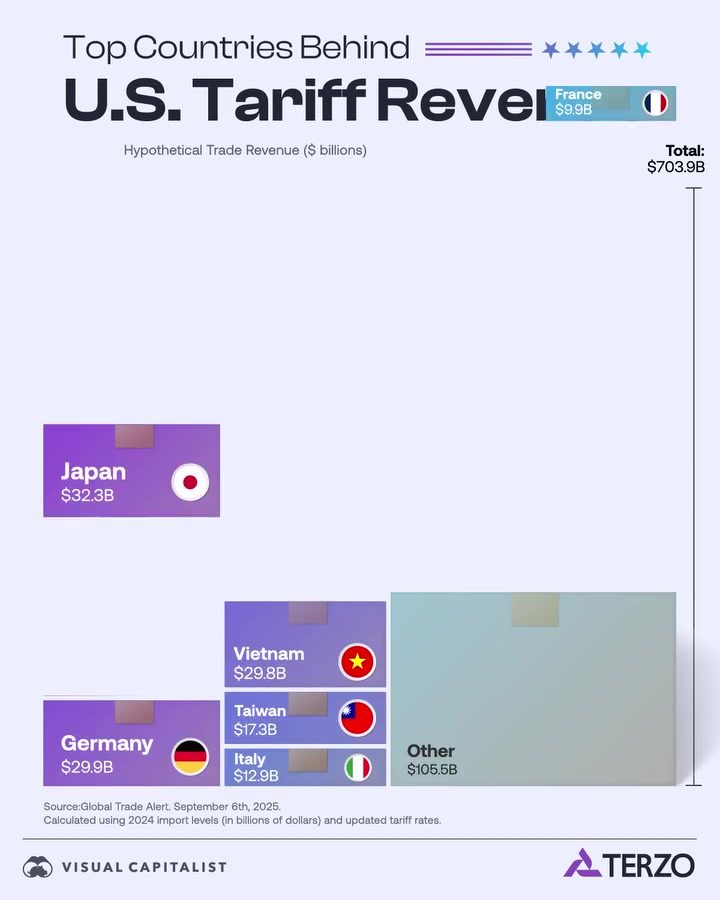
U.S. Tariff Revenue by Country
Tariff rates and their impact on trade vary widely by country, with each nation contributing differently to the U.S. tariff revenue through imports. This analysis focuses on which countries generate the most tariff revenue for the U.S. under current trade dynamics, providing a clear overview of the top contributors.
Why This Matters
Understanding which countries contribute the most to U.S. tariff revenue is crucial for several reasons. It highlights the economic significance of trade relations, influences policy decisions, and provides insights into global trade dynamics. The revenue generated from tariffs can significantly impact a country's trade balance, fiscal policies, and economic strategies.
The Role of Tariffs in Trade
Tariffs are a critical component of international trade. They serve multiple purposes, including protecting domestic industries, generating revenue, and influencing trade balances. By imposing tariffs, countries can control the flow of goods, promote local production, and manage their economic policies more effectively.
The Impact of Tariffs on Trade Relations
Tariffs can have far-reaching effects on trade relations between countries. They can lead to retaliatory measures, negotiations, and shifts in trade agreements. Understanding the revenue generated from tariffs helps in assessing the economic strength of trade partnerships and identifying potential areas for negotiation and trade adjustments.
Main Discussion
Top Contributors to U.S. Tariff Revenue
The analysis reveals that China is the leading contributor to U.S. tariff revenue, followed by Mexico and Canada. Below is a breakdown of the top countries and their respective contributions:
China
China tops the list with a significant contribution of $205.2 billion. The sheer volume of goods imported from China, coupled with the tariff rates, results in substantial revenue for the U.S. This underscores the economic interdependence and the importance of the bilateral trade relationship between the two nations.
Mexico
Mexico is the second-largest contributor, generating $84.1 billion in tariff revenue. The close proximity and extensive trade agreements, such as the United States-Mexico-Canada Agreement (USMCA), play a crucial role in this significant contribution. Mexico's role as a major trading partner highlights the importance of North American trade dynamics.
Canada
Canada follows closely with $78.8 billion in tariff revenue. Like Mexico, Canada's proximity and extensive trade agreements ensure a steady flow of goods, contributing significantly to U.S. tariff revenue. The strong economic ties and shared borders make Canada a vital trading partner for the U.S.
Other Significant Contributors
Several other countries also make notable contributions to U.S. tariff revenue:
- India: $33.0 billion
- South Korea: $27.9 billion
- Japan: $32.3 billion
- Vietnam: $29.8 billion
- Germany: $29.9 billion
- Italy: $12.9 billion
- Taiwan: $17.3 billion
- Thailand: $12.6 billion
- Brazil: $12.5 billion
- Switzerland: $9.8 billion
- France: $9.9 billion
These countries, along with others grouped under "Other," contribute a total of $105.5 billion to U.S. tariff revenue.
Practical Tips
For Businesses
Understanding the tariff landscape can help businesses optimize their supply chains and trade strategies. Here are some practical tips:
- Diversify Sourcing: Consider diversifying your sourcing to include countries with lower tariff rates, which can reduce costs and minimize risks associated with heavy reliance on a single source.
- Stay Informed: Keep updated on changes in tariff rates and trade policies, as these can significantly impact your operations and financial planning.
- Leverage Trade Agreements: Utilize existing trade agreements and explore new ones to reduce tariff burdens and enhance trade efficiency.
For Policy Makers
Policy makers can use this information to inform trade negotiations and economic policies. Consider the following:
- Negotiate Trade Agreements: Focus on negotiating favorable trade agreements with high-revenue countries to optimize tariff revenue and economic benefits.
- Review Tariff Rates: Regularly review and adjust tariff rates to ensure they align with economic objectives and trade policies.
- Promote Trade Balance: Implement policies that promote a balanced trade relationship, ensuring mutual economic benefits and reducing potential conflicts.
Important Takeaways
The analysis of U.S. tariff revenue by country provides valuable insights into the global trade dynamics affecting the U.S. economy:
- Economic Interdependence: The significant contributions from countries like China, Mexico, and Canada highlight the economic interdependence and the importance of bilateral trade relationships.
- Trade Policy Implications: Understanding the revenue generated from tariffs can inform trade policies, negotiations, and economic strategies.
- Impact on Businesses: Businesses can optimize their supply chains and trade strategies by staying informed about tariff rates and trade policies.
- Policy and Business Optimization: Leveraging trade agreements and diversifying sourcing can mitigate risks and reduce costs for both businesses and policy makers.
Conclusion
The breakdown of U.S. tariff revenue by country offers a clear picture of the countries that significantly contribute to this revenue. This analysis underscores the importance of trade relationships, economic strategies, and policy decisions in managing tariffs and optimizing trade benefits. By understanding these dynamics, both businesses and policy makers can make informed decisions that enhance economic stability and growth.
Watch the Reel
Questions readers ask
Which country contributes the most to U.S. tariff revenue?
China is the top contributor to U.S. tariff revenue. This is largely due to the high volume of imports from China and the tariff rates applied to these imports.
How do tariffs impact international trade dynamics?
Tariffs significantly influence international trade dynamics by affecting the cost of imports. Higher tariffs can make foreign goods more expensive, potentially shifting demand towards domestic products or other countries' exports. This can also lead to retaliatory tariffs, impacting overall trade relations.
Why are tariff rates different for each country?
Tariff rates vary by country based on several factors, including trade agreements, political relations, and the type of goods being imported. Some countries may have lower tariff rates due to trade deals that promote free trade, while others might face higher tariffs as a result of ongoing disputes or strategic trade policies.
What is the significance of understanding U.S. tariff revenue by country?
Understanding which countries contribute the most to U.S. tariff revenue is important for assessing the economic impact of trade policies. It helps policymakers make informed decisions, manage trade relations, and anticipate potential changes in global trade dynamics.
How does tariff revenue affect a country's fiscal policies?
Tariff revenue can significantly impact a country's fiscal policies by providing a substantial source of income. This revenue can be used to fund various government programs, reduce budget deficits, or support economic development initiatives. However, it's essential to balance these benefits with the potential downsides, such as higher consumer prices and strained international relationships.
Recent articles
Fresh deep dives from the latest Reels we unpacked.




Comments
Be the first to comment.